At the beginning of October, Siemens signed a five-year agreement with the Queensland University of Technology (QUT) and Defence Science and Technology Group to expand the use of high temperature superconducting (HTS) technologies for Australia’s maritime defence market. The team will conduct research and explore new applications of HTS for naval vessels as a way to save energy and increase capabilities in naval fleets.
Siemens, one of the pioneers in the research on superconductivity, became in 2001 the first manufacturer in Europe to start up a high-temperature superconductor motor at its Research Center in Erlangen, Germany. It was this very project to point out the possibility to develop a market for HTS motors and generators. High-temperature superconductors can carry high-density current with virtually no loss. Power output is much more increased in comparison with conventional motors of similar size with copper windings, while losses are halved.
Later in 2007, researchers from Siemens Corporate Technology in partnership with I&S Marine Solutions and A&D Large Drives divisions, developed one of the first type of propulsion motor for all-electric ships (AES) whose electric propulsion system was based on HTS technology.
HTS technology offers numerous advantages for shipbuilding: the superconductors of the rotor windings carry a current density 100 times greater than that in conventional copper windings. Significant weight and volume reductions, by over 30%, are thus made possible. In addition, there are no electrical losses with HTS, so that means greater efficiency. The enclosed, self-regulating system, which cools the superconducting rotor windings of the motor to a temperature of 27K, promises cheaper cooling with low maintenance. HTS motors therefore create total flexibility in ship design, enhancing more energy-efficiency, more effective capacity utilization and less environmental impact.
Jeff Connolly, CEO, Siemens Australia, said: ‘For the Australian navy, this partnership opens a pathway to more energy-efficient vessels with huge leaps forward in size, weight and capacity. HTS will also mean less environmental impact and reduced operating costs. Imagine the benefits of a motor with the same power but 30% less size and weight.’ The company has strategic alliances in place with 12 defence companies and research agencies, including 28 universities across Australia – a network it hopes to expand on.
Chief Defence Scientist Alex Zelinksy said the partnership will focus on transitioning research to outcomes that can deal with real world problems, starting with its potential applications to defence. He said: ‘This agreement is in line with our strategic goal to partner with the best talents in industry and academia to achieve a capability edge for defence.’


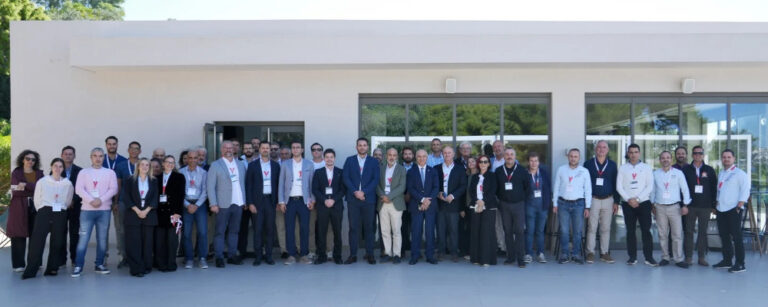
Boatbuilding industry comes together at the International Boatbuilders Summit 2026
The International Boatbuilders Summit 2026 brought together key players from the European boatbuilding sector in Aegina, Greece, for two days of discussion, networking and knowledge sharing. The event highlighted the importance of collaboration, adaptability and continuous innovation in shaping the future of the boating industry.