DTOcean, an open source software package for designing wave and tidal energy array, has been launched.
A three-year European collaborative project funded by the European Commission, it counts 18 partners including utilities, project developers, industrial suppliers and R&D organisations from 11 countries (Ireland, Spain, United Kingdom, Germany, Portugal, France, Norway, Denmark, Sweden, Belgium and United States of America) under the coordination of the University of Edinburgh.
DTOcea, Optimal Design Tools for Ocean Energy Arrays, aims at accelerating the industrial development of ocean energy power generation knowledge, and providing design tools for deploying the first generation of wave and tidal energy converter arrays.
DTOcean has been implemented as five content-orientated Work Packages, Hydrodynamics, Electrical Sub-systems, Moorings & Foundations, Installation and Operations & Maintenance, guided by two defining work packages, Scenarios and Management & Coordination. Together, these define the operational S&T effort and are supported by a dedicated Work Package for Dissemination and Exploitation. All work packages interact and collaborate to deliver an integrated approach to ocean energy array design and development.
Given a set of user inputs regarding the chosen wave or tidal energy converter and array location, DTOcean can identify optimal layouts, balance of plant including specific components and logistics procedures for that array. Optimisation is based on the Levelised Cost of Energy (LCoE), and further feedback on reliability and environmental impact is provided. The software includes computational modules around, moorings, foundations and layouts, which can also be run in isolation from the wider tool for specific tasks.


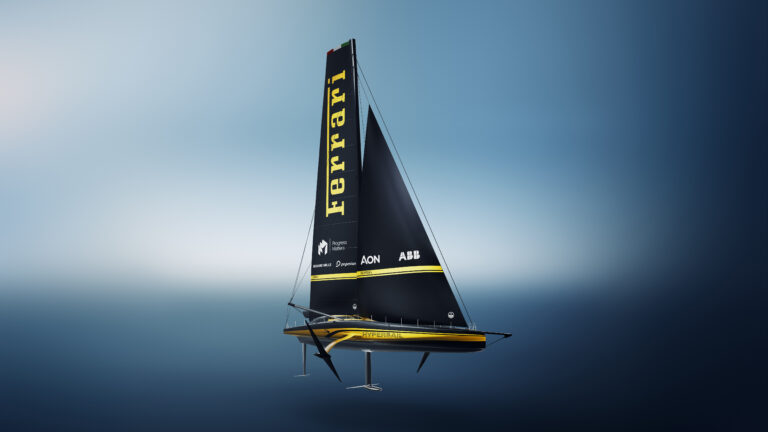
Ferrari Hypersail, a testing ground for advanced electrification
ABB has entered into a partnership with Ferrari Hypersail, the innovative 100-foot flying ocean-going monohull powered by renewable energy systems.