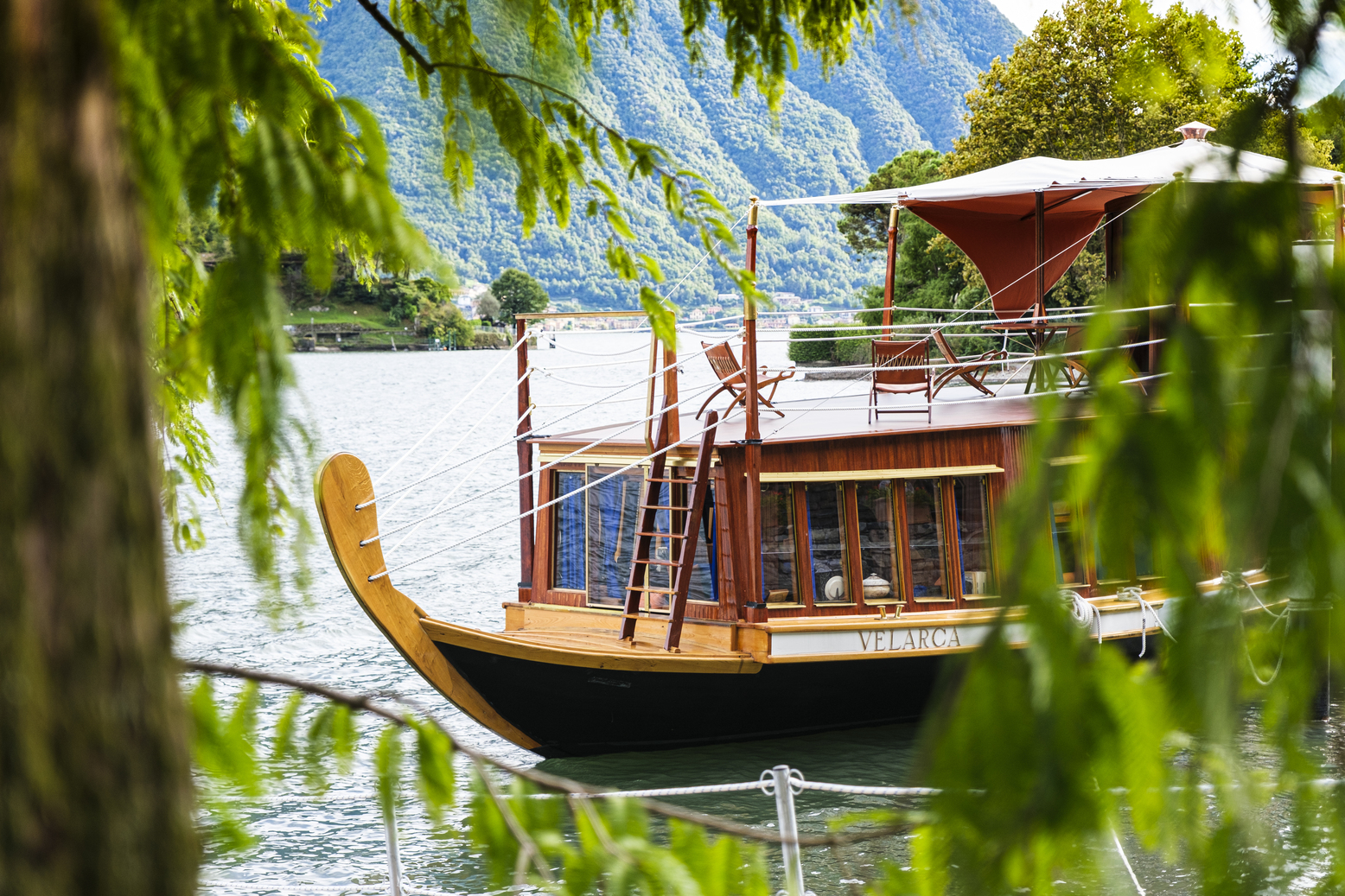
Moored on the tranquil waters of Lake Como, just off the shores of Isola Comacina, La Velarca appears less like a houseboat and more like a floating architectural apparition.
It was conceived between 1959 and 1961 by the renowned Milanese practice BBPR, formed by Gian Luigi Banfi, Lodovico Barbiano di Belgiojoso, Enrico Peressutti and Ernesto Nathan Rogers: the same minds behind Milan’s iconic Torre Velasca.
Modernist design, naval engineering, and landscape sensitivity
Originally a 1911 Larian gondola known locally as the Corriera Tremezzina, the 19-m boat was transformed into a summer residence for the Norsa family.
Faced with strict landscape protection regulations and a limited plot of only 325sq.m, BBPR reimagined the vessel as a visionary response to architectural constraint – an elegant gesture that has since become a jewel of mid-century Italian design heritage. The vessel is a rare fusion of modernist design, naval engineering, and landscape sensitivity.
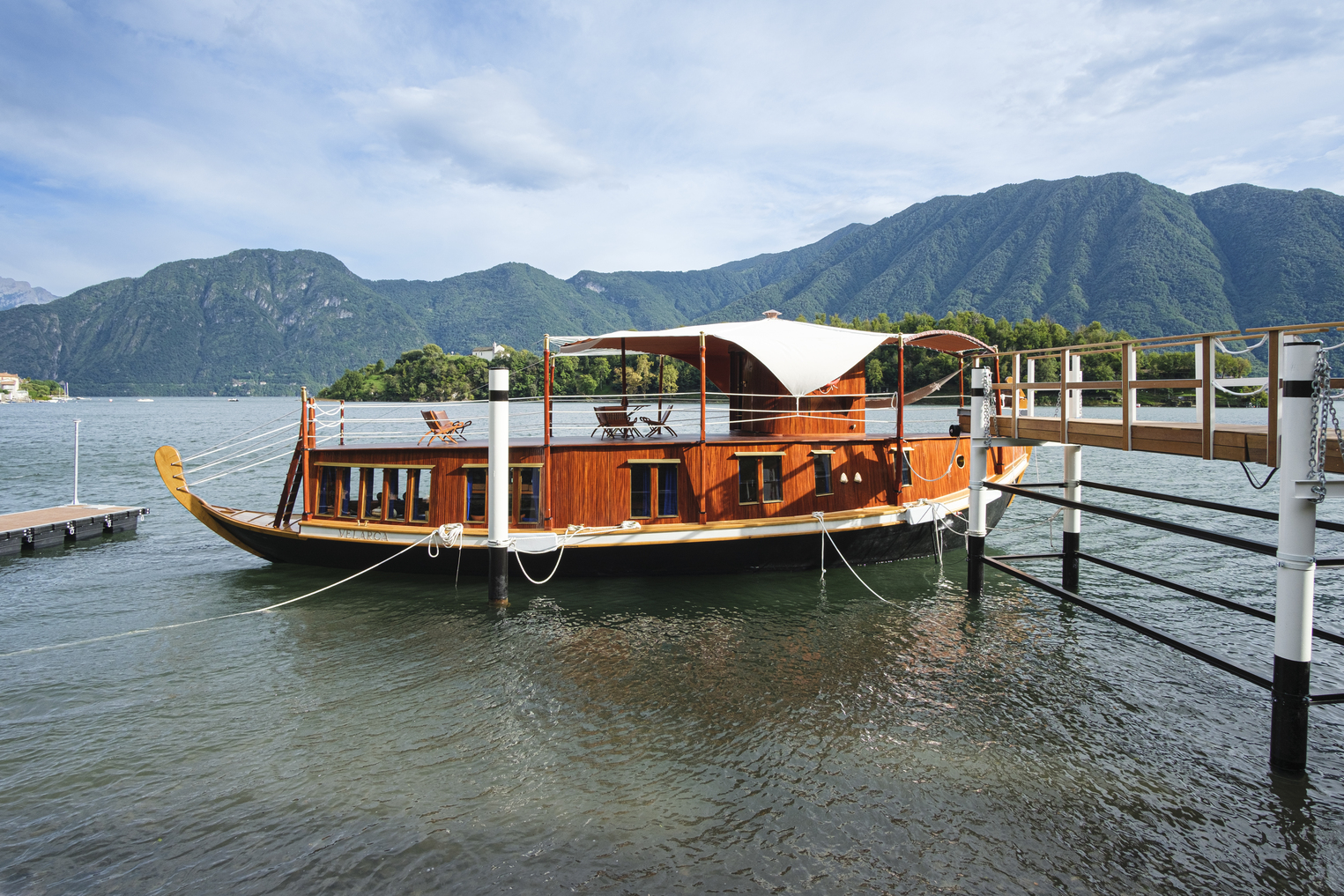
Architecture floating between earth and water
A small terraced garden, planted with olive trees and aromatic herbs, forms a natural threshold between land and lake, guiding visitors into a liminal space where architecture floats, quite literally, between earth and water.
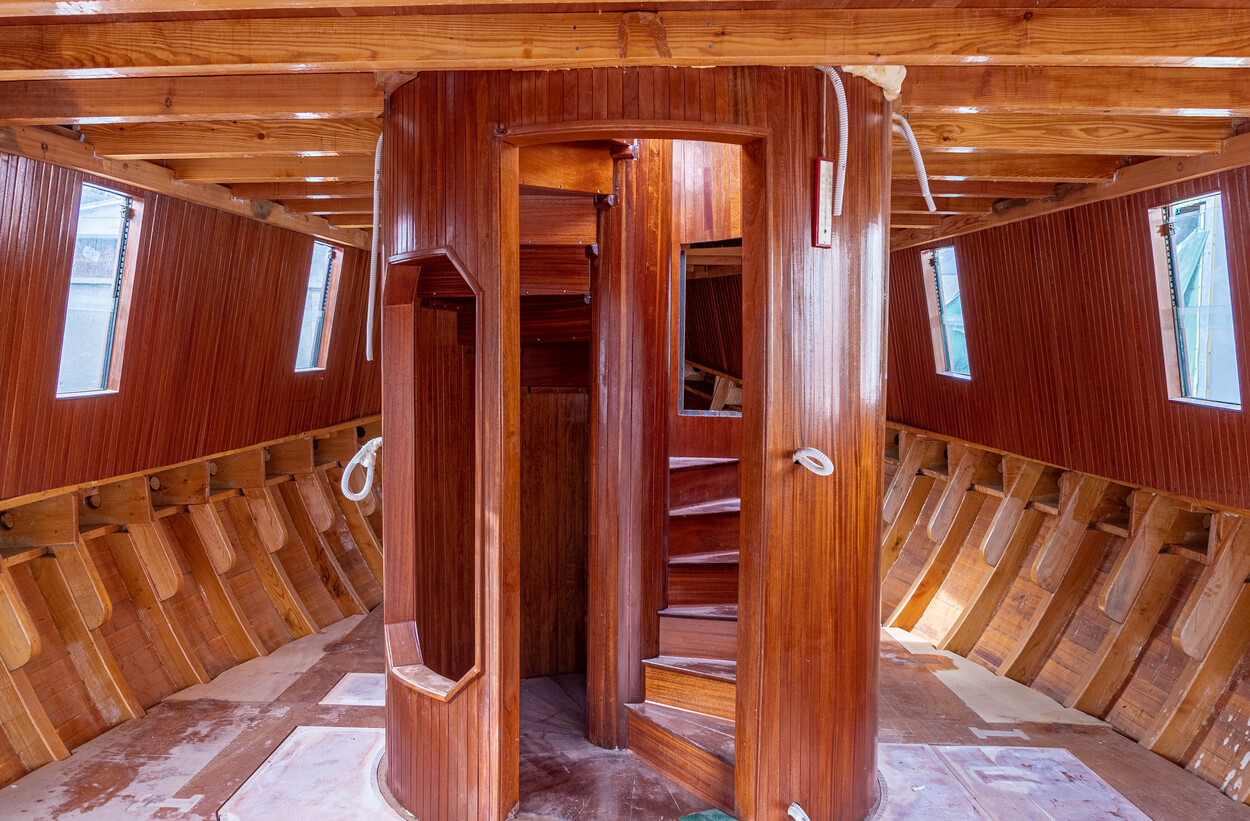
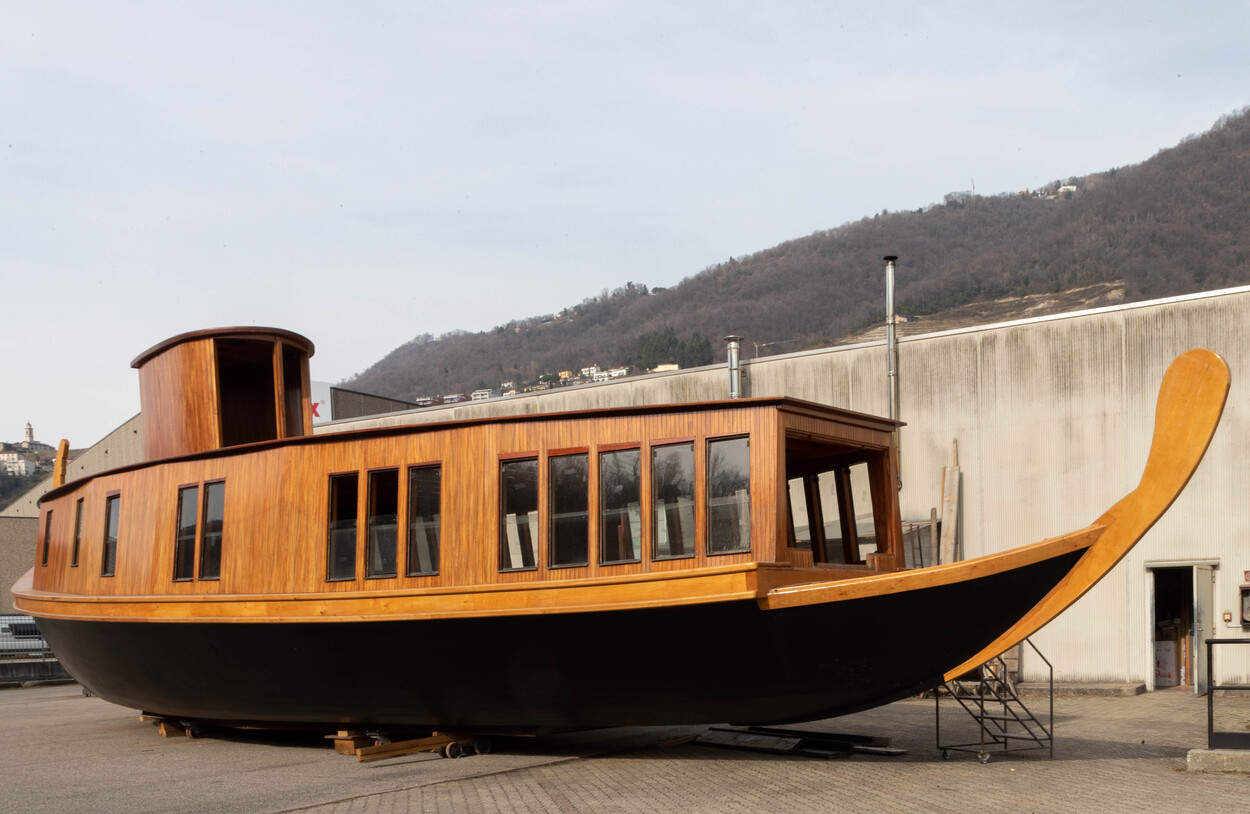
Far from being a simple houseboat, La Velarca stands as an architectural manifesto: linear forms, interiors recalling the refined domesticity of 1950s Milanese apartments, and furnishings that remain true to the BBPR’s original vision. Notable are the long horizontal windows, whose design echoes those of Milan’s trams, and the carefully curated fittings and finishes.
La Velarca’s restoration
For decades, La Velarca was not only the Norsas’ private retreat, but also a cultural salon afloat: a gathering place for figures central to Italy’s 20th Century intellectual life. In 2011, the vessel was donated to FAI (the Italian National Trust), and after over a decade of meticulous study and restoration, it reopened to the public in autumn 2024.
We spoke with Lucia Cattoni, lead architect for the project at FAI’s Office for Restoration and Conservation, to explore the challenges, technical solutions, and philosophy behind reviving this unique architectural specimen.
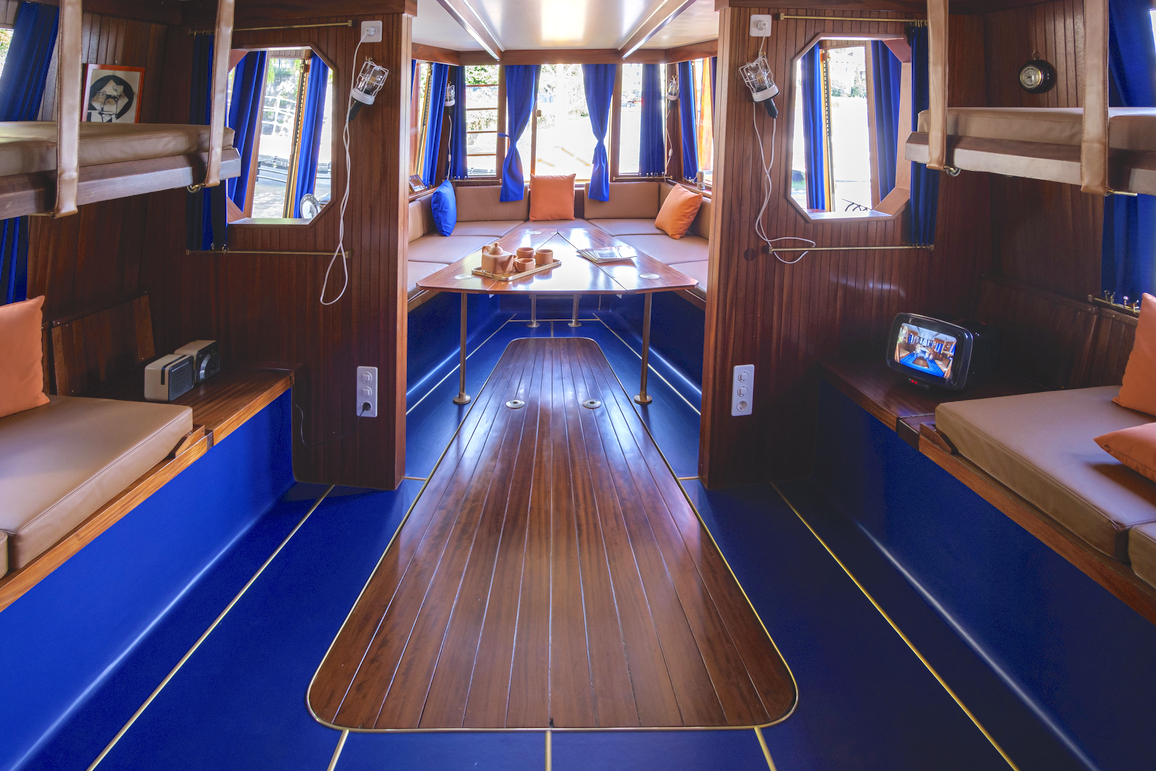
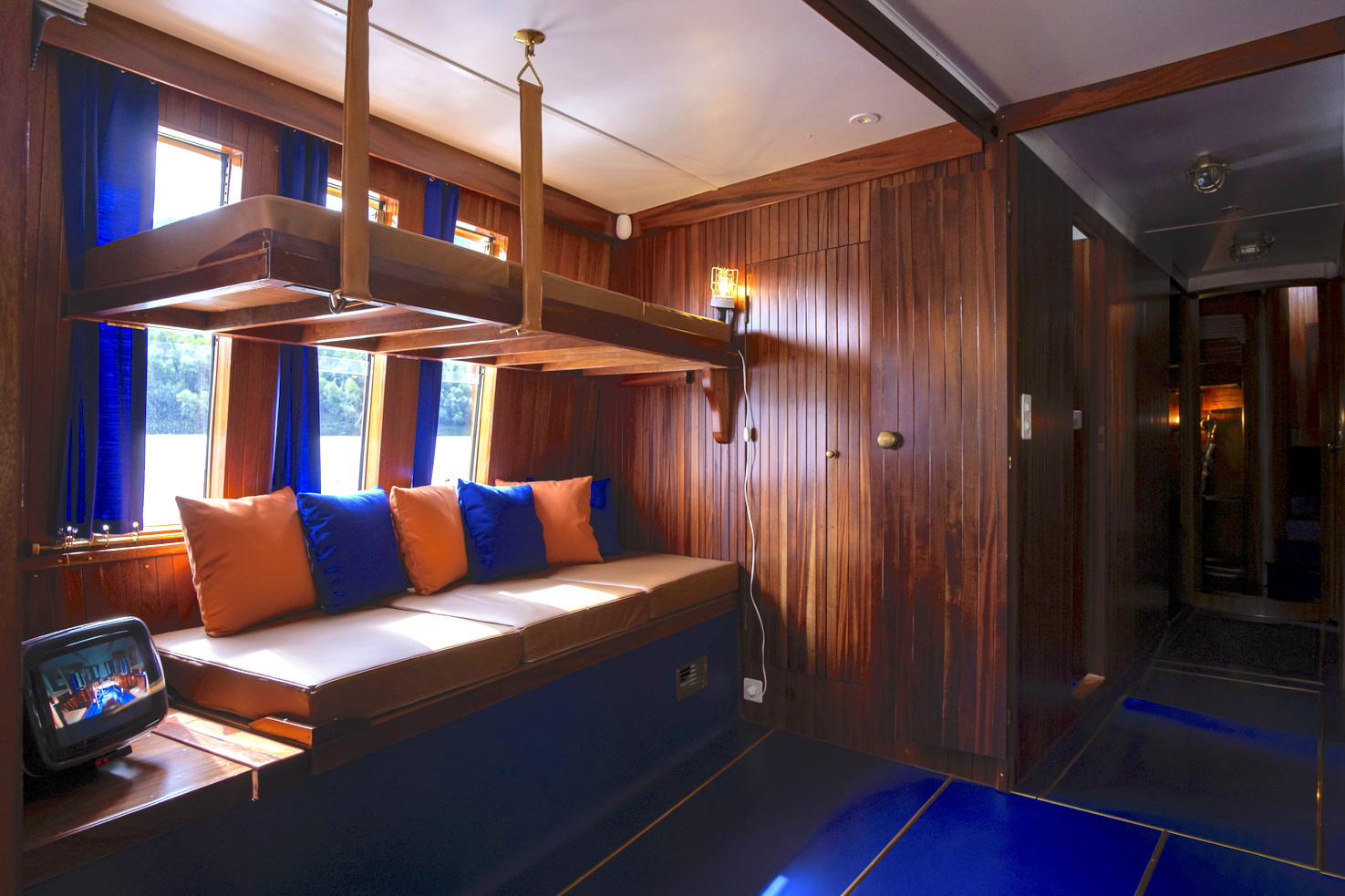
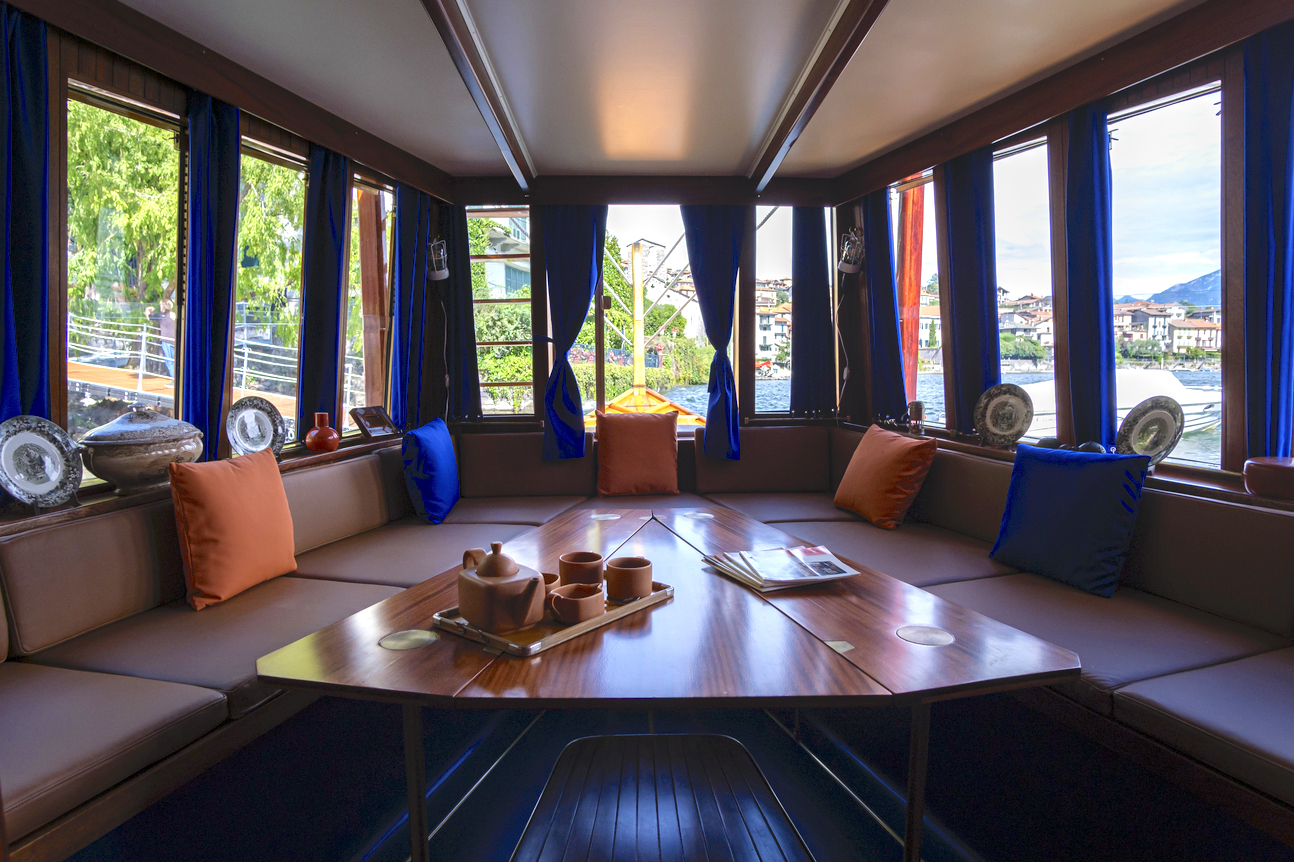
Credits: Roberto Morelli
THE INTERVIEW
Architect Cattoni, what was the overall timeline of the project?
The Velarca was gifted to FAI in 2011 by its last owners, the Norsa family. The first step was relocating it to the Ernesto Riva shipyard in Maslianico in 2013, where the conservation assessments began. Actual restoration commenced in 2018, starting with the complete reconstruction of the hull and followed by the interior and deck works.
What major challenges did the team encounter?
Challenges were numerous: the pandemic halted operations for nearly 2 years, forcing to rethink logistics entirely. This included transporting the vessel by night convoy – with the cabin dismantled – and managing a very delicate relaunch using special cranes in extremely confined conditions.
From a technical standpoint, integrating modern systems while preserving the original aesthetic was particularly complex. This also applied to the faithful restoration of interior elements, from blue PVC flooring to vintage electrical fittings.
Why was a full reconstruction of the hull necessary?
Inspections in 2013, led by a master shipwright and a marine engineer, revealed severe structural degradation. The wood had lost all mechanical resistance – primarily due to a fibreglass coating added in the 1970s, which had trapped moisture and accelerated decay. Underwater inspections further identified damage from invasive lake mollusks.
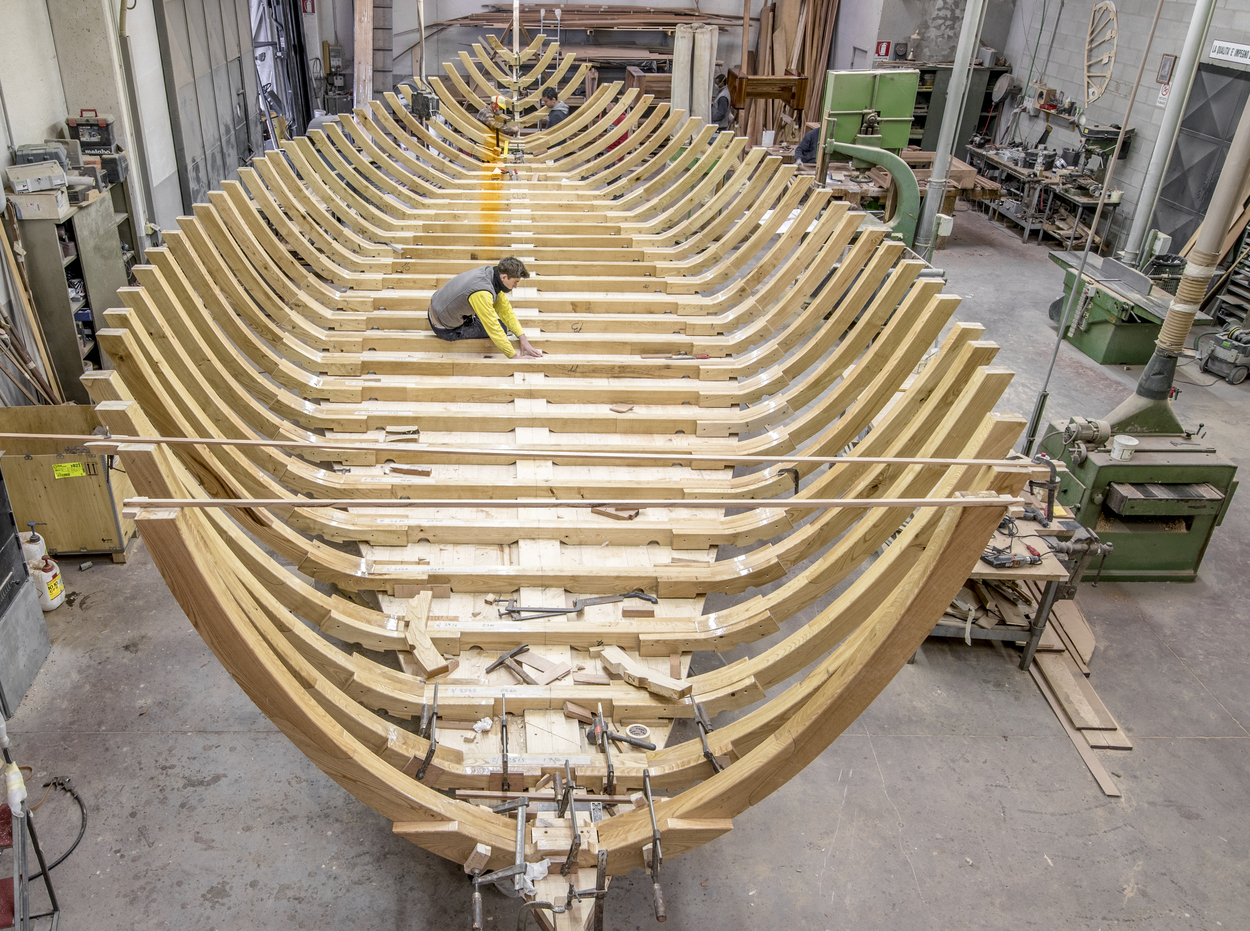
Once hauled out, additional investigations confirmed the irreversibility of the damage. The only viable solution was to rebuild the hull entirely, adhering closely to the original form and construction methods, but using updated, durable materials.
What technical choices were made for the new hull?
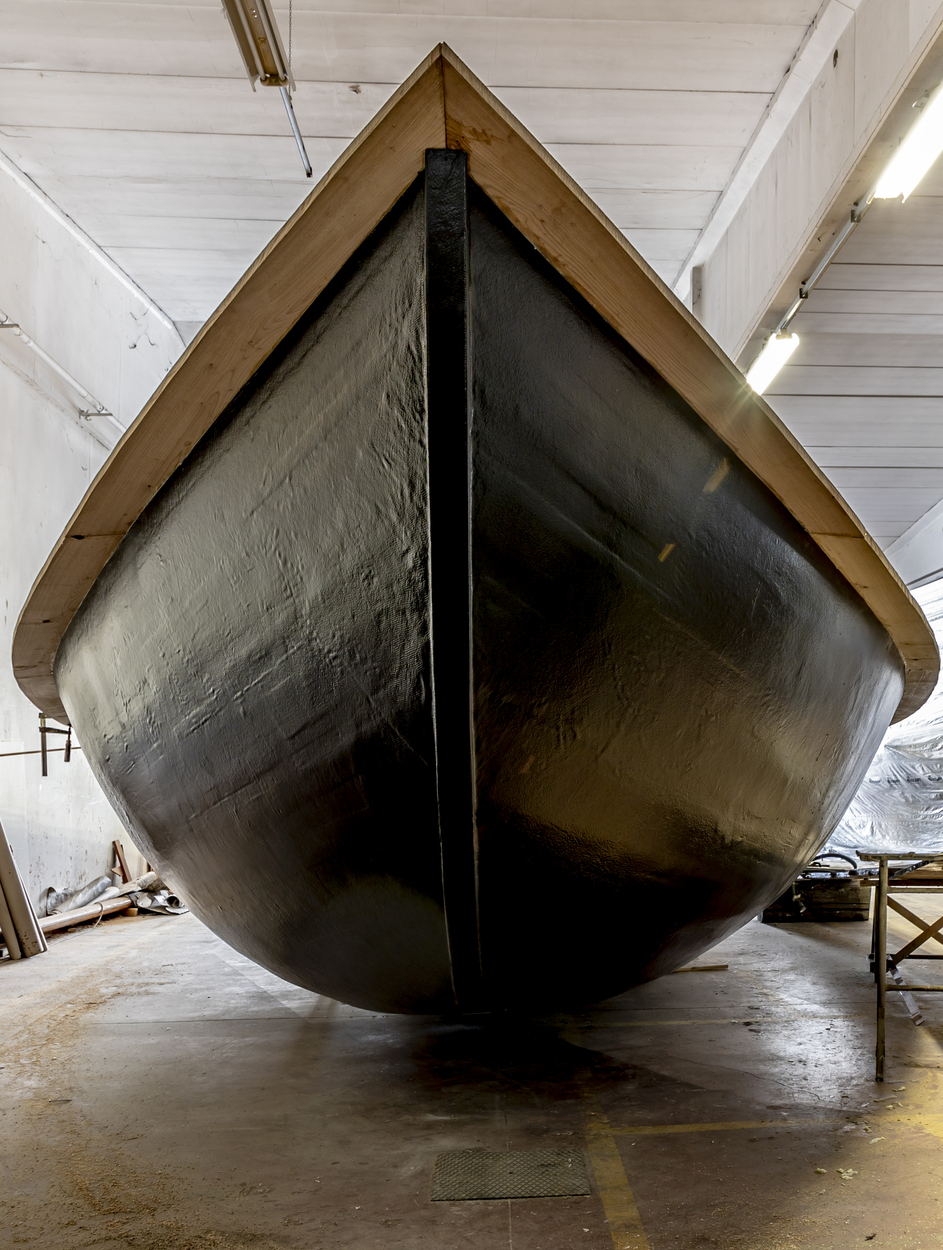
Naval engineer Carlo Bertorello designed the new hull, carefully replicating the traditional flat-bottomed profile of Larian gondolas. Chestnut and oak – both historically typical for the region – were used for the frame. However, unlike the original, we employed CNC-cut components for precision and structural rigidity. The hull is planked with overlapping staves bonded with epoxy resin to ensure longevity and watertightness.
Credits: Carlo Borlenghi
How were the original furnishings treated during restoration?
Before the vessel was moved from Ossuccio, every item – furniture, textiles, utensils – was carefully catalogued by FAI and stored in dedicated facilities. Each piece was assessed individually: many were restored, while others were replicated only where absolutely necessary.
The restoration philosophy was one of maximum conservation. Elements such as the galley, beds, drawers, doors, and the iconic spiral staircase were reinstated in their original positions within the reconstructed shell.
BBPR’s signature windows, inspired by Milan’s tram carriages, were carefully dismantled and restored by specialised artisans. Their mechanisms were overhauled, seals replaced, and brass finishes polished. Light fixtures – such as the ‘tortoise’ and ‘cage’ lamps – underwent similar, highly detailed restorations.
How important was archival research to the project?
Archival material from IUAV’s Project Archive was invaluable. It provided critical historical data and photographic documentation, forming the backbone of our approach to spatial layout, material choices, and detailing. The archive also gave insight into how the boat was used and adapted over time. This, alongside period architectural journals, greatly informed the faithful recreation of the living quarters.
Were there any engineering innovations introduced during the works?
We were guided by a principle of faithful restoration but adapted to today’s safety and environmental standards. Structural stability was refined for a permanent mooring, without altering the hull’s shape. All systems – heating and cooling via a heat pump drawing lake water, a capillary smoke extraction system, and emergency lighting – were carefully hidden within service cavities to avoid any visual disruption.
What restoration was necessary on the deck?
The deck had suffered water infiltration over time, which damaged both the interior ceilings and the insulation layer. Much of the deterioration traced back to flawed waterproofing interventions from the 1990s.
The new deck was built with a larch ring beam structure, covered in two layers of certified okoumé marine plywood. The top layer features iroko slats, spaced with black caulking and edged with solid mahogany, replicating the original finish.
How was the transition from private to public space handled?
This was one of the project’s most delicate aspects. We introduced all necessary safety and accessibility features – including a new jetty connected to the Lake Como Greenway, funded by the Lombardy Region –without compromising the building’s integrity. The aim was to open La Velarca to a broader audience while retaining its architectural purity.
Can you tell us about the landscaping plans?
The garden will be completed by 2025. The design takes inspiration from BBPR’s original scheme but adapts it to public use. It includes low stone terraces typical of local construction, flat green areas with new trees and herbs, and a canopy for shaded gatherings. A system of irregular stone paths will connect these areas, with the entire garden functioning as a green extension of the boat itself.