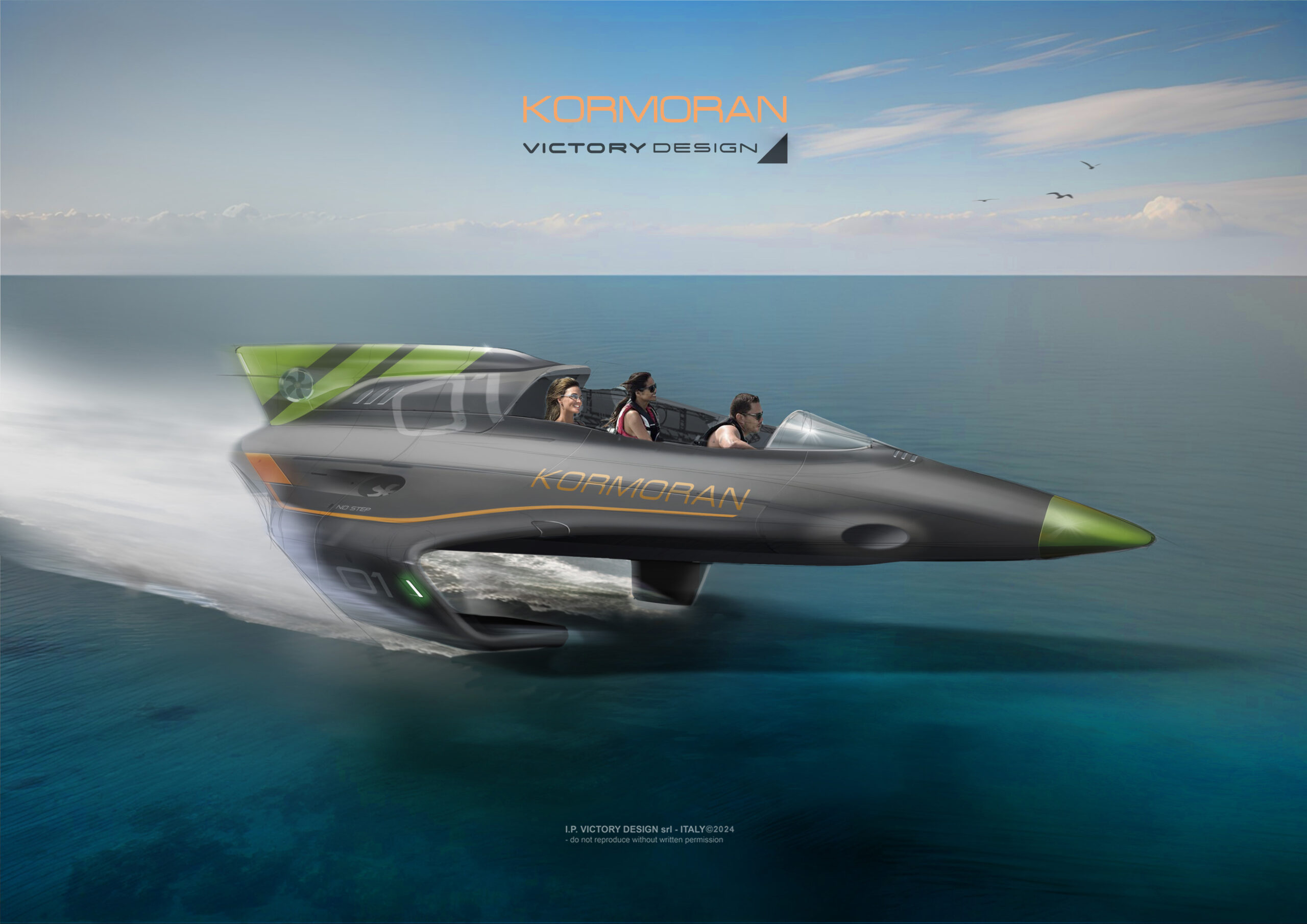
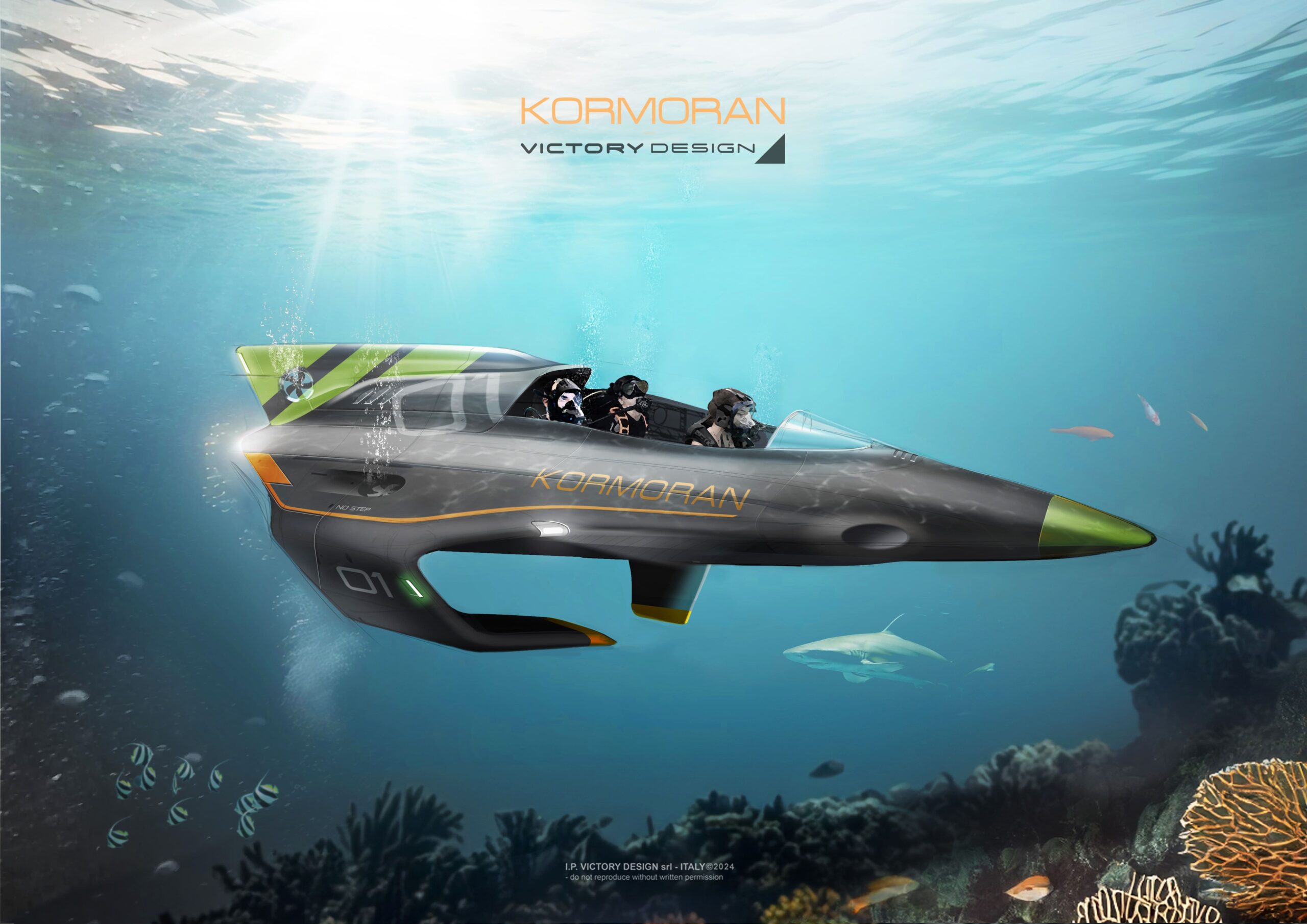
Kormoran was born as a descendant of the RaceBird E1 (Nautech no. 2/2022 and no. 2/2024) and, although it will sail far from the buoys of the circuits to become an exploration and diving vessel with different logic and uses from the original raceboat, it inherits its radically sustainable approach. It is therefore not a competition vehicle, but more of an advanced toy and an innovative electric foiling boat designed for exploration and underwater missions.
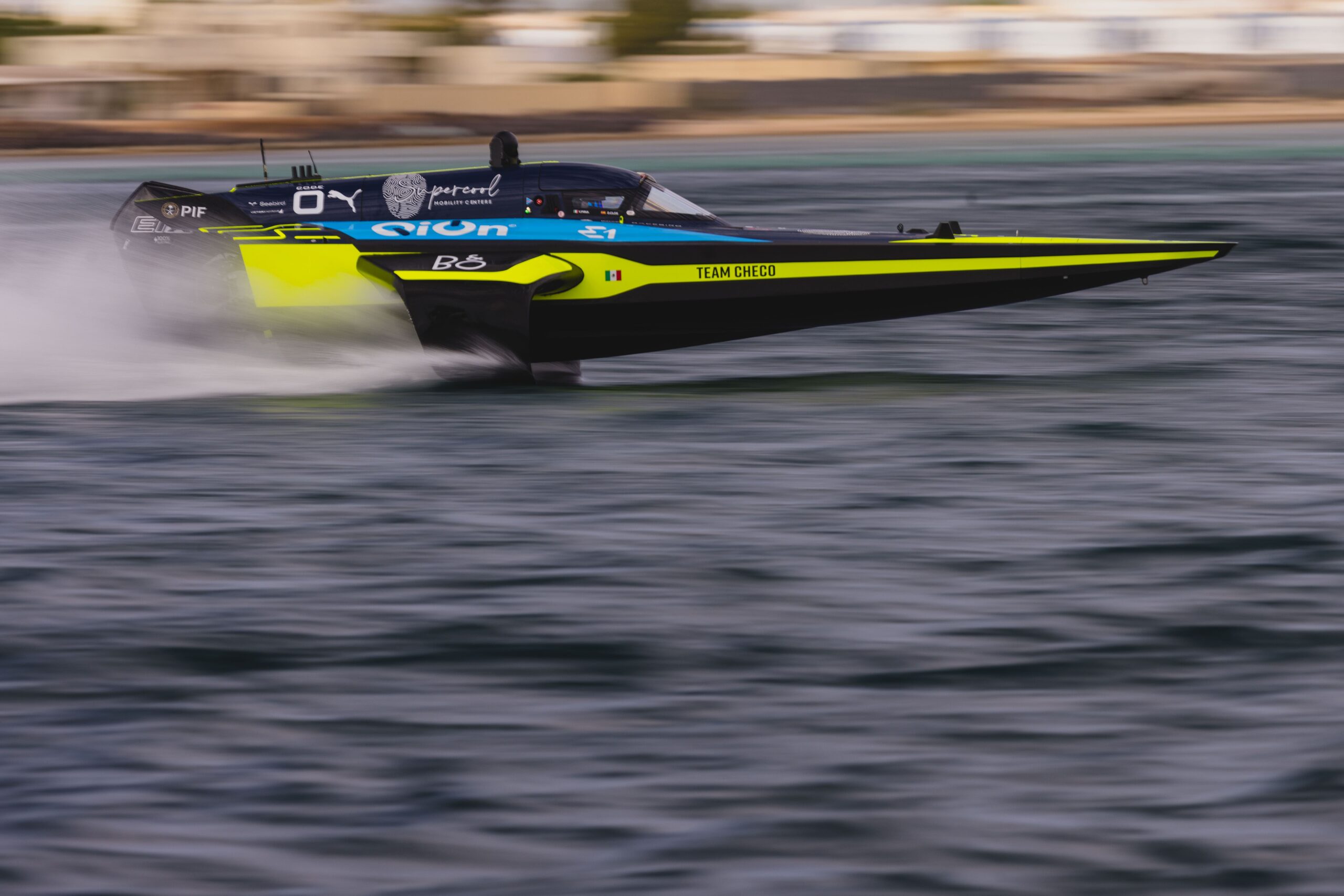
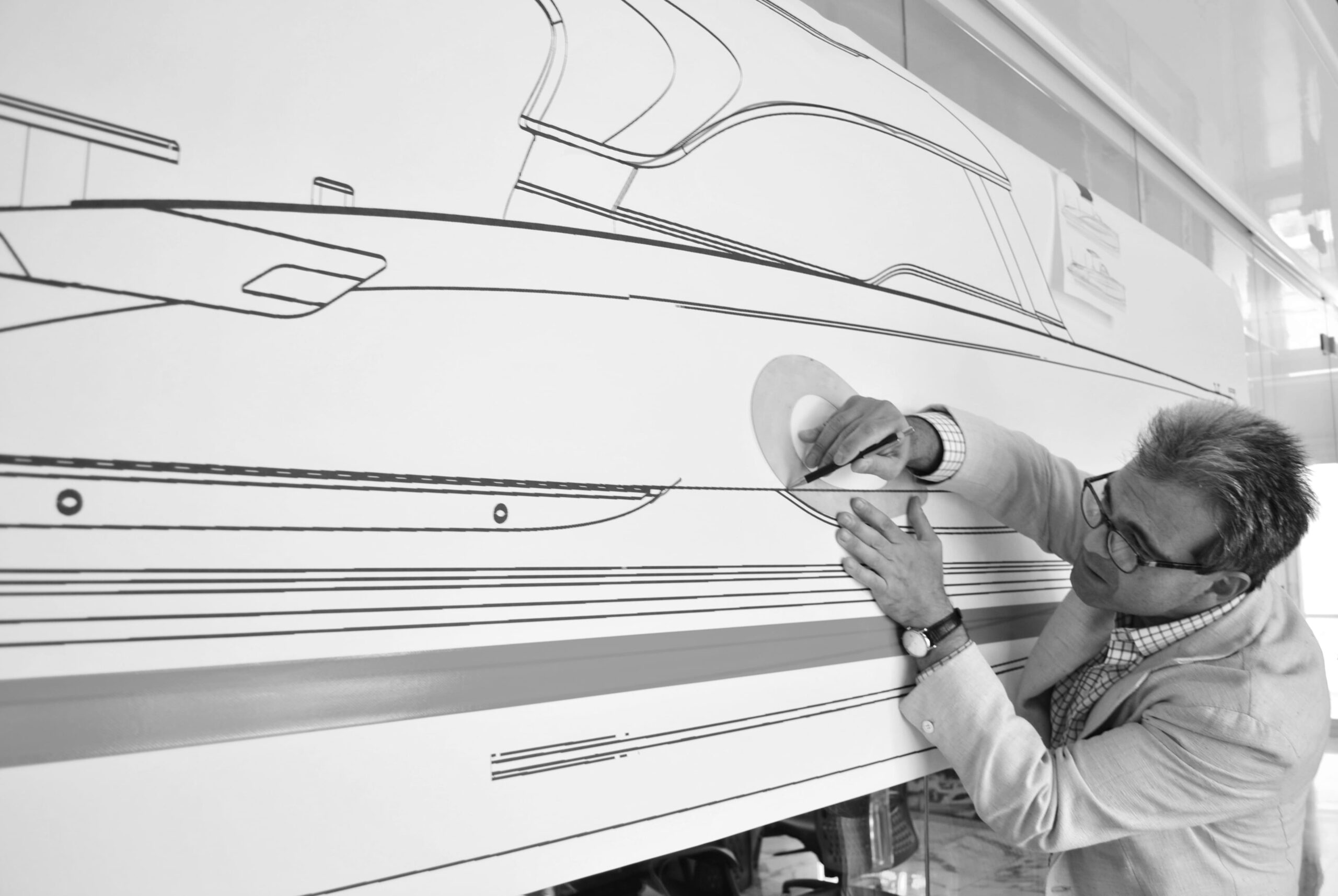
The project was developed – like the E1 – by Victory Design and Brunello Acampora, and it uses a foiling technical platform with electric propulsion boat technology similar to that of its predecessor.
The UIM E1 World Championship (a championship dedicated to electric raceboats) with all its media visibility, was conceived not only as a sporting event, but also as an event capable of promoting, through its one-design craft, a technical platform for experimenting with foiling, trim control, full electric propulsion, energy management and supply in the ‘real world’ of the docks, helping accelerate the evolution of sustainable marine technology for next-generation vessels.
The concept
“This concept arose from a Saudi request. Thanks in part to their beautiful sea, the coasts of the Arabian Peninsula are rapidly developing tourist areas: there is therefore a great passion for boating, boats and jet skis. The beautiful seabed has also sparked a great passion for scuba diving,” says Mr Acampora.
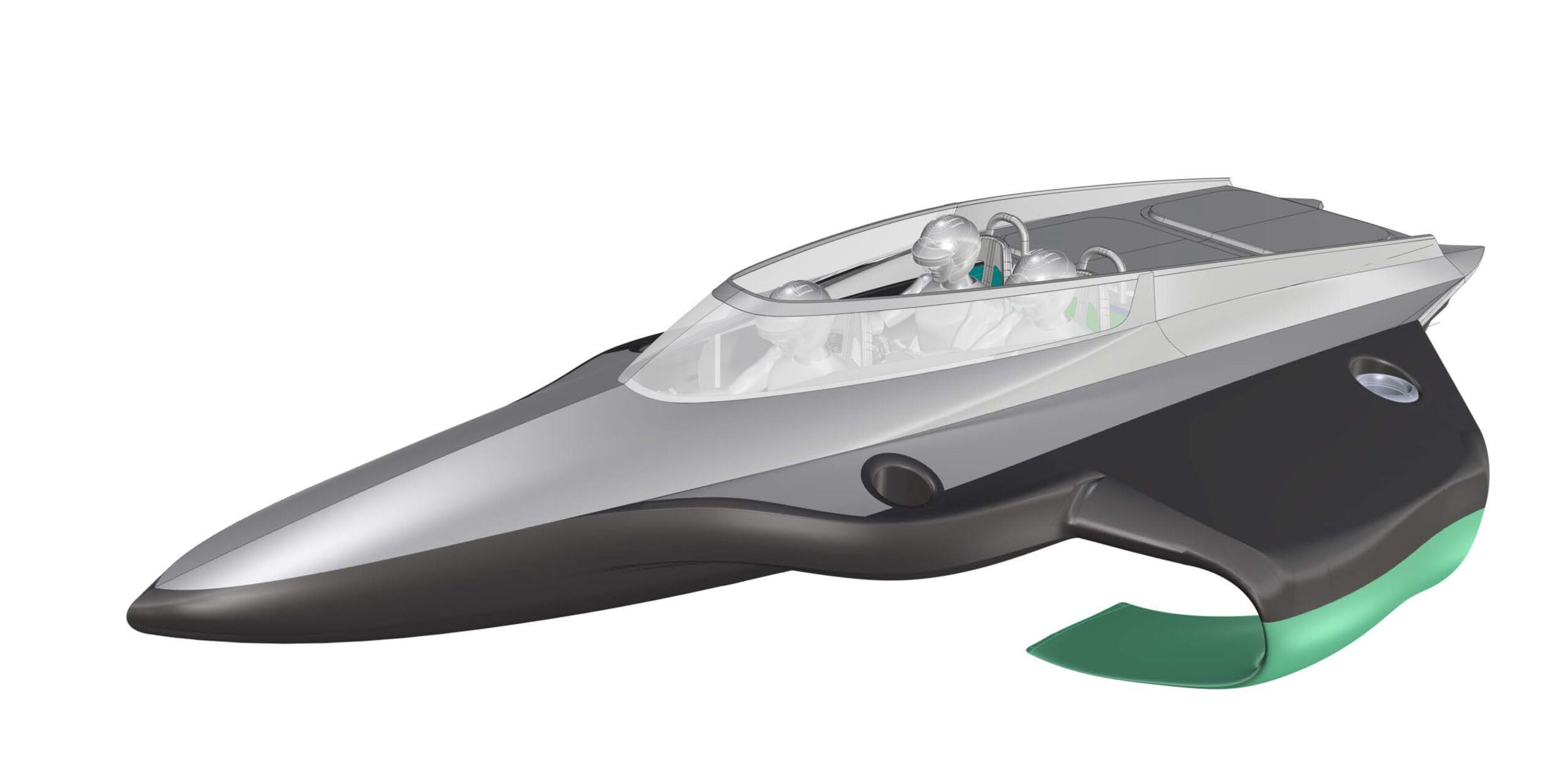
The idea was to be able to easily reach the coral reefs for diving with a vehicle piloted by an accompanying instructor. On board the Kormoran, already equipped with regulators, the pilot and passengers quickly fly over the foils to the dive site aboard a next-generation electric diving vessel, without making waves and all electrically. At this point in the mission, the vehicle changes mode to wet submarine and dives for the underwater excursion.
Surface navigation and flight on foils
The vehicle has 3 navigation modes:
• displacement on the belly of the ‘gondola’ at low speed, which eliminates ‘single point of failure’ scenarios;
• on foils;
• submerged.
Designed for a crew of 3, Kormoran is slightly larger and has more volume than RaceBird, so there will also be an increase in weight, resulting in the need for more power and larger foil surfaces to be able to take off. As it is not a competition vehicle, the speeds it can reach, although still high, are lower than those of its predecessor, and the target for transfers on the foils is around 35 knots.
From a materials point of view (also for budgetary reasons) there will be some differences.
“The craft will not be built in an extreme way, like the RaceBird, entirely from carbon composites. It will be a hybrid craft, certainly with the use of carbon in the reinforcements and probably also in the foils, but at least 60-70% will be fibreglass,” explains Acampora.
The geometry of the foils is the same as previously tested: subcavitating secant profiles – therefore partially submerged – with fixed wings that enter the water themselves, like those used on the E1, so as not to require electronic stability control systems.
At any speed and weight within the expected range, the boat can independently find the optimal altitude and trim, self-regulating.
Immersion and underwater manoeuvrability
In line with the logic of its missions, the Kormoran’s immersion takes place at a depth of approximately 15 metres, and its duration, expected to be between 20 and 30 minutes, will depend on the characteristics of the battery installed.
The speed during immersion will obviously be significantly slower than that on the surface.
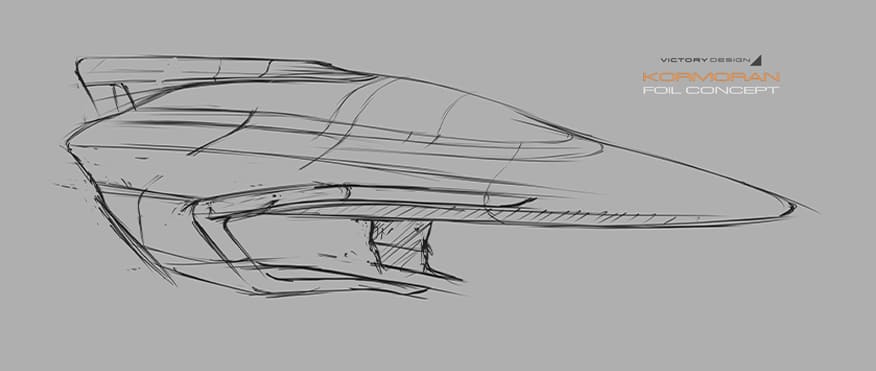
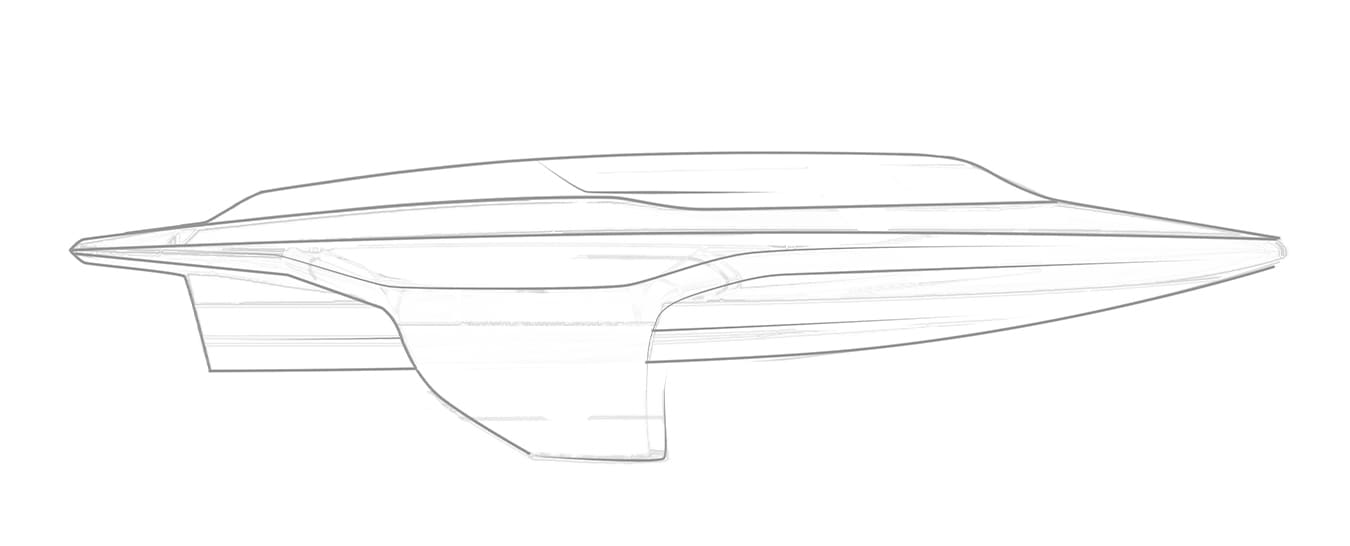
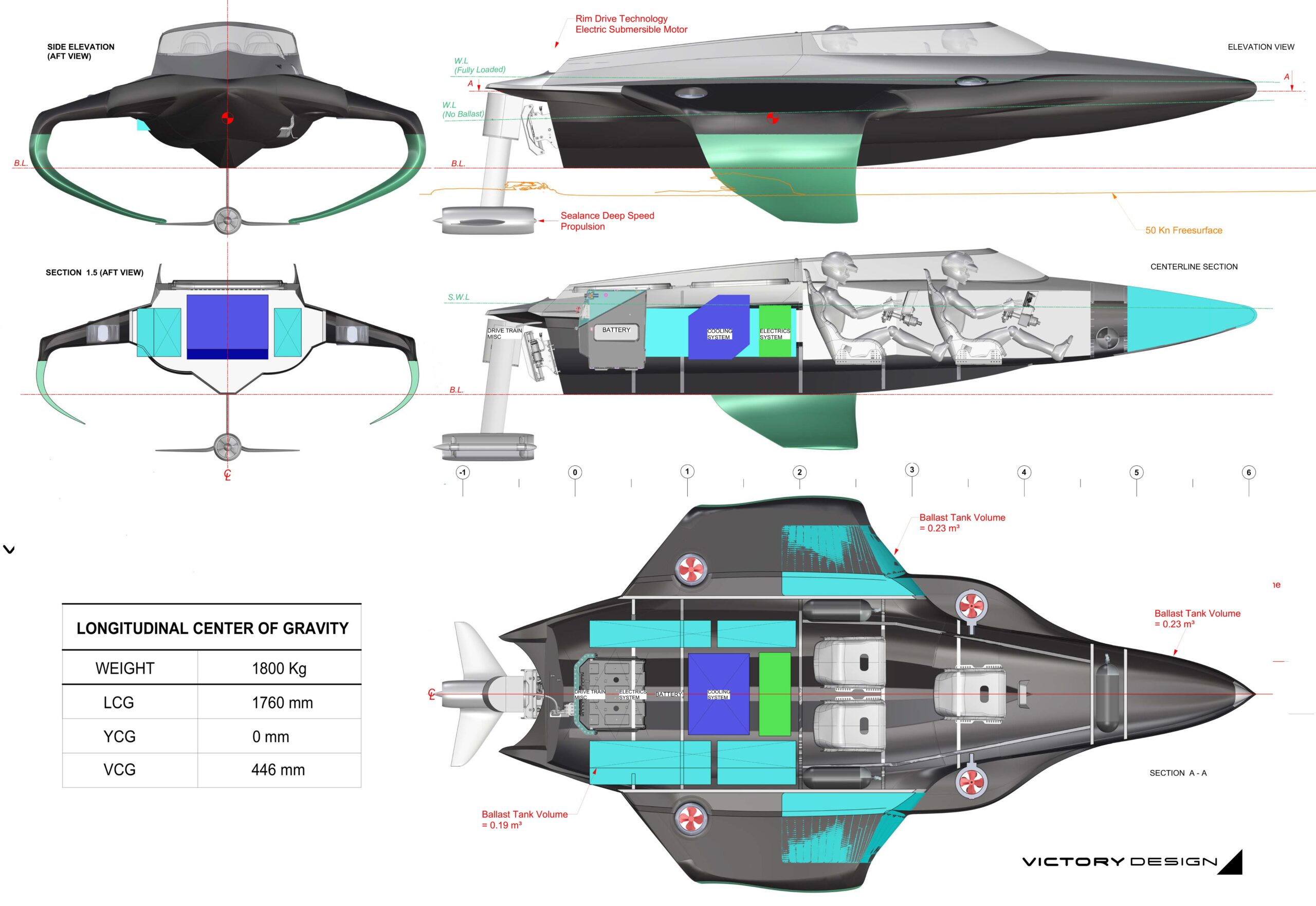
The dive begins by flooding the ballast tanks: this lowers the buoyancy level and brings the hull into a deeper trim (see the different WLs in the longitudinal profile of the technical drawings).
Next, the four vertical thrust propellers (two at the bow and two at the stern) come into play, taking over the vertical motion of the vehicle (heave) and fine control of altitude, allowing for rapid changes in depth.
The dynamics of the vehicle can be understood in terms of classic manoeuvrability: the differential actuation of the vertical thrust propellers at the bow and stern during underwater flight generates pitching moments to perform controlled dives and climbs; the differential actuation of the left and right propellers, on the other hand, allows for rolling movements; yaw – both when submerged and when navigating on the surface – is controlled by varying the angle around the vertical axis of the main propeller.
In mid-water hovering mode, the vertical thrust propulsion system is able to automatically maintain depth and trim in synergy with the ballast tanks, compensating for currents and any movements of the crew.
Crew (almost always) on board
The commander prepares the mission profile: in addition to piloting the vehicle, he also acts as an instructor on the dynamics of diving with breathing apparatus.
Aspects related to the integrated breathing system will obviously be subject to specific assessments and certifications, just as it is reasonable to imagine that the pilot/instructor must possess specific qualifications, similar to those already required in other areas of professional diving.
The cockpit is open – unlike that of the RaceBird, which is similar to that of a military fighter jet – and will have a small windscreen.
The crew will therefore wear shorty wetsuits and, according to two different scenarios, will use either a breathing system integrated with the boat or lightweight tanks.
In the latter scenario, these tanks must be able to guarantee a (short) dive that is not too deep and the necessary agility for those ‘wearing’ them to move in and out of the vehicle.
Classic diving equipment with personal back tanks would be incompatible with both the seated position on the Kormoran and the need for movement.
An integrated system
“We are studying the possibility of having a system integrated with the boat with respiratory gas recirculation that does not produce bubbles. Then, if you have to leave the vehicle, you just need to change the mouthpiece with the one on the small cylinders on the wetsuit to leave,” explains the Neapolitan engineer.
“In case of other exploratory needs, you can rest the vehicle on the bottom and do a little reconnaissance and then return on board; or, in case of emergencies, you can abandon the vehicle and ascend according to the rules.”
It is therefore a system consisting of a primary vehicle (Kormoran) and a secondary vehicle (the diver who moves independently), whose logical architectures are very similar to those of certain vehicles, more or less classified, used by the raiders of some special forces.
In fact, Acampora points out, the vehicle has enormous potential in the fields of defence, security and professional missions thanks to its low acoustic signature architecture, electric propulsion and multimodal capabilities (surface/foil/submerged), representing a new benchmark in sustainable marine technology.
A fully electric vehicle
From the outset, the concept was to create a highly sustainable vehicle that would have the lowest possible environmental impact at every stage of operation, from transfer to diving.
The pure electric solution was therefore the most natural and consistent choice with this vision.
“Electric power is currently technically feasible, and there is little debate about the efficiency of electric motors compared to internal combustion engines,” says Brunello Acampora.
“The big challenge, if anything, is related to battery capacity, which, for the expected operational profile, must be able to cover a round trip of at least 5-6 miles and a dive of about 20 minutes, which is no small feat!”
The battery pack is sized to power an electric powertrain of around 100 hp equivalent, with ranges to be defined based on mission profiles (foiling transfer and immersion). The battery, which is larger and heavier than the one used by RaceBird, has been developed in collaboration between Sealence DeepSpeed and Flexitab and must have characteristics suitable for immersion in water.
It will be installed inside a completely watertight structural container, which is an integral part of the hull structure. In the event of electrical or electronic failure, a purely pneumatic re-emergence procedure is provided, which is extremely simple and ‘idiot-proof’, independent of software or active control.
Jet propulsion
Among the significant technological advances compared to the RaceBird is the propulsion system, which will use a jet propulsion system designed by Sealence, an Italian company that has been developing it for several years.
The Sealence DeepSpeed jet is an electric jet propulsion system inspired by aeronautical fluid dynamics, in which the electric motor is integrated directly into the water jet: no traditional shafts, gears or transmissions, just an electric machine that drives a high-efficiency fairing impeller.
Compared to conventional propellers and waterjets, it offers optimised thrust, less noise, less vibration and a smaller wake, with obvious advantages for a vessel that needs to move fast but remain discreet in sensitive environments such as reefs and marine reserves.
“The system guarantees good propulsion both on the surface and underwater within the expected speed range, and the efficiencies, from the data we see from the simulations carried out, are excellent,” explains Acampora.
The Sealence electric jet transmission uses an impeller that works inside a fairing duct and has no torque effect like that of an open-bladed propeller transmission.
This latter feature also reduces the risk of collisions and cuts compared to traditional propulsion, especially in the vicinity of swimmers and divers. In addition, the system is completely protected even when the vessel rests on the seabed.
The compactness of this propulsion system – an electric motor integrated into the water jet – frees up the space in the Kormoran’s streamlined stern, allowing it to house the necessary batteries and diving systems, thanks to the integration and optimisation work carried out in collaboration with Flexitab