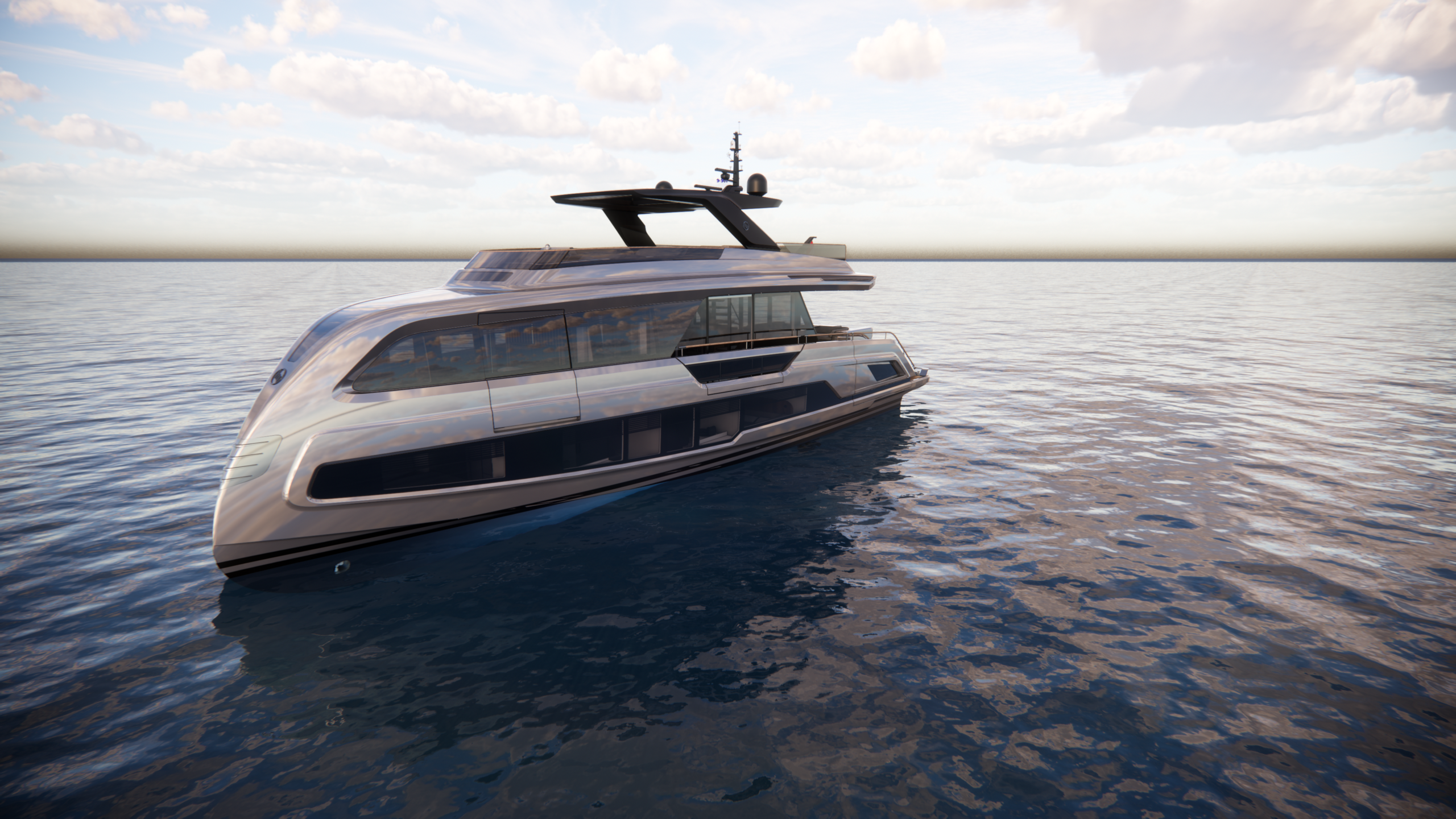
Hugøa Yachts, based near Nantes in France, introduces the ORCA 70, a 21.5-m fiberglass yacht with a 6.5-m beam. This vessel aims to represent a new generation of luxury motor yachts, blending superyacht codes with an approach to ownership that is both accessible and uncompromising. The shipyard’s vision was to create a yacht that feels alive, able to offer generous space and sophistication without ostentation.
The design of the ORCA 70 celebrates fluidity, natural light, and a direct connection with the sea: these three principles are evident in nearly every area on board. The result is a yacht conceived as a floating villa, combining the generous volumes of a larger yacht with the intimacy, flexibility and usability required for extended stays at sea.
Defining features
“With the ORCA 70, we wanted to create a yacht that combines the serenity of a villa with the freedom of the ocean. A place to experience the sea differently, in total comfort, with no compromises and no surprises,” explains Thibaud Casas, founder of Hugøa Yachts.
Another defining feature of the project is its unique sales philosophy: a single, all-inclusive price of €3.5 million for a fully equipped yacht, with zero compromises. Every element, from advanced technical systems to luxury finishes, is included as standard. There are no hidden extras and no optional packages.
This transparent, turnkey approach marks a new way of acquiring a yacht, simplifying the process while ensuring that every owner enjoys the same uncompromised specification. It also reflects a broader evolution in modern yacht design, where architecture, technology and usability are increasingly considered as one integrated concept.
Purposeful and striking design
Many of the ORCA 70’s most striking features are underpinned by functional reasoning, beginning with its continuous, sinuous bow that appears to extend the superstructure seamlessly into the hull.
“The idea behind the ORCA 70’s signature bow was to dissolve the traditional boundary between hull and superstructure. The objective was both sculptural and functional: to create a pure, continuous line that stretches the yacht visually while expanding the internal volume,” the design team explains.
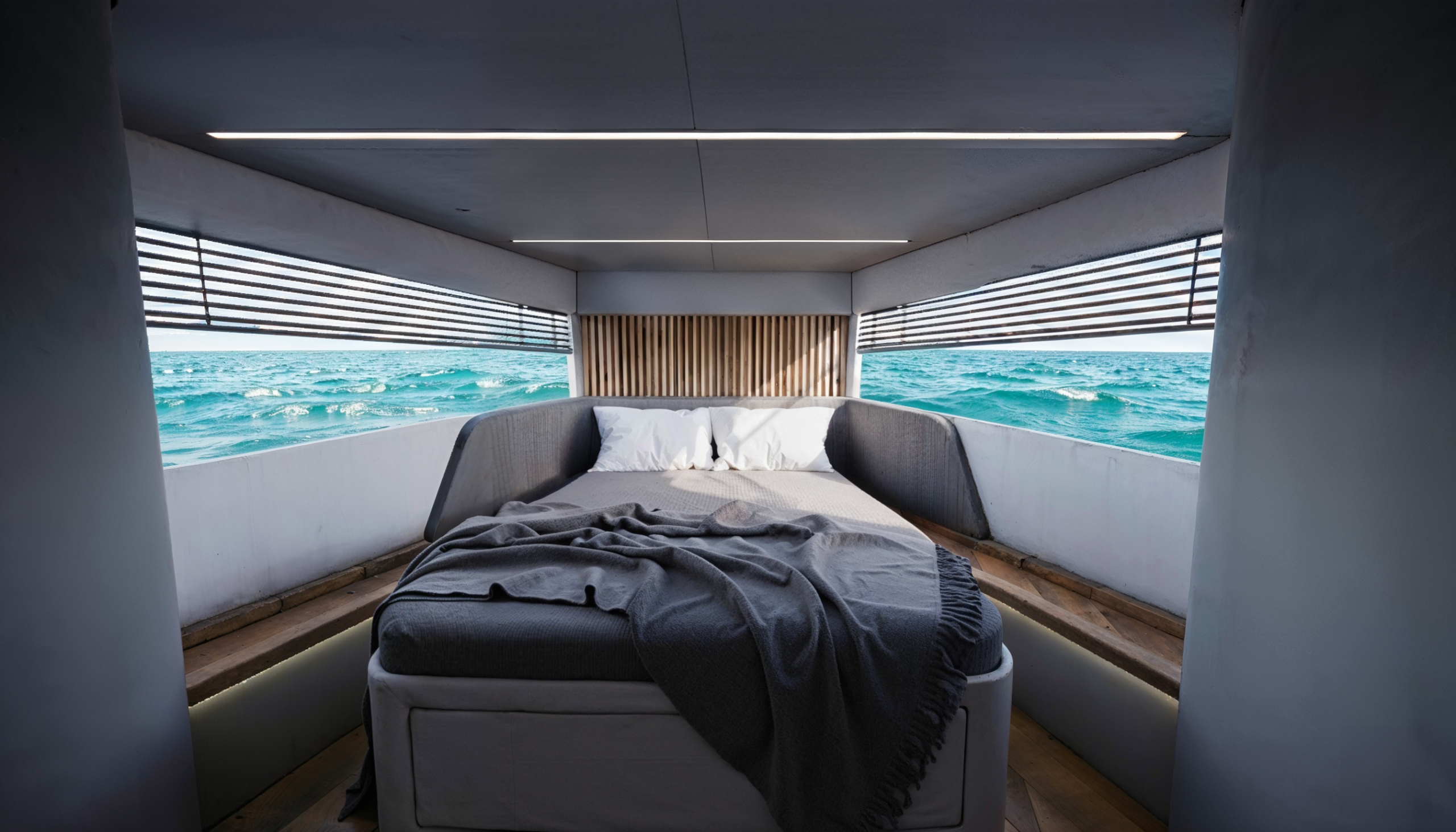
This concept allowed the main deck to be extended forward, accommodating a full-beam owner’s suite on the same level as the salon, which is a rare arrangement on a yacht of this size, while maintaining full side walkarounds. This also enabled the creation of an exceptionally generous flybridge, which features multiple seating configurations.
The beach club
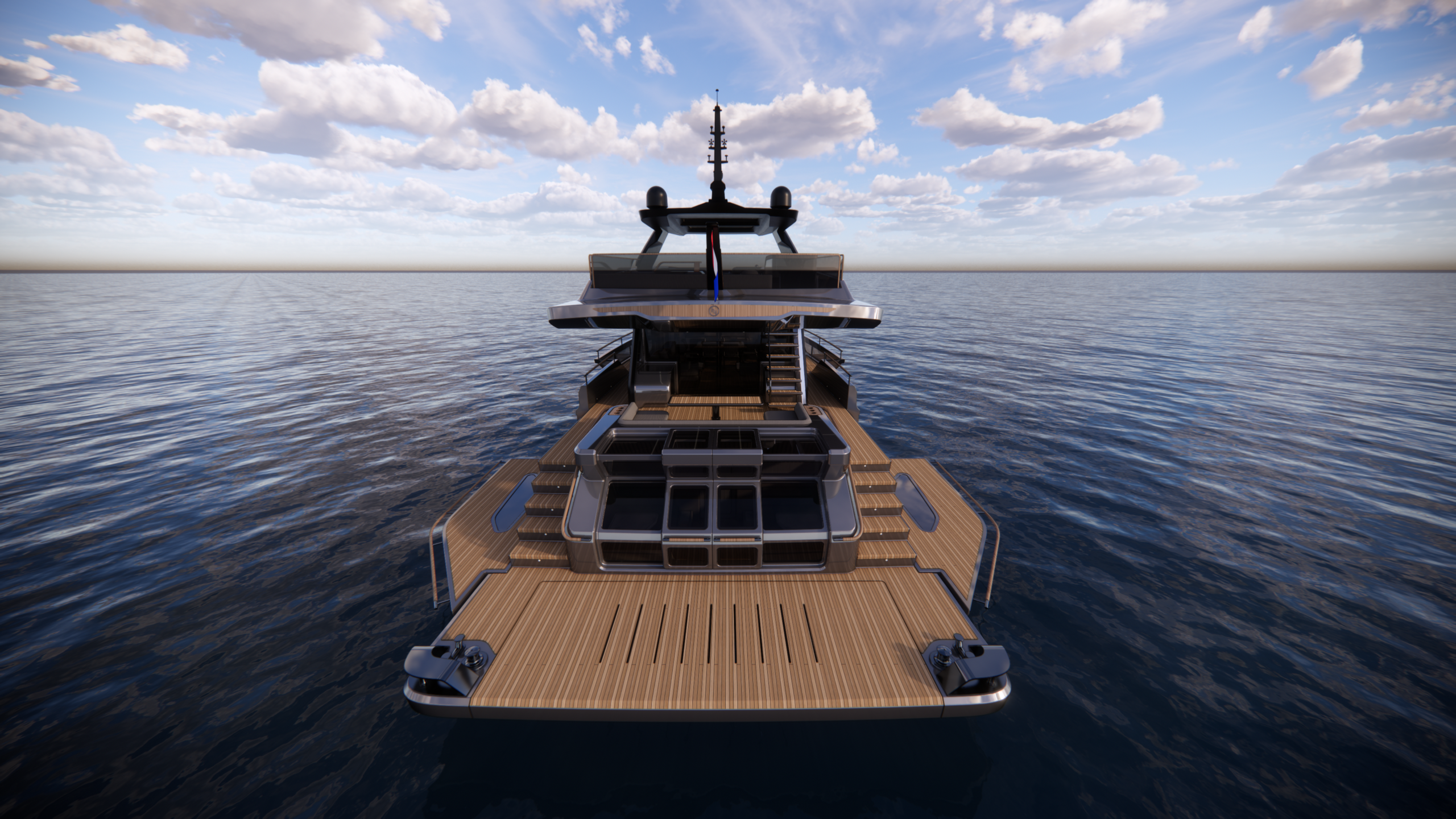
Another detail, at first glance purely aesthetic, has been carefully considered: the entrance door to the beach club. This area has been conceived as a living space rather than a mere technical area, and the door’s shape and glazed structure allow natural light to flood the interior even when closed, maintaining a constant visual connection with the sea.
When opened, it forms a wide, elegant transition from the interior lounge to the water, transforming the entire aft section into a bright, open terrace. This approach reinforces one of the central principles of the ORCA 70: creating yacht beach club spaces that function as genuine extensions of the living areas rather than simply as technical zones for access to the water.
A hydraulic aft platform
Beneath this refined architecture lies a major innovation: a hydraulic yacht platform engineered to operate at multiple levels. It can be lowered into the water to launch and retrieve water toys and tenders, all of which are provided as part of the yacht purchase or positioned just below the surface to create a shallow “water lounge.” This transforms the stern into a natural sea pool, ideal for children to play safely or for adults to relax half-submerged in the water.
The system adds another dimension to the relationship between the yacht and the sea, allowing the aft area to change according to the owner’s needs and the activity taking place on board.
Contemporary architecture onboard
The ORCA 70 embraces a fluid and adaptable approach to onboard spaces, where every area responds naturally to the rhythm of life at sea. At the stern, the aft cockpit exemplifies this modular philosophy: it can transform effortlessly from an elegant dining area with a central table into generous sunpads facing the sea.
Convertible furniture and integrated storage enable the space to shift from social gatherings to pure relaxation with ease, while preserving unobstructed views of the horizon.
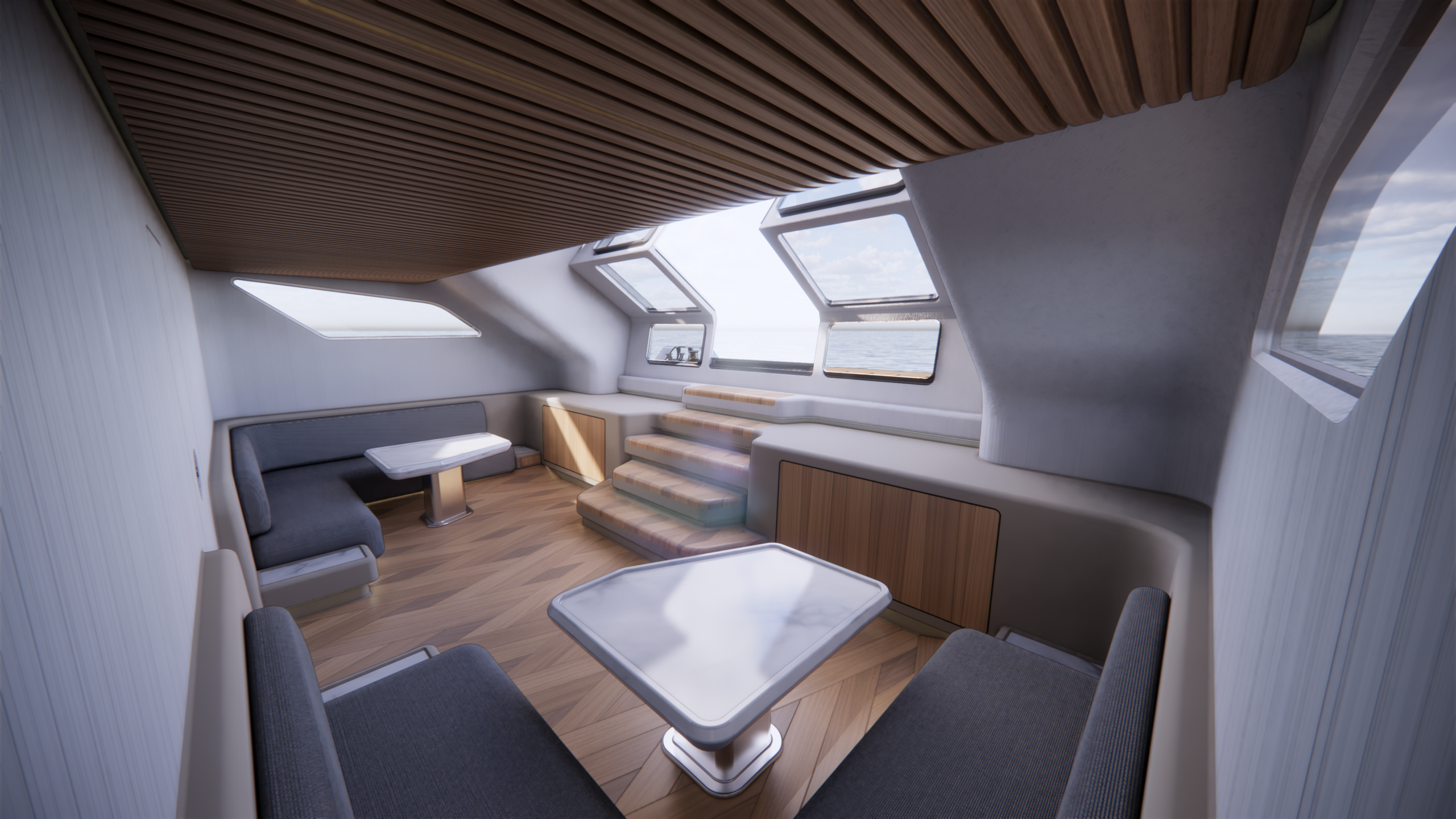
Inside, the main salon flows seamlessly into the galley, forming a bright, open living environment. Modular seating, adjustable tables, and built-in storage allow the interior to transition smoothly from daytime living to evening ambiance without disrupting the yacht’s clean lines. Neutral colours, natural materials, and subtle textures create a calming, refined atmosphere. Decorative elements and artwork are carefully curated to harmonise with furnishings, reinforcing the sense of understated elegance.
Multiple possible configurations
The galley has been designed for frequent use, with integrated air extractors in the ceiling to prevent culinary aromas from spreading, ensuring comfort across all living areas. Circulation throughout the yacht is carefully orchestrated: separate paths for guests and crew maintain privacy, while discreet service and technical systems are fully integrated beneath sculptural surfaces.
The flybridge continues this flexible approach, accommodating up to 15 guests with a bar, outdoor galley, sunpads, and modular seating beneath a shaded hard-top. Multiple configurations are possible, from navigation and dining setups to a fully open-air lounge, preserving the signature openness and harmony of the yacht.
Interiors
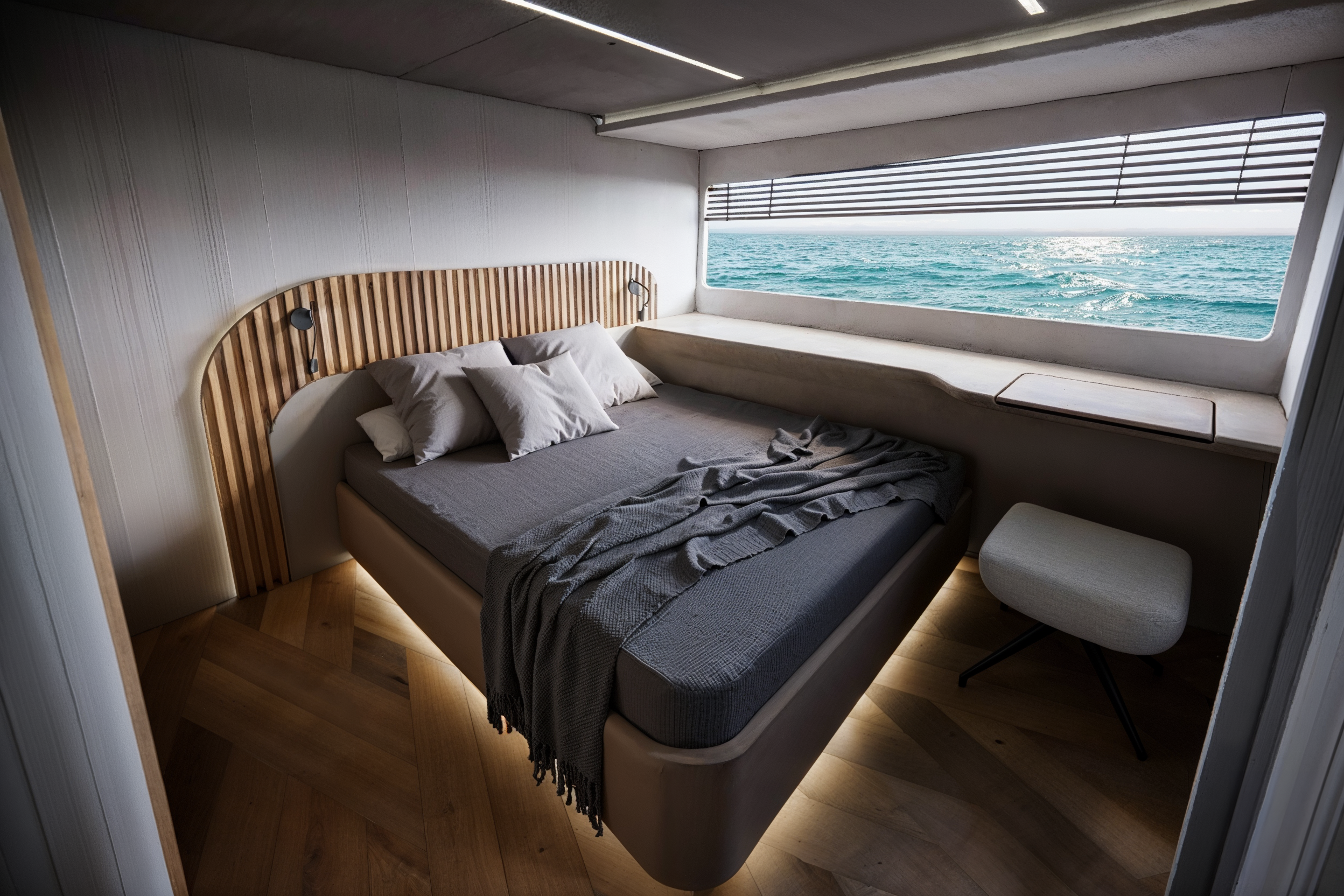
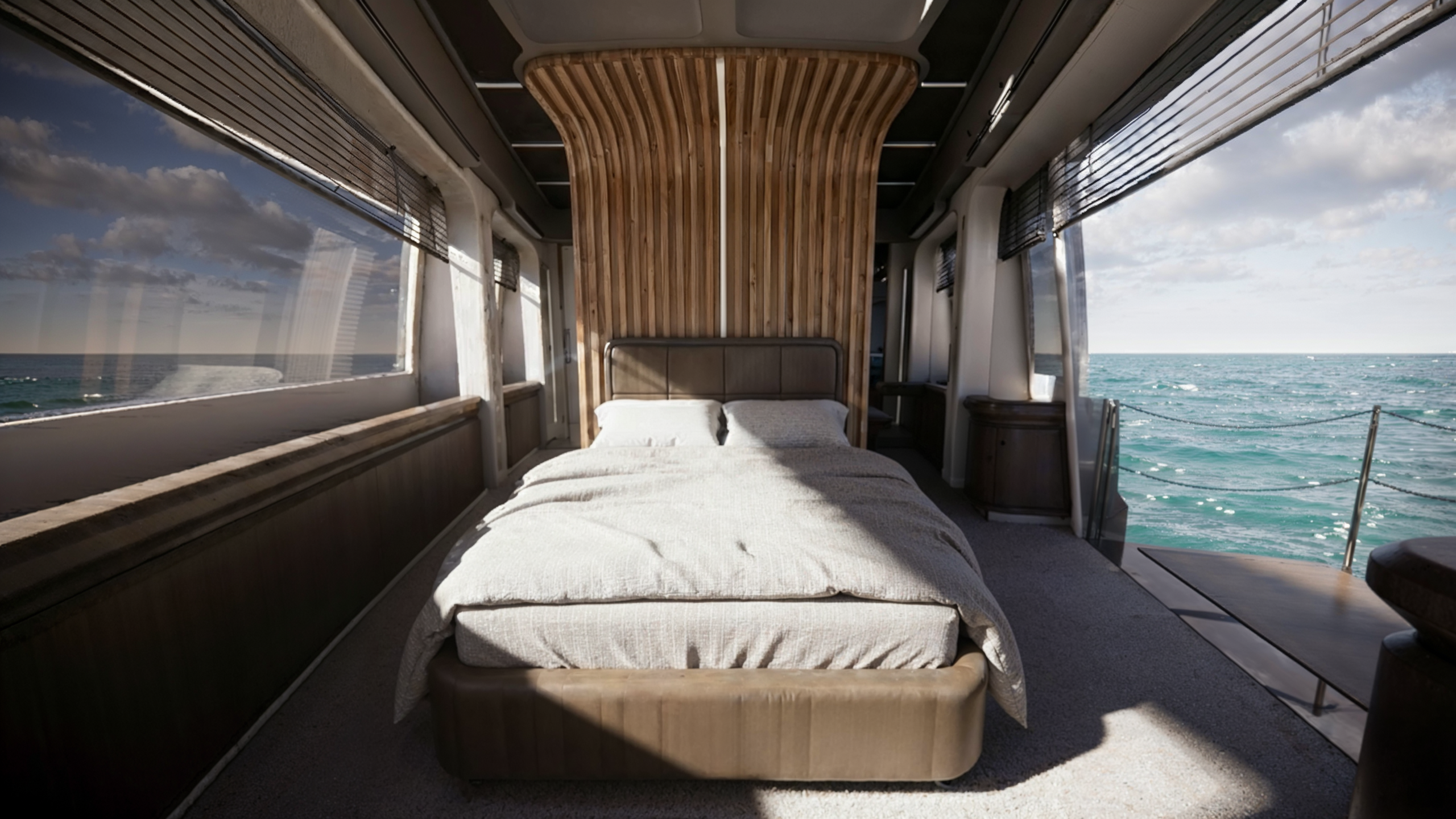
The owner’s suite, located forward on the main deck, is one of the yacht’s most emblematic spaces. Bathed in natural light from sunrise to sunset, it features a centrally positioned king-size bed facing the ocean, framed by expansive wraparound windows. A private office nook allows work while remaining connected to the view, and a dressing area leads to a refined bathroom with soft ambient lighting.
At the very front, a forward vestibule opens discreetly onto the foredeck, providing integrated seating that conceals mooring and anchoring equipment.
Guest accommodation maintains the same colour palette. VIP cabins feature generous space and thoughtful layouts, while a flexible twin cabin can adapt for families or crew members. The cabin can host a couple, 2 children, or convert into a dedicated crew area with independent rear access. A trundle bed discreetly adds a 3rd sleeping option, providing flexibility for personalising each cruise.
A sense of comfort and well-being permeates the yacht. Thermal and acoustic insulation has been carefully engineered, and a quiet ventilation system ensures optimal air circulation. Light, refined materials, including chevron parquet, veined marble, and textured upholstery, create a warm, inviting atmosphere that remains minimalist and elegant. Every detail, from furniture placement to circulation and lighting, has been considered to provide an environment that is both calming and luxurious.
Propulsion and technology
Beneath its elegant exterior, the ORCA 70 features powerful and efficient engineering. Twin Volvo Penta IPS engines (D13 IPS 1050 – 800 hp or D13 IPS 1350 – 1000 hp) provide a top speed of 32 knots, while consumption at 10 knots remains remarkably low at 50 litres per hour, granting an autonomy of up to 1,200 nautical miles.
Hull optimization and a Seakeeper 18 gyrostabilizer reduce roll by up to 95%, ensuring unmatched stability and comfort at sea. A new generation of intuitive smart-control systems allows centralized management of lighting, climate, audio, shading, and hydraulic features from touchscreen interfaces or mobile devices.
Starlink connectivity provides high-speed internet for remote work, streaming, or yacht monitoring, while a 30 kW generator, 180 L/h watermaker, and advanced Raymarine navigation systems guarantee comfort and peace of mind.
Sustainability remains a core value of Hugøa Yachts: wastewater treatment, FSC-certified wood, high-efficiency lithium batteries, and an optimized hull work together to minimise environmental impact and fuel consumption.