Canada is bordered by the Atlantic, Arctic and Pacific Oceans and is the second-largest country in the world by land area. Its geography makes it a particularly attractive environment for recreational boating, with an extraordinary combination of coastlines, lakes, rivers and navigable waterways.
Recreational boating is deeply rooted in Canadian culture and represents an important economic activity. Canada is reported to have one of the highest ratios of boats per capita in the world, with more than 200 vessels for every 1,000 inhabitants.
The reasons are easy to understand. Canada has an extensive network of rivers and lakes, as well as access to three oceans. Boaters can sail along the Atlantic and Pacific coasts, explore remote archipelagos, enjoy whale-watching excursions or navigate the country’s enormous freshwater areas.
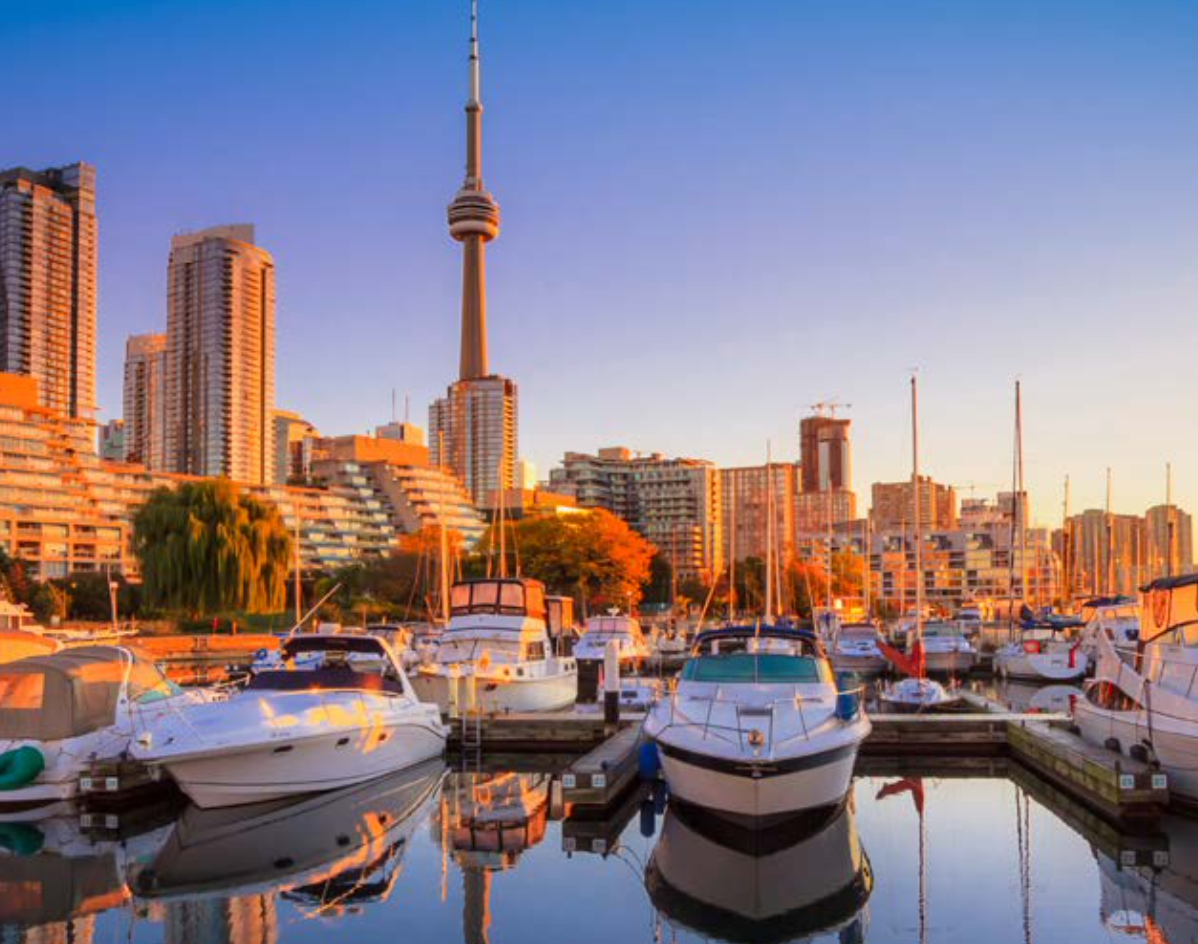
The Great Lakes, particularly Ontario, are among the most important boating destinations. Marinas, harbours, rivers and canals provide access to an extensive network of inland waterways, while the St. Lawrence River represents a strategic connection between the Great Lakes and the Atlantic Ocean.
This combination of geography and boating infrastructure has helped create a mature and diversified Canadian recreational boating market, with opportunities ranging from boatbuilding and marine equipment to tourism, services and marina infrastructure.
A long-standing boating tradition
Boating has always played an important role in Canadian life. The country’s boatbuilding tradition dates back centuries, with Québec becoming an important centre for canoe production and mass manufacturing towards the end of the 18th century.
During the 19th century, boating gradually became accessible to a wider section of the population. Sailing clubs were established in different regions, while technological developments progressively transformed recreational boating.
The introduction and diffusion of engines and outboard motors represented a major turning point. Later, the adoption of fibreglass and aluminium contributed to the development of lighter, more versatile and easier-to-produce boats.
The growth of the fleet reflects this long-term evolution. In 1950, approximately 72,558 boats were registered in Canada. Today, the country has more than 8.6 million registered recreational vessels.
During the 1990s, smaller boats equipped with outboard engines became particularly widespread, further contributing to the accessibility and popularity of recreational boating.
From canoes to modern yachts
Today, the Canadian boating sector encompasses a broad range of activities and products. Canoeing, rowing, sailing and recreational motorboating remain popular, while Canadian manufacturers continue to supply both domestic and international markets.
The country’s boatbuilding industry also has a strong export orientation. Approximately one out of every two sailboats built in Canada is exported, demonstrating the international competitiveness of Canadian manufacturers.
At the same time, the motorboat segment has continued to evolve. Concerns over fuel consumption have encouraged manufacturers to improve efficiency, while consumers increasingly expect high levels of comfort, design quality and attention to detail.
This combination of technological development, design and market demand creates opportunities for companies supplying propulsion systems, marine electronics, materials, components, interiors and other specialised equipment.
A significant economic impact
The Canadian marine industry makes a substantial contribution to the national economy.
According to industry figures, recreational boating generates more than CAD 10 billion in total economic impact. Core recreational boating activities account for approximately CAD 3.5 billion, while the sector includes around 4,400 companies and supports more than 80,000 jobs.
The impact extends well beyond boat sales. Manufacturing, distribution, marina management, maintenance, repair, tourism, charter activities and marine services all contribute to the wider boating economy.
The size of the sector therefore makes recreational boating an important component of Canada’s broader marine economy, while also creating opportunities for international companies interested in entering or expanding within the Canadian market.
The abolition of the luxury tax
One of the most significant recent developments for the Canadian boating sector has been the abolition of the federal luxury tax on boats.
Introduced in September 2022, the tax had become a major concern for the recreational boating industry. Industry associations and companies argued that the measure could negatively affect boat sales, manufacturing activity and employment.
The sector’s advocacy efforts eventually contributed to a major political victory. The federal luxury tax on boats was abolished as part of the 2025 Budget.
The National Marine Manufacturers Association of Canada (NMMA Canada), the Canadian Marine & Recreational Association (CMRA) and industry stakeholders played an important role in the campaign.
Grassroots advocacy was also central to the process. The sector’s participation in political initiatives such as the “Day on the Hill” in Ottawa helped communicate the economic importance of recreational boating directly to policymakers.
The abolition of the tax represents an important change for the Canadian boating market, potentially improving the environment for manufacturers, dealers and consumers.
However, industry organisations continue to work with policymakers on a broader range of issues, including access to waterways, invasive species, boating safety, infrastructure, innovation and emissions.
Trade shows as a gateway to the Canadian market
Trade shows remain an important meeting point for Canada’s recreational boating industry and provide international companies with an opportunity to understand the market and establish commercial relationships.
The Toronto International Boat Show is one of the country’s major industry events. The 2026 edition attracted 47,286 visitors, while the 2027 edition is scheduled for January 16–24.
The event also provides an overview of the economic importance of boating in Ontario. According to conference figures, the province’s boating industry generates more than CAD 4.5 billion in annual economic activity.
On the west coast, the Vancouver International Boat Show represents another key event. The 2027 edition is scheduled for January 27–31 and is expected to feature more than 750 boats, over 25,000 visitors and more than 250 exhibitors.
The Mid-Canada Boat Show is another important appointment, particularly for the central Canadian market. The 2026 edition was held in Winnipeg from January 29 to February 1, while dates for the 2027 edition had not yet been announced.
Together, these events offer manufacturers, distributors and marine technology companies an effective entry point into the Canadian recreational boating ecosystem.
Canada: a market to watch
The figures provide a clear picture of the opportunities offered by Canada.
The country’s extensive coastline measures approximately 233,802 km, while its boating infrastructure includes around 1,472 marinas and small harbours and almost 59,838 berths.
The scale of the recreational fleet is particularly significant. With approximately 8.6 million registered recreational vessels, Canada has a vast installed base of boats requiring equipment, maintenance, refit and replacement products.
The relationship between the fleet and available infrastructure also highlights potential opportunities. There are approximately 144 recreational craft per berth, while only around 10% of recreational craft have access to a berth.
For companies operating in marine infrastructure, marina services and boat storage, this represents an important area for future development.
A diverse and evolving boating economy
Canada’s recreational boating sector combines a long-standing boating culture with a highly diversified marine economy.
Its geography provides exceptional opportunities for sailing, cruising, fishing, canoeing, rowing and water-based tourism. Its established boatbuilding industry supplies both domestic and international customers, while a large installed fleet creates continuous demand for equipment, maintenance and services.
The recent abolition of the federal luxury tax has further strengthened the industry’s position, removing an important concern for manufacturers and consumers.
At the same time, the sector faces challenges that will shape its future, including sustainability, emissions reduction, invasive species, boating safety and the development of modern infrastructure.
For international companies, Canada therefore represents more than simply a large boating market. It is a mature ecosystem with strong manufacturing capabilities, extensive waterways, sophisticated consumers and significant opportunities across the entire marine value chain.
From the Great Lakes to the Atlantic and Pacific coasts, the Canadian recreational boating market deserves increasing attention from companies looking to develop their presence in North America.