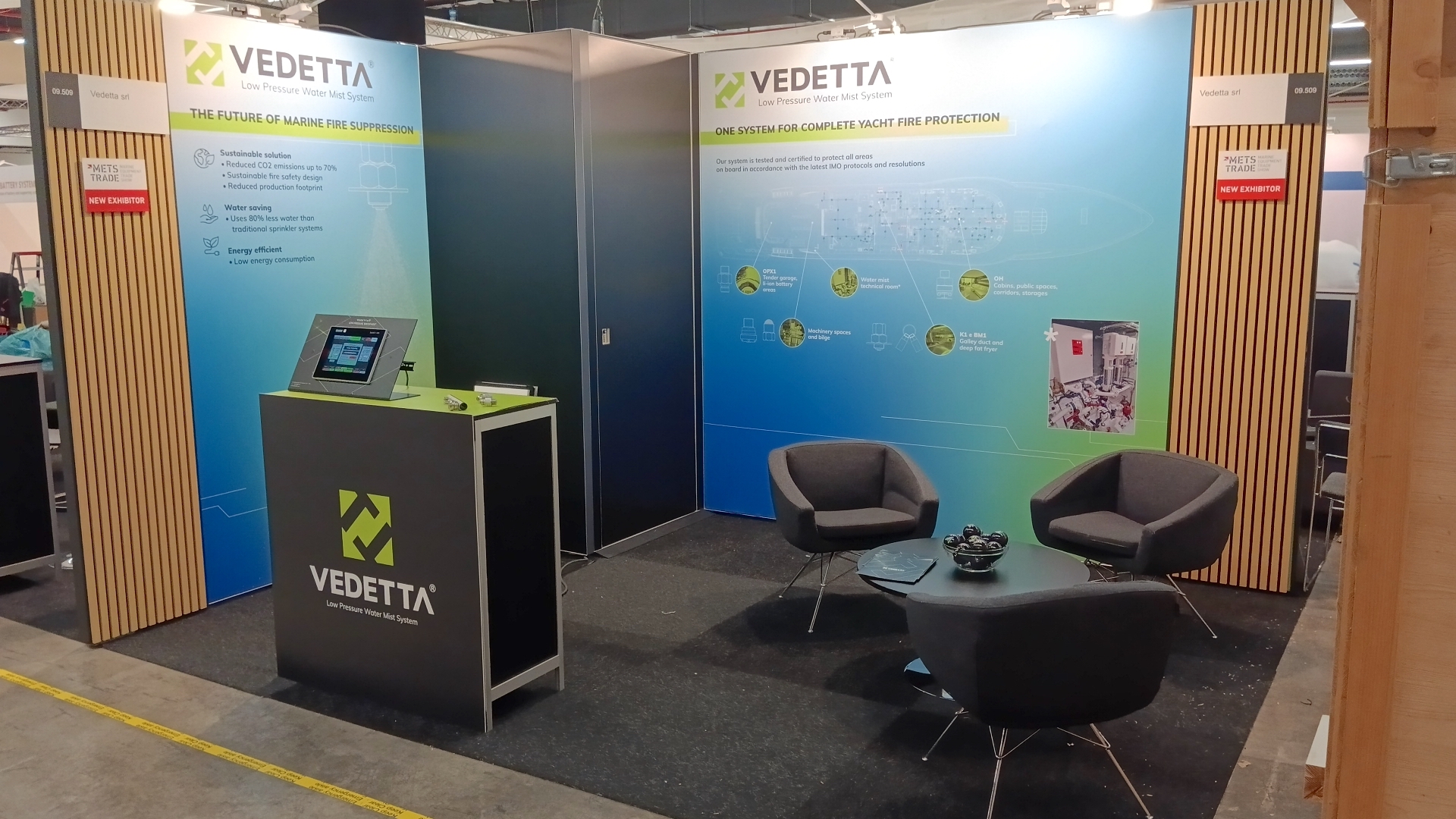
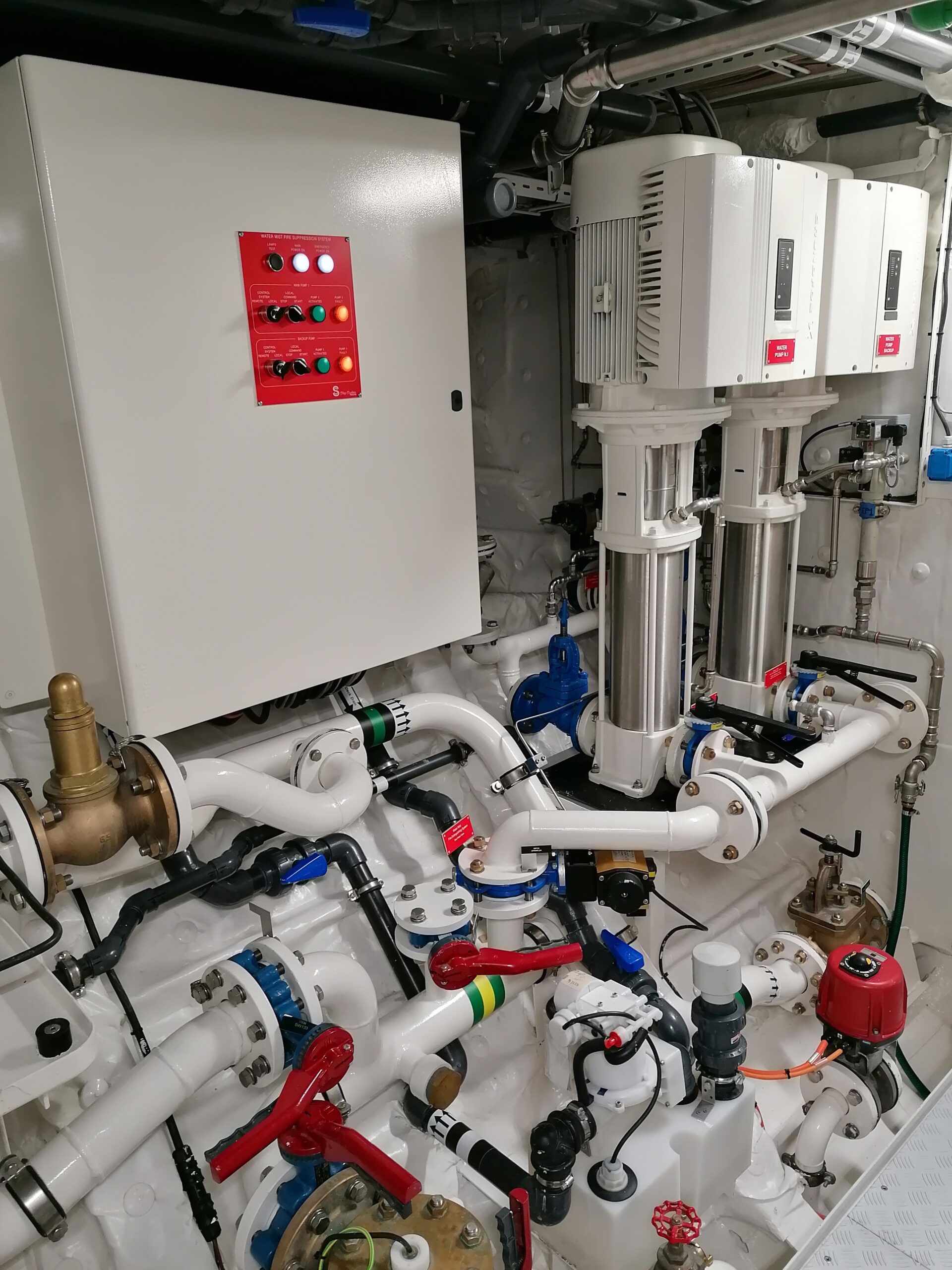
Founded in Genoa in 2023 as a spin-off of Ship System – a company active in the maritime sector for more than twenty years – Vedetta Srl has rapidly established a clearly defined niche in marine fire protection systems for the marine industry, ranging from yachts and superyachts to passenger and cargo vessels. The focus extends beyond individual products to the management of the entire lifecycle: engineering, material supply, plan approval, commissioning, original spare parts, technical assistance, and international service.
“The company’s core business is water mist fire suppression systems, an advanced and environmentally sustainable technology capable of delivering high extinguishing performance while minimising environmental impact and installation costs,” explains Stefano Chiti, CEO of Vedetta. “Our portfolio is complemented by Fluoro-K gas systems, aerosol solutions, and integrated lithium battery fire protection systems, addressing the new challenges associated with energy innovation and the transition toward more sustainable propulsion.”
Low pressure, high efficiency
Low-pressure water mist remains the company’s most distinctive technical signature. The concept is well established, yet worth clarifying: this is not simply ‘mist’ installed on board, but a water mist fire suppression system engineered to operate at low pressures using standard components, reduced weight, and lower energy consumption compared with traditional high-pressure systems.
Vedetta indicates a power requirement of less than 20 kW for a 60-m yacht. Its systems are designed to protect accommodation and technical spaces, engine rooms, galley areas, as well as RO-RO and special category spaces, with approvals aligned with SOLAS and IMO requirements.
Operationally, the advantages are twofold: rapid heat removal with limited collateral damage on one side, and significant reductions in water consumption, installed power, pipe weight, and installation and maintenance costs on the other. At sea – where every kilowatt, every cubic meter, and every meter of piping carries operational consequences – these factors are far from secondary.
The environmentally friendly clean agent
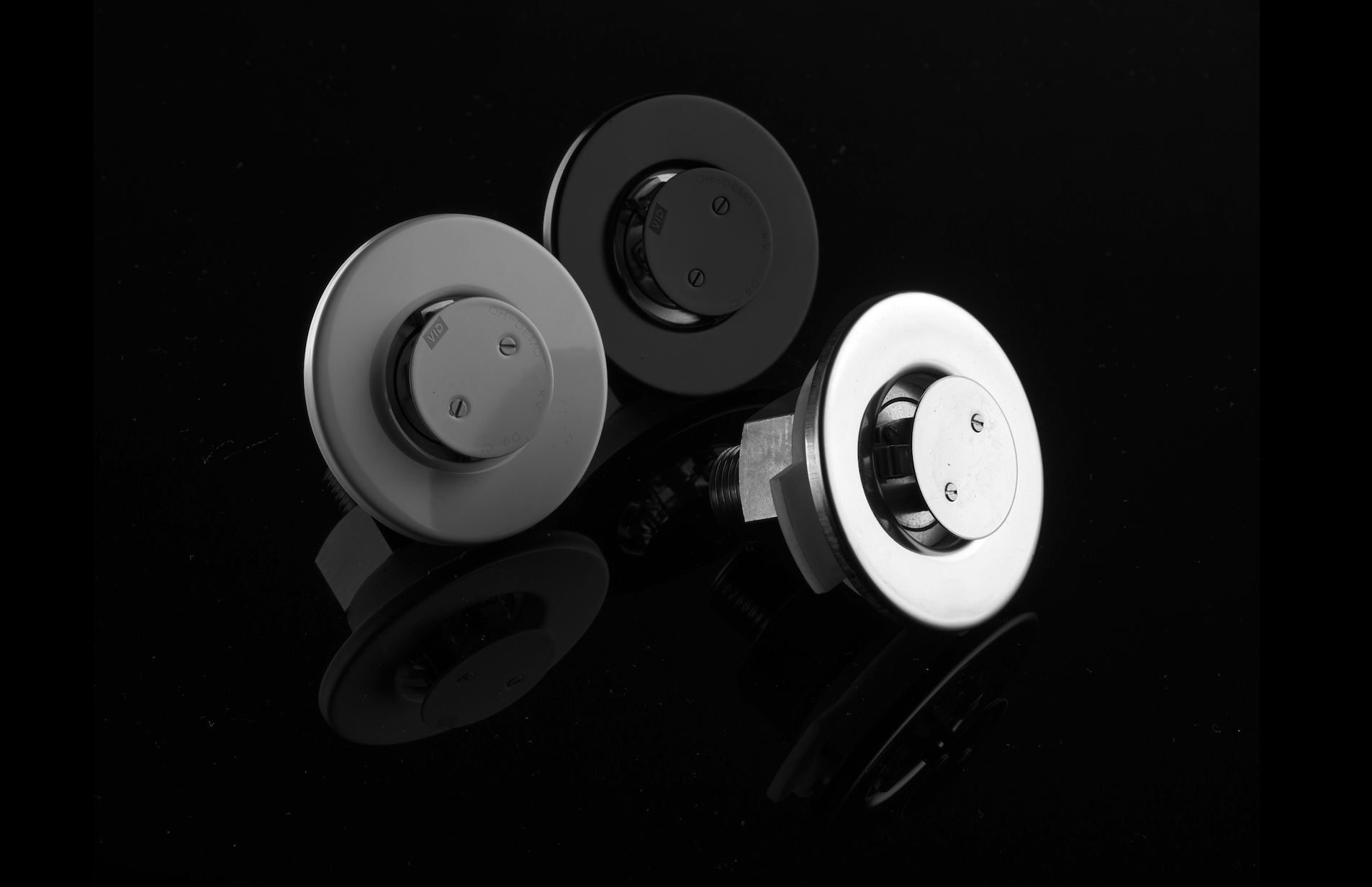
The offering is further complemented by Fluoro-K, a clean agent fire suppression solution specifically developed for the protection of engine rooms on yachts and vessels up to 500 GT. Rather than a generic gas system, it is based on a fluoroketone agent designed to extinguish fires rapidly without leaving residues or contaminating machinery and electronic equipment, while offering a significantly improved environmental profile compared with many legacy technologies.
Manufacturer data indicate zero ozone depletion potential, a global warming potential (GWP) below 1, and a very short atmospheric lifetime. Vedetta positions this technology as a targeted solution where rapid discharge, minimal post-incident cleaning, and reduced vessel downtime are essential requirements. In practice, the system is designed to act within seconds and then dissipate without leaving behind extensive recovery or cleaning operations.
A flexible and easy-to-install solution
The third pillar of the portfolio is aerosol fire suppression, a technology that Vedetta distributes in Italy for the maritime sector using Hafex and DSPA systems. This solution is particularly suited to confined and machinery spaces, where installation simplicity, compactness, and rapid activation are key considerations.
Compact engine rooms, electrical panels, and battery compartments represent typical applications.
Aerosol systems suppress fire by interrupting the chemical chain reaction of combustion; they require minimal installation space, limited maintenance, and leave only negligible residues. It is not a universal solution – nor should it be – but in specific applications it often represents the most rational engineering choice, especially where immediate effectiveness is required without adding complex distribution piping. For this reason, within Vedetta’s portfolio, aerosol fire suppression is not an accessory, but a complementary solution with a clearly defined field of application.
Lithium batteries: the new frontier of protection
Battery protection deserves separate consideration, as the challenge extends beyond fire suppression to the early recognition of events that can escalate extremely rapidly. The energy transition is driving the installation of increasingly large battery packs on board vessels, introducing new operational risks – and new terminology – including thermal runaway, off-gas release, and re-ignition.
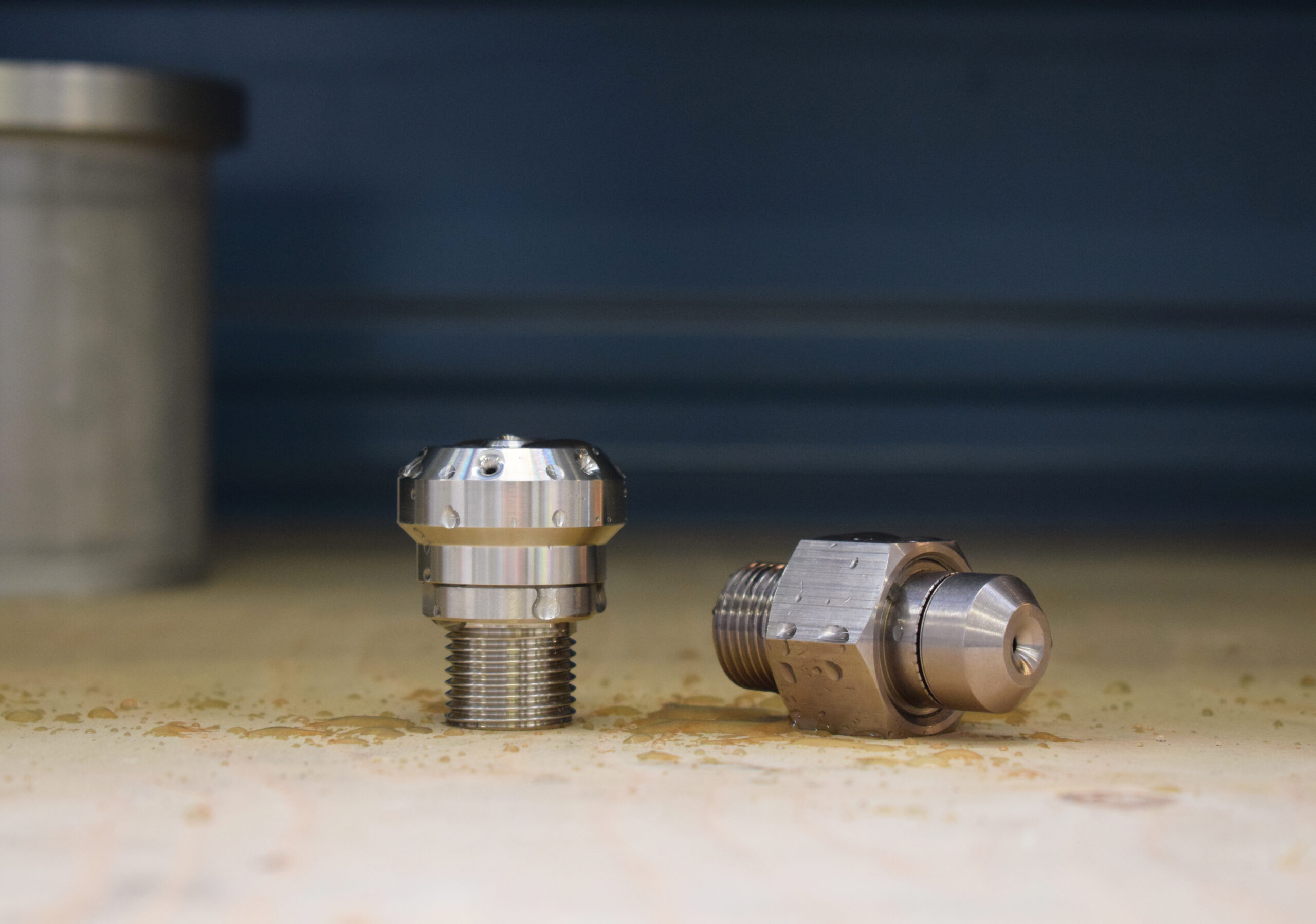
In this field, Vedetta offers dedicated solutions based on water mist or drencher systems, designed for targeted intervention in battery compartments to rapidly cool cells, limit temperature escalation, and reduce the risk of re-ignition through advanced lithium battery fire protection strategies.
This approach aligns with the most authoritative industry guidelines. EMSA highlights the dual hazard associated with lithium-ion batteries: thermal runaway — an uncontrolled chain reaction leading to exponential temperature increase and potential fire — and the generation of flammable gases. At the same time, the latest classification standards increasingly emphasise monitoring, environmental control, and gas detection in marine battery installations.

Protection therefore begins long before visible flames appear: with temperature monitoring, interpretation of early warning signals, detection of off-gases, and, when required, rapid and precisely targeted cooling. In battery applications, true technical effectiveness lies in intervening just before a critical event develops.
Within this balance between complementary technologies, Vedetta defines its most credible identity. Battery protection is conceived as an integrated prevention and containment system combining water mist technology with early gas detection, temperature monitoring via ATEX thermocouples, thermal imaging cameras, and controlled ventilation management within modern marine fire protection systems.
A defined methodology
What ultimately holds this approach together is not a catalogue of products, but a methodology: customised engineering design, technical consultancy, continuous dialogue with shipyards, shipowners, and classification societies, careful evaluation of existing systems when their preservation is technically appropriate, and structured after-sales support backed by global service capabilities. In a sector where safety is sometimes reduced to a formal requirement, this perspective restores it to its proper meaning: technology applied with engineering judgement, without unnecessary emphasis and without room for approximation.