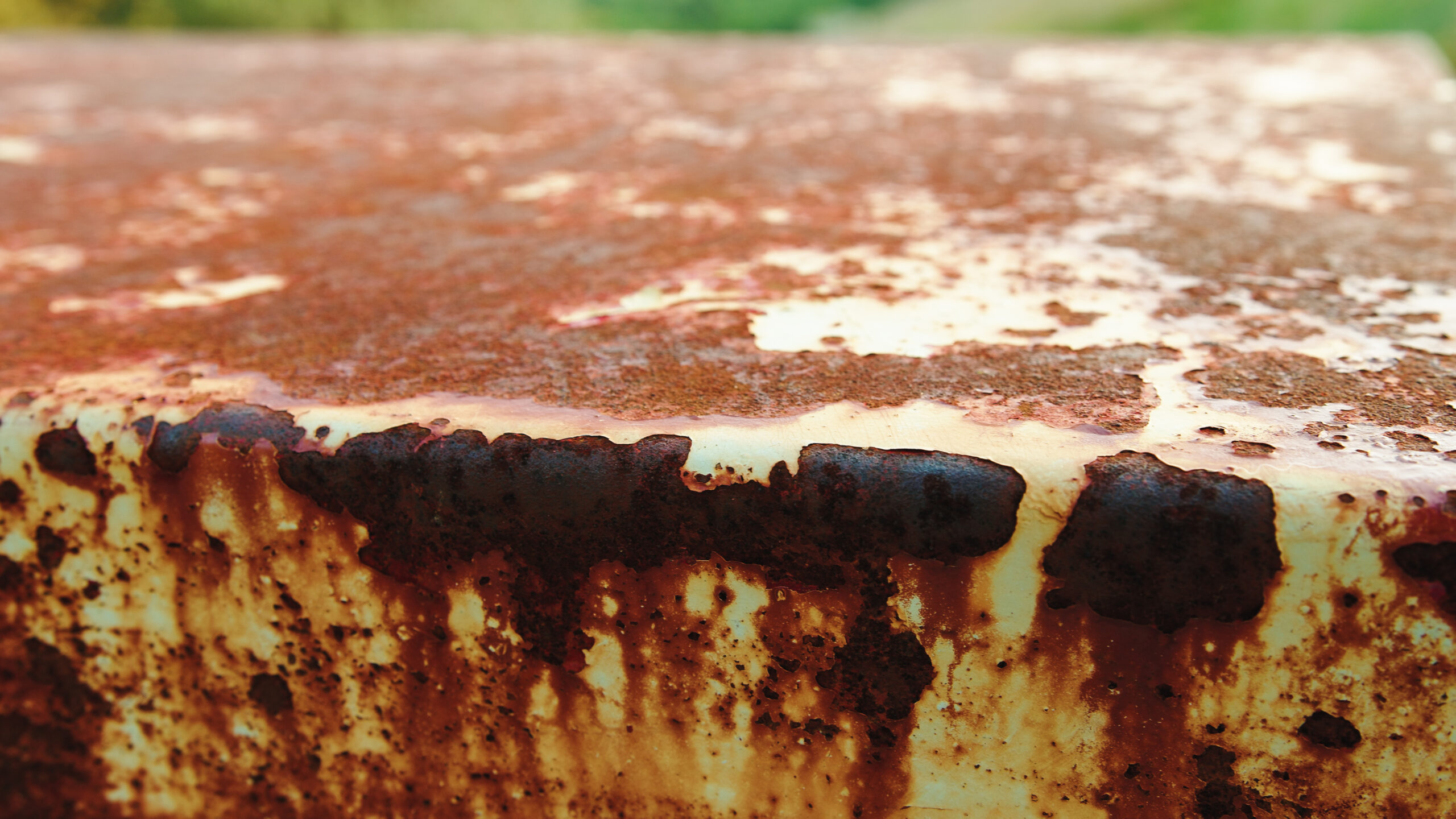
In the marine field, corrosion issues are often associated with the operational phase of a vessel: water quality, environmental conditions, insufficient maintenance or improper management of protection systems. On-site experience, however, often tells a different story. In the more complex situations – those where corrosion appears widespread, premature or otherwise abnormal – the cause can hardly be attributed to operational factors alone. More often, the origin lies in design decisions, system integration and the initial conditions under which the vessel enters service. Galvanic corrosion, in particular, is a phenomenon that is simple in principle but potentially critical in its consequences within galvanic corrosion in yachts applications.
Galvanic corrosion explained
When two dissimilar metals are electrically connected and immersed in an electrolyte, an electrochemical cell is created: the less noble metal behaves as the anode and gradually deteriorates. On a modern ship or yacht, where carbon steels, stainless steels, copper alloys, aluminium and numerous specialised components coexist, the conditions for this mechanism to develop can be found in many areas of the vessel. Not only where it is most intuitive – such as between the hull and appendages like rudders, propellers and shafts – but also in less obvious locations, often hidden and therefore difficult to detect, for instance within seawater systems used for engine cooling, ballast operations and other auxiliary services.
When this is combined with the fact that corrosion protection is often entrusted to complex electrical systems – converters, DC circuits and active protection equipment – the electrochemical balance of the vessel becomes highly sensitive to even small disturbances within cathodic protection marine systems.
How to avoid the problem
Corrosion prevention is not something to be addressed at the end of the process; rather, it is a delicate balance that must be established from the earliest design stages. Material selection, for example, cannot be based solely on mechanical properties or individual corrosion resistance. Galvanic compatibility between different elements is essential, and particular attention must be paid to the ratio between exposed surfaces. A small component made of a less noble material and electrically connected to a much larger, more noble structure may unintentionally become a sacrificial anode, with a rate of consumption far greater than expected, which may also lead to catastrophic failures within marine material compatibility design.
The same principle applies to seawater circuits, where the simultaneous presence of bronze, stainless steel and carbon steel requires careful design of electrical continuity and, where necessary, the introduction of galvanic isolation. In many cases, accelerated corrosion is not the result of poor material quality, but of unfavourable material combinations or unintended electrical paths.
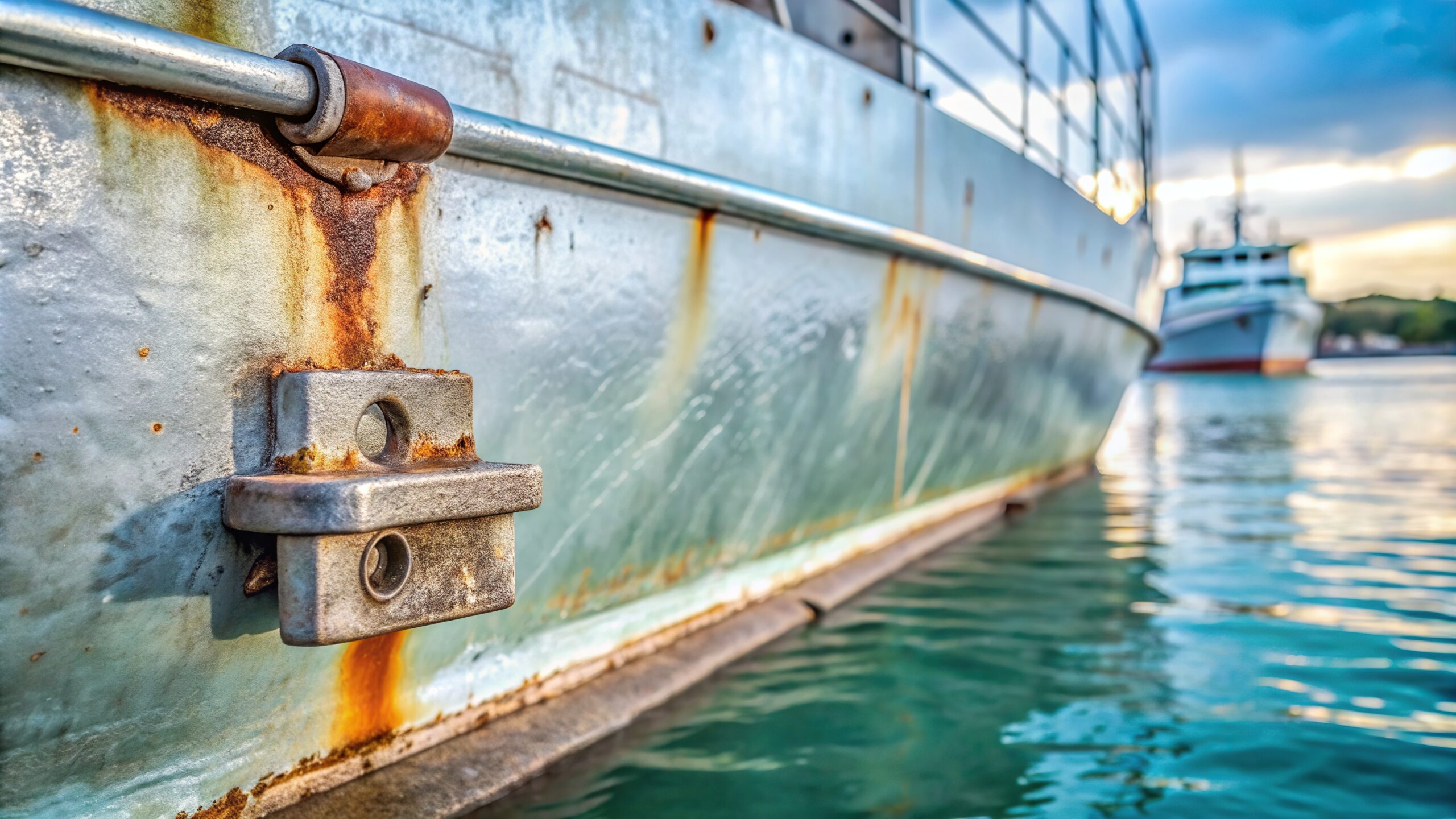
A proper coating system
Passive protection represents the first line of defence. A properly specified and correctly applied coating system is not only a barrier against the marine environment, but also a key factor in reducing the current demand of cathodic protection marine systems. When coatings are damaged or discontinuous, active protection must compensate over larger areas, increasing the risk of local underprotection or, conversely, overprotection and coating disbondment.
Anodes and electrode placement
Other protection measures, such as sacrificial anodes or impressed current systems, also require careful integration at the design stage. The positioning of anodes cannot be based on simple geometric criteria; they must be distributed to ensure uniform current coverage, taking into account shielded areas, appendages, propellers and thrusters within sacrificial anode systems marine protection.
Even more critical is the placement of reference electrodes in ICCP systems. These must measure a potential that is truly representative of the hull condition and should not be affected by turbulence, marine growth, deposits or local electrical interference.
The balance between systems
One of the most critical aspects observed with increasing frequency in recent years is the interaction between the various electrochemical systems installed on board. Seawater anti-fouling systems, hull protection, shaft and rudder bonding, earthing arrangements and electrical distribution networks can all influence each other. When the balance between these systems is not properly managed, one may reduce or alter the effectiveness of another, leading to misleading readings and operational behaviour that may appear inconsistent or difficult to interpret within marine corrosion management systems.
Stray currents
The situation is further complicated by the presence of stray currents. Even low levels of direct current leakage, if continuous over time, can produce rapid and highly localised corrosion. The sources are often relatively simple: unintended connections between the DC negative and the hull, degraded insulation, contaminated equipment, or undocumented modifications carried out during construction or refit. The difficulty lies in the fact that the corrosion damage often appears far from the origin of the electrical fault.
Experience from real cases shows that widespread corrosion is rarely the result of a single failure. More commonly, it develops from a combination of factors: protection systems not optimally configured, wrong materials installed, wiring errors or later alterations, equipment operating in inappropriate modes, interference between systems, etc. In such circumstances, identifying a single technical cause can be misleading, as the phenomenon is inherently systemic.
The human factor
Another element that should not be underestimated is the human factor. Modern cathodic protection systems are highly automated, but this does not mean they can operate without oversight. Crew members should have a basic understanding of the system’s function, the meaning of its operating parameters and the significance of alarms or abnormal trends. Early signs such as unusual anode consumption, unstable readings or localised corrosion inconsistent with service conditions can often be detected long before more serious damage occurs within marine corrosion monitoring systems.
Corrosion prevention as a system function
The lesson learned from real experience is that galvanic corrosion is rarely just a materials or environmental issue. It is, above all, an integration issue which involves designers, shipyards, equipment suppliers and vessel operators. Nowadays, corrosion prevention should therefore be regarded as a system function within advanced marine corrosion prevention engineering. It requires a global perspective during design, careful installation during construction and proper management throughout the vessel’s service life.