Promoted by ASSONAT President Avv. Luciano Serra, the Strategic Plan for Italian Tourist Ports stems from the Blue Forum in Gaeta, the “Port in Italy” consultation (April 2023) and the States General of Tourist Ports (February 2024, with Ministers Urso and Musumeci).
Presented on 18 June 2025, in the presence of Minister Musumeci, Chief Inspector Admiral Carlone and the President of Assonautica Giovanni Acampora, it was developed in partnership with SACE, the insurance and financial group owned by the MEF, with which an operational agreement was finalised.
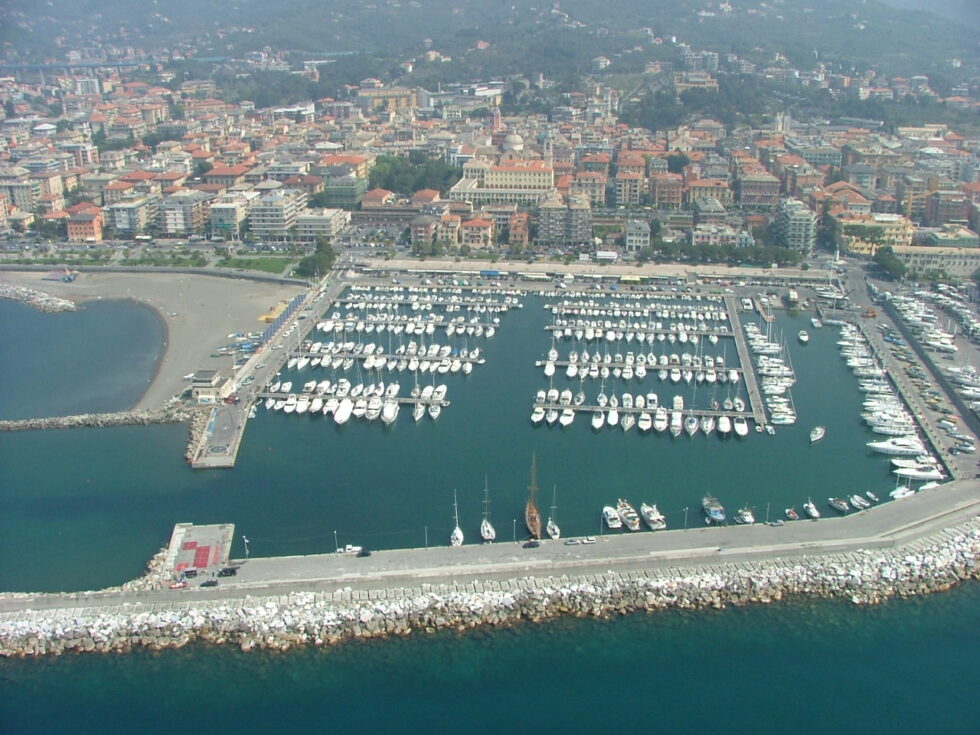
The sector includes approximately 8,000 km of coastline, 161,778 berths and 285 marinas and tourist harbours. The 12th Report on the Maritime Economy estimates added value at EUR 178.3 billion (10.2% of GDP), with over one million employees and almost 228,000 companies.
We discussed all this with Fabrizio De Nicola, Director of the ASSONAT – Confcommercio Research Centre, analysing the evolution of smart marina technology and its impact on the sector.
The interview
Priority technologies: where is competitiveness in tourist ports being decided today?
The Plan identifies 3 main pillars – more infrastructure and berths, greater competitiveness, and enhanced sustainability – with technology running across all of them. First comes the digitalisation of services (integrated booking systems, berth management, CRM platforms); then smart marina technology, including IoT sensors, automated mooring systems and environmental monitoring; followed by the energy front (photovoltaic installations, EV charging stations, renewable energy communities) and connectivity, through the “Wi-Fi by Italia.it” project funded under the Development and Cohesion Plan.
Two enabling conditions are essential: regulatory certainty regarding concessions and access to credit, ensured through the amendment of Article 10 of Presidential Decree 509/1997 and the partnership with SACE under the GROWTH model. The Masterplan will define uniform technological standards supporting port digitalization systems.
Smart marinas: which infrastructures truly matter – and what is holding them back?
The concept of the smart marina is structured on 3 levels:
• OPERATIONAL (IoT, automated mooring systems, marina management software);
• RELATIONAL (online booking platforms, mobile apps, CRM);
• INFRASTRUCTURAL (Wi-Fi, CCTV, environmental monitoring systems).
The SWOT analysis highlights key obstacles: ageing facilities – most built between the 1960s and 2000 – regulatory fragmentation and inadequate Wi-Fi coverage. The Plan responds with a Masterplan, a digital monitoring portal and targeted training programmes for missing professional profiles, including digitalisation operators, maintenance technicians and energy managers, reinforcing the marina development Italy framework.
Which European benchmarks and measurable results set the standard for digital transformation?
Where implemented, digitalisation delivers measurable outcomes: increased online bookings and reduced administrative processing times. Benchmark analysis highlights marinas sharing common features such as online booking, dedicated apps, robust Wi-Fi and smart security systems, confirming the importance of port digitalization systems, including Marina Port Vell (Barcelona), Port Hercule (Monaco), Port Camille Rayon (Golfe-Juan) and Porto Montenegro (Tivat).
The institutional framework includes the Tourism Digital Hub (under the PNRR), which the Plan proposes to complement with a nationwide marina booking platform covering all Italian ports, strengthening the Italian tourist ports strategy.
Can true interoperability be achieved in port systems?
Although the term ‘interoperability’ does not explicitly appear in the Plan, the issue clearly emerges from the analysis: lack of uniform services and non-communicating systems across heterogeneous facilities. All proposed tools – the Masterplan with uniform standards, the digital portal and the national platform – presuppose that systems can effectively interact. The European Maritime Single Window environment (EMSWe) requires the inclusion of professional yachting, while the Tourism Digital Hub is conceived as an ‘open ecosystem’. Technical specifications will be defined during the implementation phase, further advancing port digitalization systems.
What does the Plan suggest in terms of connectivity?
Inadequate Wi-Fi coverage is identified among the documented weaknesses. The immediate instrument is the “Wi-Fi by Italia.it” programme (CIPESS Resolution No. 58/2021), which expressly includes tourist ports among its points of interest. Broader infrastructural connectivity – broadband and 5G – lies beyond the current scope of the Plan but remains essential for the future of smart marina technology.
What about sustainability?
Sustainability is a structural pillar of the Plan, with green technologies deployed across 3 fronts, reinforcing sustainable marina solutions:
• ENERGY: photovoltaic systems authorised through simplified procedures (CILA) up to 1 MW, EV charging stations classified as minor building works, and renewable energy communities with GSE registration within 60 days.
• ENVIRONMENTAL MANAGEMENT: water quality monitoring, LED lighting, desalination plants and advanced waste management systems.
• ALTERNATIVE FUELS: they are incentivised through reductions in concession fees.
The objective is to transform marinas into sustainable energy hubs through coordinated procedural simplifications and incentives – concession extensions, tax credits and SACE financial support.
Security and cybersecurity: is the system prepared for emerging challenges?
Physical security rests on a solid framework: the Capitanerie di Porto – Coast Guard are responsible for maritime security (ISPS Code, EC Regulation 725/2004), and the Plan recognises their role as a cornerstone of the sector. Cybersecurity is not addressed as a standalone topic, but it is embedded within professional profiles – including expertise in digital systems and onboard domotics – and among berthing services. The Plan provides for a monitoring system with biennial review, ensuring alignment with evolving Italian tourist ports strategy priorities.
How can marinas become effective gateways to both coastal and inland destinations throughout the year?
Within the SWOT analysis, seasonality is both a threat and an opportunity: high concentration of flows yet growing potential for off-season development. The Masterplan envisages systematic data collection for each marina. Operationally, it promotes off-season events (October-March) coordinated with local destinations. The vision is clear: tourist ports must act as drivers of coastal tourism and gateways to inland destinations. Tools include integration with the Tourism Digital Hub, mobile apps, a national platform, multi-product packages and eco-friendly mobility solutions. Achieving this requires integrated governance among marina operators, public administrations and tourism stakeholders.
Which barriers are hindering investment in the marina sector?
The Plan outlines training pathways across three areas – operational, technical and managerial – and proposes 2 certifications: Marina Manager and Travel Lift Operator.
Training will follow a blended learning model, including internships at partner marinas. A study by Navigo identifies additional specialist roles still lacking in the sector, including IoT and cybersecurity experts, data analysts and software developers for maritime operations.
3 main barriers to investment are identified:
- the REGULATORY BARRIER is the most critical: facilities outside Law 84/1994 – the vast majority – lack a comprehensive legal framework, and uncertainty regarding concessions discourages investment. The proposed solution is the amendment of Article 10 of Presidential Decree 509/1997, linking concession extensions to investments in innovation, sustainability and digitalisation.
- FINANCIAL BARRIERS are equally significant: local taxes (IMU, TARI), dredging costs and limited access to credit. The Plan proposes IMU exemption, tax credits and the SACE GROWTH Guarantee, with approval times potentially as short as 24 hours.
- The ORGANISATIONAL BARRIER stems from fragmentation among State, Regions and Municipalities; the Masterplan, Regional Plans and training initiatives serve as counterbalances.
ASSONAT is actively working on a legislative proposal for the Italian leisure-port sector, officially presented in July 2025 as a response to the need to modernise the industry.
How should marina infrastructure evolve to meet the expectations of the new generation of boaters?
The true competitive lever lies in integration capacity, defined as open innovation. Italy is a global leader in yacht construction – accounting for over 50% of global orders above 24 m (source SYBAss) – and the biennial review mechanism will allow the integration of emerging technologies.
The segment above 24 m represents high-spending clientele; below 24 m, the market is numerically dominant. The Navigo study outlines the profile of the new boater: under 45, cosmopolitan, environmentally conscious and oriented towards digital experiences. Marina infrastructure must evolve across all fronts (digital, environmental and experiential) and the ‘Port in Italy’ brand will position Italian marinas as a contemporary yachting destination.
Energy shortages. Port Authorities governance. International investment networks. How do you deal with these problems?
The response to energy shortages unfolds across three horizons: in the short term, EV charging stations classified as minor building works; in the medium term, photovoltaic systems up to 1 MW under simplified procedures (CILA) and desalination plants; in the longer term, renewable energy communities, alternative fuels with reduced concession fees and public-private partnerships.
The vast majority of tourist ports remain outside the Port System Authorities (Law 84/1994), lacking a comprehensive regulatory framework. The Capitanerie maintain their role as a trait d’union between territorial authorities and operators, ensuring proximity oversight and legality. Proposed measures include extension of compensation schemes, fiscal alignment starting with IMU and the development of Regional Plans.
The increase in foreign funds and partners is identified among the SWOT risks. Networks such as D-Marine bring standards and investment capacity, but also potential concentration risks. The response relies on the Masterplan, the “Port in Italy” brand, partnership with SACE and biennial monitoring.