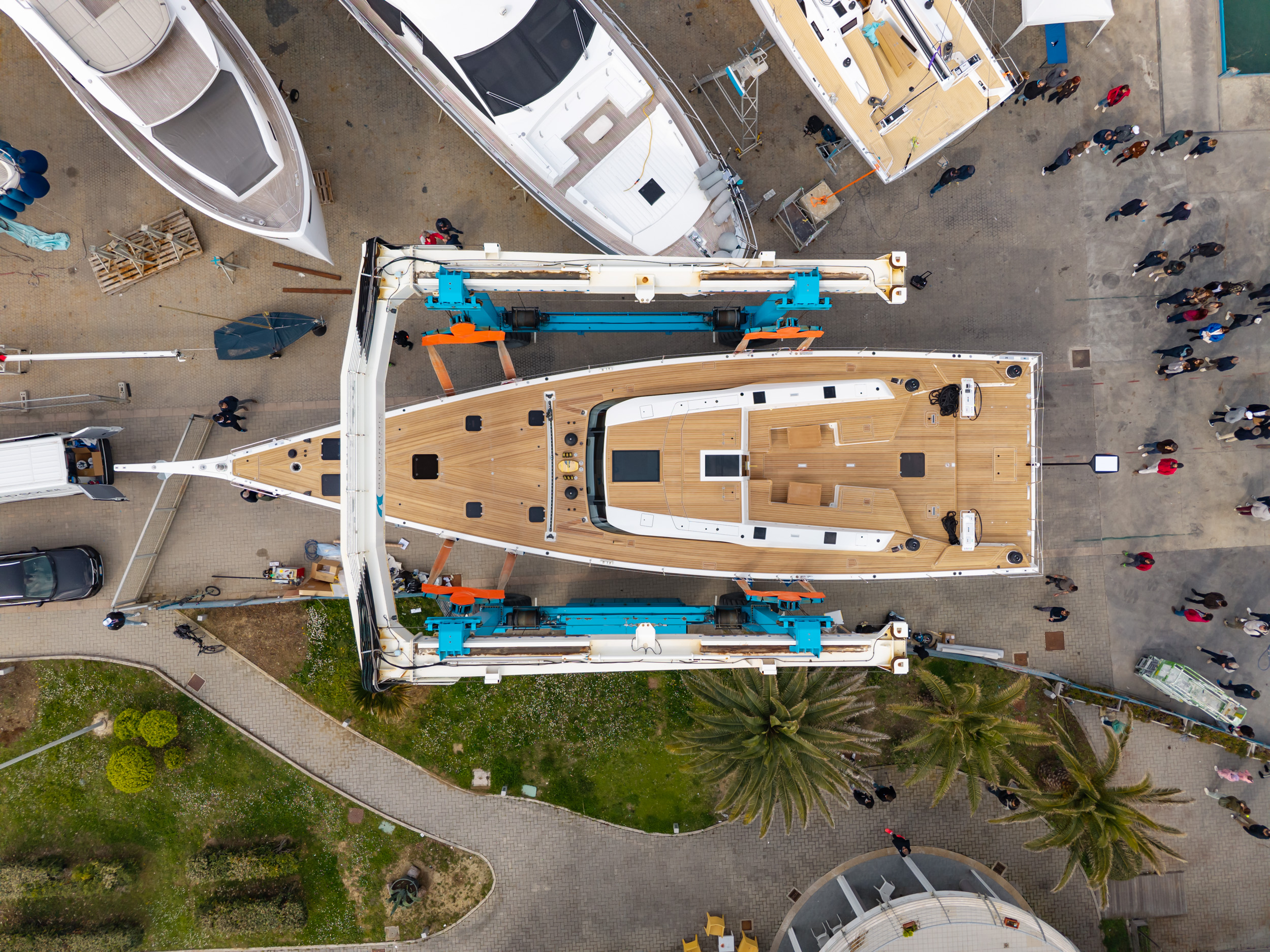
“The sailing world is our DNA and heritage: it is where our first projects were born and where the challenges we later brought into the motor segment originated. Its role remains central, both in the past and for the future”. In the words of Marcello Veronesi, CEO of Cantiere del Pardo, the positioning of sailing within the Group is clearly evident; and it finds confirmation in 2026 with the development of the Grand Soleil range, now at the center of a growth phase that combines product evolution and industrial strengthening. This reinforces a long-term Sailing Strategy.
A packed schedule in 2026
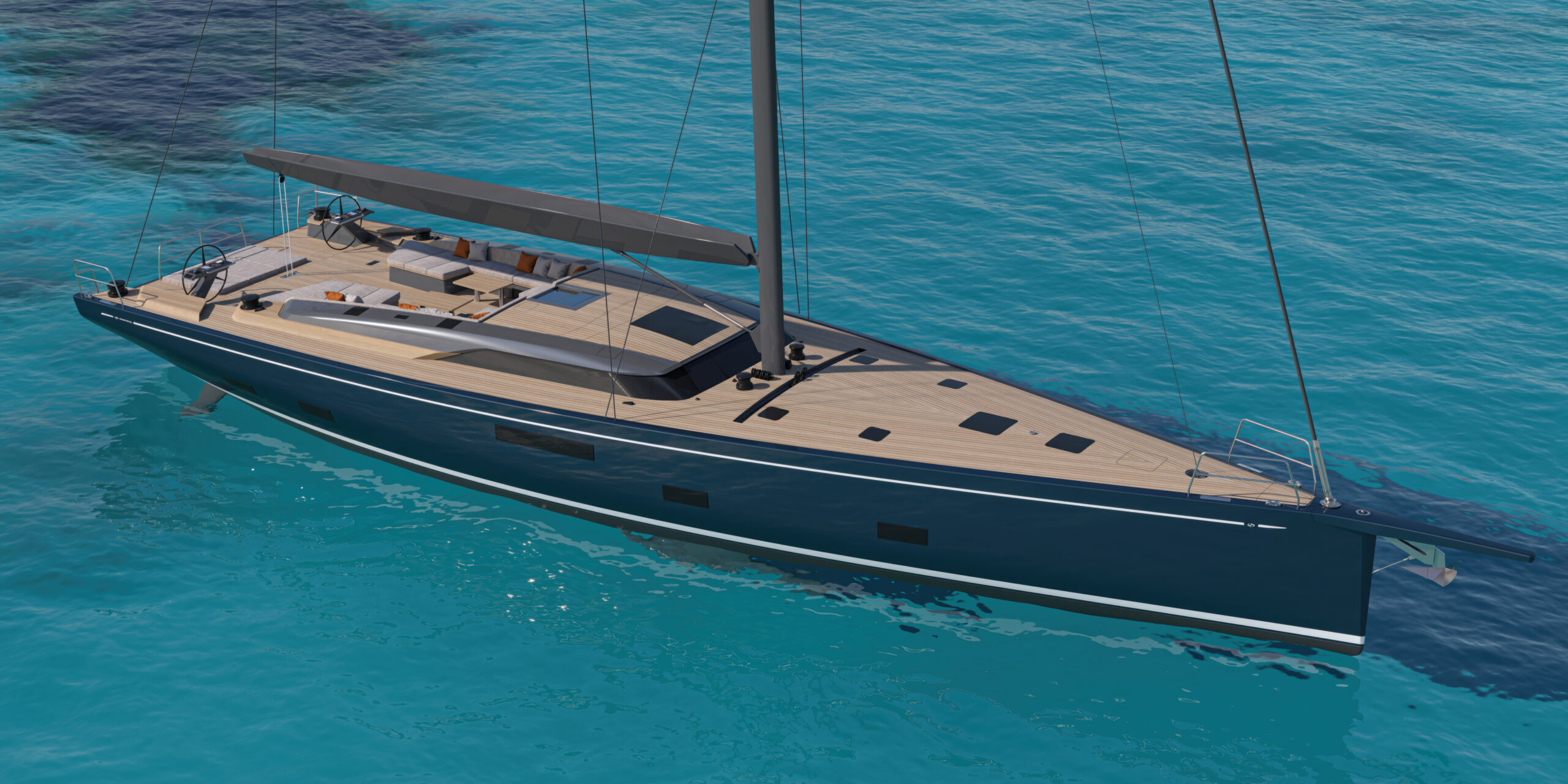
This year marks a significant milestone for the brand: from the launch in March of the first GS Plus 80 Long Cruise (GS Plus 80 LC) – the new flagship of the range – to its participation in May at the Grand Soleil Cup in Porto Cervo, and on to the debuts scheduled at the Cannes Yachting Festival and its first appearance at the Monaco Yacht Show. A packed schedule that also includes the launch of the new Grand Soleil 60 Long Cruise and the launch, by the end of the year, of a second 80-foot unit in the Performance version. And for the future, there is talk in the shipyard of a new model around 40 feet.
Sailing at the heart of the strategy
Behind this product acceleration lies a parallel path of industrial growth. The acquisition of the Fano facility – formerly Adria Sail and now wholly owned by the Oniverse Group – represents a key milestone: all Grand Soleil units over 60 feet, known as the Grand Soleil Plus line, are built here, concentrating a range with high technical and design complexity into a single production hub. This is accompanied by the renovation of the offices in Forlì and the expansion of the presence in Marina di Ravenna. This evolution takes on significant meaning when viewed in light of the expectations generated by Oniverse’s investment in the shipyard: while an initial phase suggested a likely shift toward the motorboat segment, the trajectory now appears different. Sailing remains central and is consolidating as a strategic area of development.
The plus line
Within this context the Grand Soleil Plus line takes shape, dedicated to models over 60 feet and now one of the key pillars of the brand’s evolution. “Plus” does not simply indicate a larger size, but a different approach to the product. Each yacht is developed through a shared process with the owner, supported by a dedicated team throughout all phases – from design to construction and after-sales. The goal is to offer a level of customization and quality control that brings the shipyard closer to a semi-custom approach, while maintaining a solid industrial structure. The numbers confirm this direction: in just a few years, the Plus range has reached 14 units sold, including 4 boats currently under construction (an 80, two 72s, and a 65). A growth that led to the strategic decision to fully internalize production, moving away from subcontractors and concentrating manufacturing at the Fano facility. The range now includes models such as the GS 65, GS 72, and GS 80, available in Long Cruise and Performance versions.
Grand Soleil Plus 80: The flagship as a synthesis
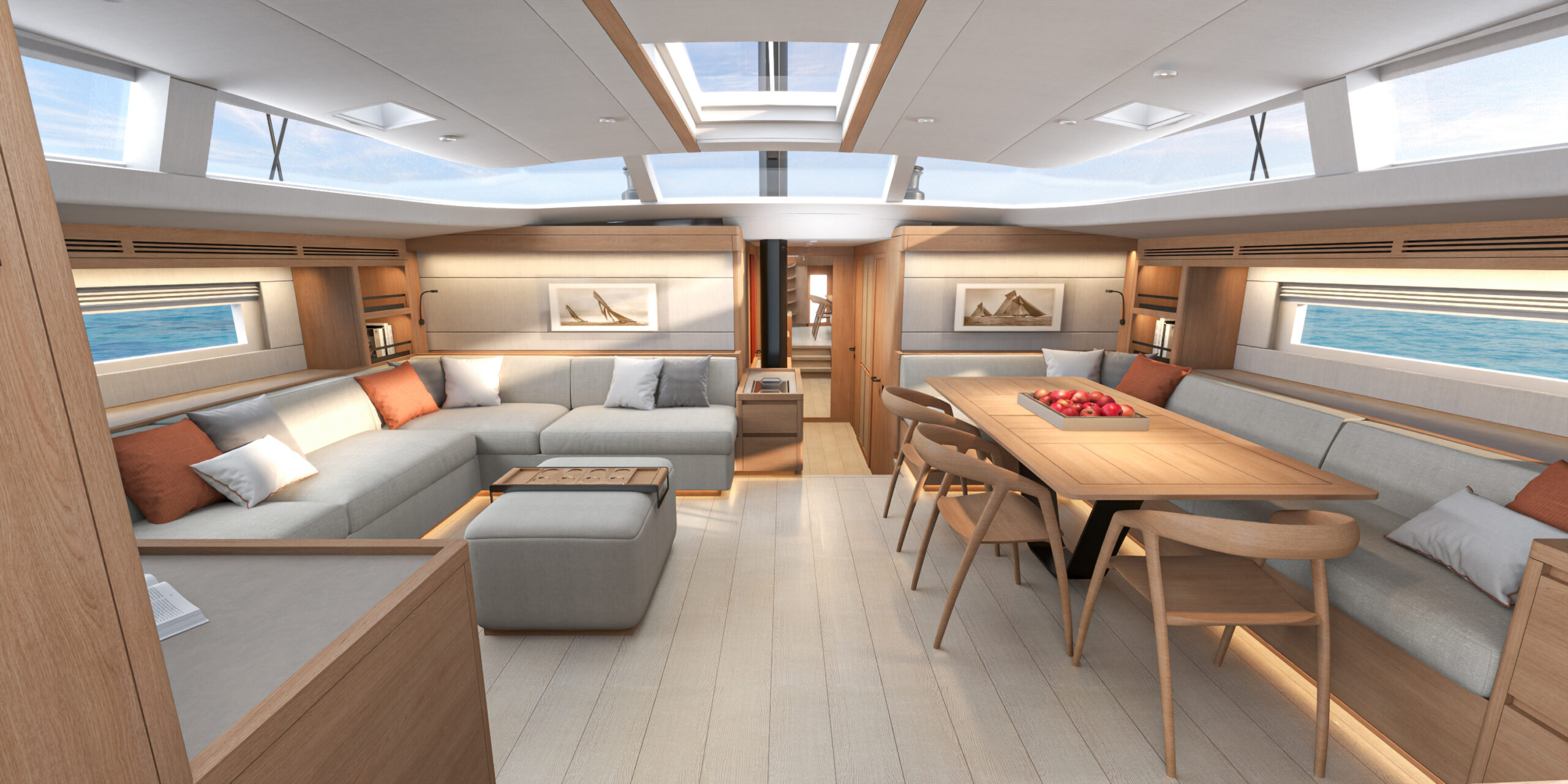
The GS Plus 80 Long Cruise, the new flagship of the range, is more than just a step up in size: the project represents the synthesis of industrial structure, design capability, and a direct relationship with the owner.
“We follow the client and accompany them on a journey that lasts about a year and a half, from the first deposit to delivery,” explains Franco Corazza, project manager of the Plus line. In the case of this unit, this approach resulted in a particularly high level of customization: over 140 change orders introduced by the owner – already a client of the shipyard with a previous 72-footer from the same range and looking toward a possible further increase in size – during the development phases. A figure that reflects the extent of direct and continuous involvement, made possible by a technical structure capable of managing complexity. “An owner returning and choosing a larger boat means that the work done has been recognized”. The project is the result of a collaboration between the Grand Soleil team, Matteo Polli’s naval architecture, Marco Lostuzzi’s structural engineering, and Nauta’s design for the exteriors, interiors, and layout.
Construction
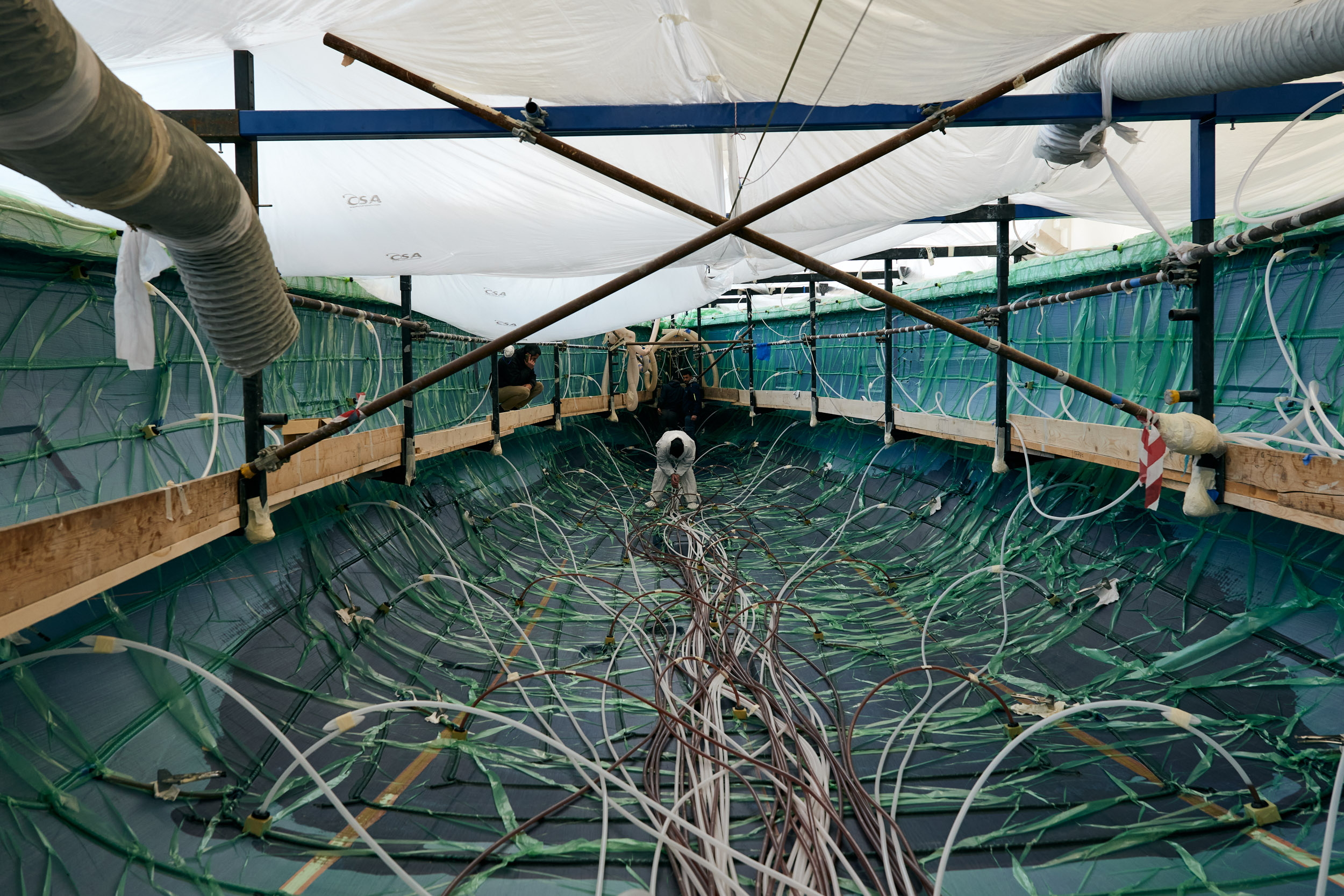
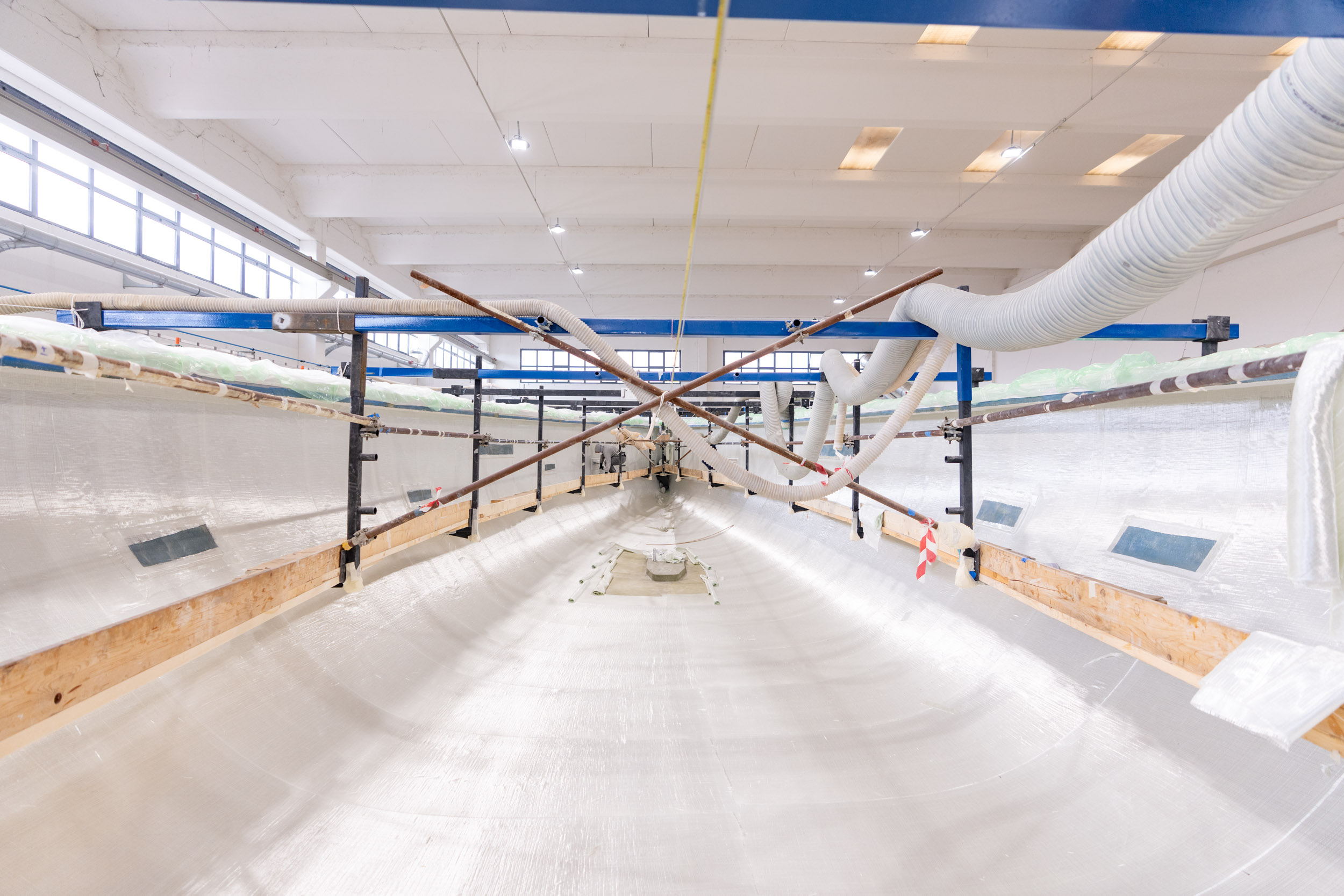
From a construction standpoint, the GS Plus 80 further develops the technologies of the range. The yacht is entirely built using infusion with epoxy-based vinylester resins and extensive use of Carbon Fiber Structures in high-stress areas such as the forestay, shrouds and backstay structures. “All structures are built in place,” explains Alessandro Pera, head of Grand Soleil’s technical office. “We do not use structural elements applied at a later stage, as each structure is adapted to the specific layout and compartmentalization of the yacht.”
Integration
This approach also results in strong integration between construction and onboard systems. On this unit, for example, bulkheads were built incorporating carbon tubes designed to route electrical cables. “The finishes selected by the owner were very thin compared to the size of cables and fittings: this solution allowed us to maintain the desired finishes while using the internal volume of the bulkheads, improving both accessibility and installation cleanliness,” Pera notes. The same approach is applied to the deck, built by infusion with integrated structures, and to the modifications required to accommodate the Hybrid Propulsion system, which demanded careful design also in terms of maintenance.
The systems’ architecture
One of the most distinctive features of this first GS Plus 80 is the integration between the energy system and onboard utility management. All deck operations are managed via a centralized hydraulic system: winches, mast actuators, telescopic keel movement, 3D jib sheeting system, backstay, captive winches, etc., are all powered by a single circuit, eliminating the need for dedicated electrical systems. “There are no electric deck systems on this yacht: everything is hydraulic…”
The key feature lies in its integration with the onboard energy system. Part of the system developed by Torqeedo powers, via electro-hydraulic conversion, the pump that feeds the entire hydraulic circuit. Control is handled through a distributed PLC network, regulating each function according to pressure and flow parameters defined during the design phase.
Hybrid propulsion and energy management
At the heart of this architecture lies a Hybrid Propulsion system that functions as a complete energy management platform. The system developed by Torqeedo includes an electric motor powered by two 40 kWh battery packs, for a total of 80 kWh. Stored energy is used both for propulsion and to power onboard systems. For long-range cruising, the system relies on two 45 kW generators that recharge the battery packs.
Comfort and vibration control
One benefit of this architecture is improved onboard comfort, achieved through specific work on noise reduction and vibration transmission. Engine room insulation, anti-vibration mounts, flexible joints and solutions to limit vibration propagation contribute to engineered acoustic comfort.
A strategy centered on sailing
If the GS Plus 80 represents the cutting edge of the range today, it is also because it is part of a broader Sailing Strategy that reaffirms the role of sailing within the Cantiere del Pardo Group. The growth of the Plus line, the expansion of dedicated production capacity, and the return of existing owners to larger vessels point to a clear direction.