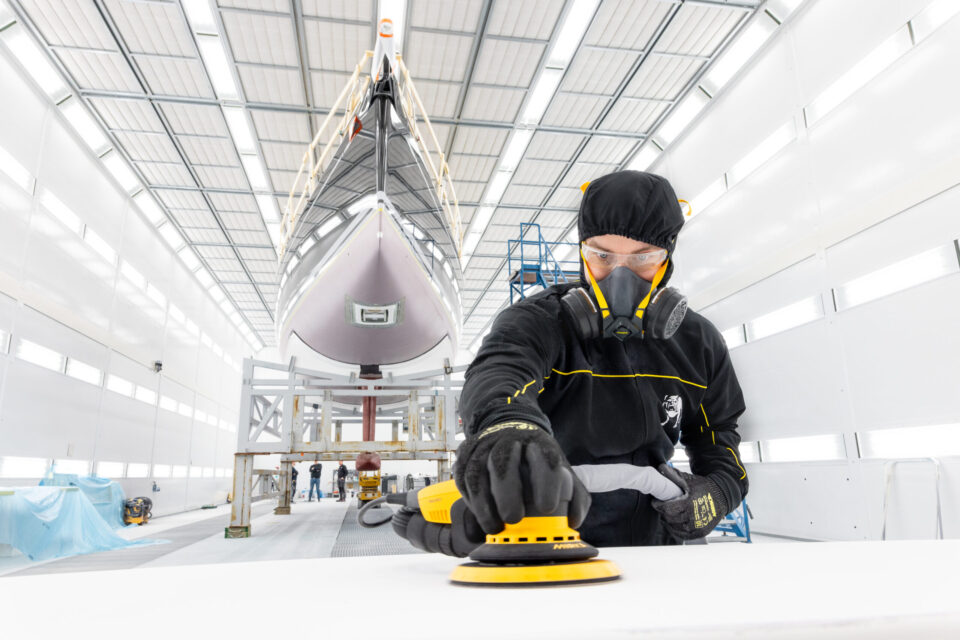
A flawless finish is one of the defining qualities every yacht owner expects. For shipyards and refit professionals, achieving that level of perfection often involves long, demanding sanding processes that generate significant amounts of dust. According to Mirka, there is a more efficient way.
The Finnish company promotes a different approach: invest more time in surface preparation by using a wider grit progression together with a dust-free sanding system. The result is a significant reduction in the polishing work required afterwards. Better sanding creates finer, more consistent scratch patterns, allowing a higher-quality finish to be achieved with fewer polishing steps.
Dust-free sanding also delivers practical benefits throughout the workshop. It creates a cleaner working environment, reduces operators’ exposure to airborne dust, and minimizes the time spent cleaning surfaces before moving on to the next stage of the process.
Mirka dust-free system for the marine industry
At the core of the system is Abranet (below), world’s first abrasive featured by net backing for dust-free sanding, engineered to extract dust through the entire abrasive surface. Its open net structure minimizes clogging, maintains a consistent cutting performance, and extends abrasive life while helping produce a more uniform surface finish.
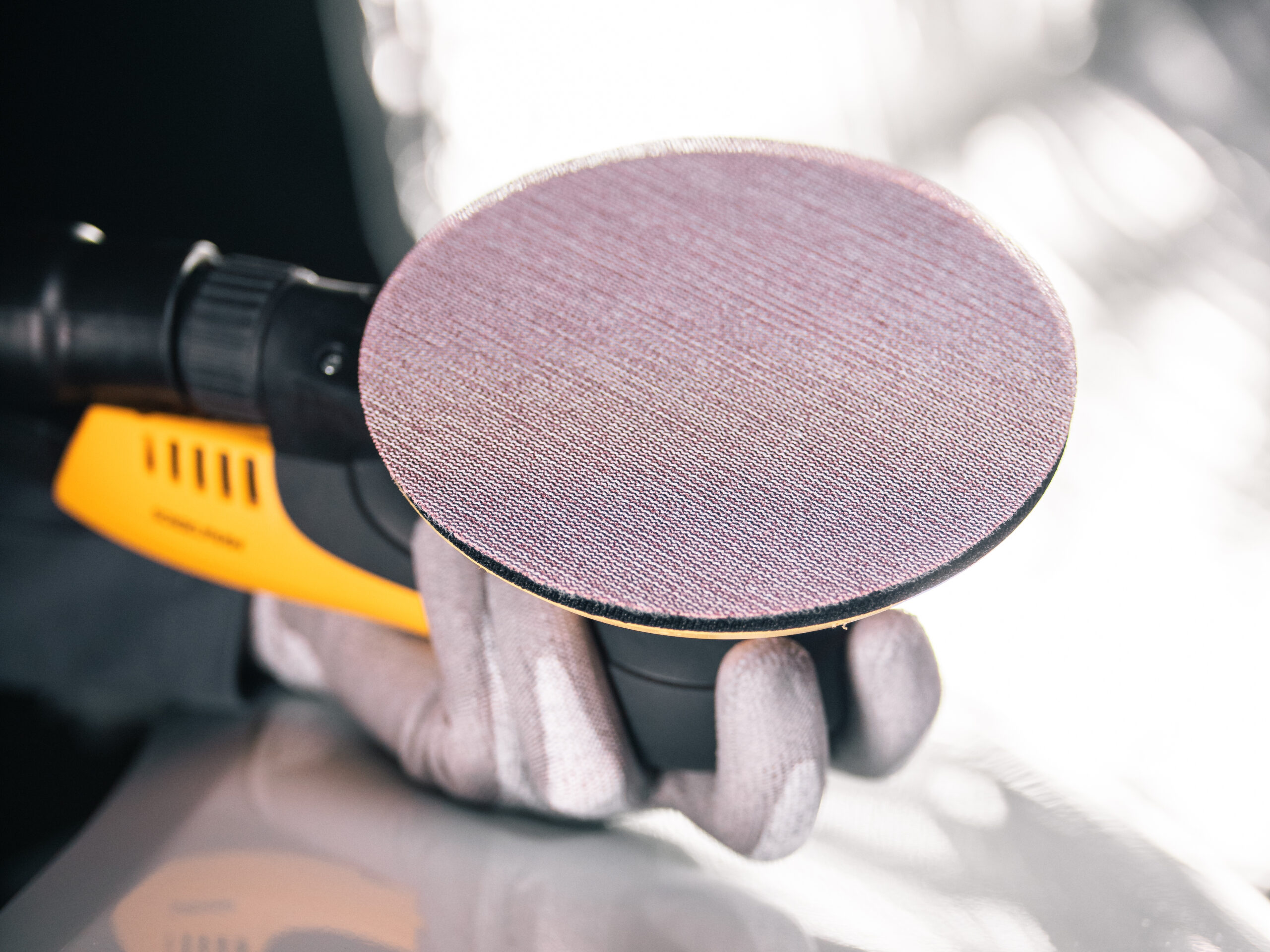
For hull sanding, Abranet can be used with Mirka’s lightweight manual long file boards or with the ergonomic Mirka DEROS random orbital sanders.
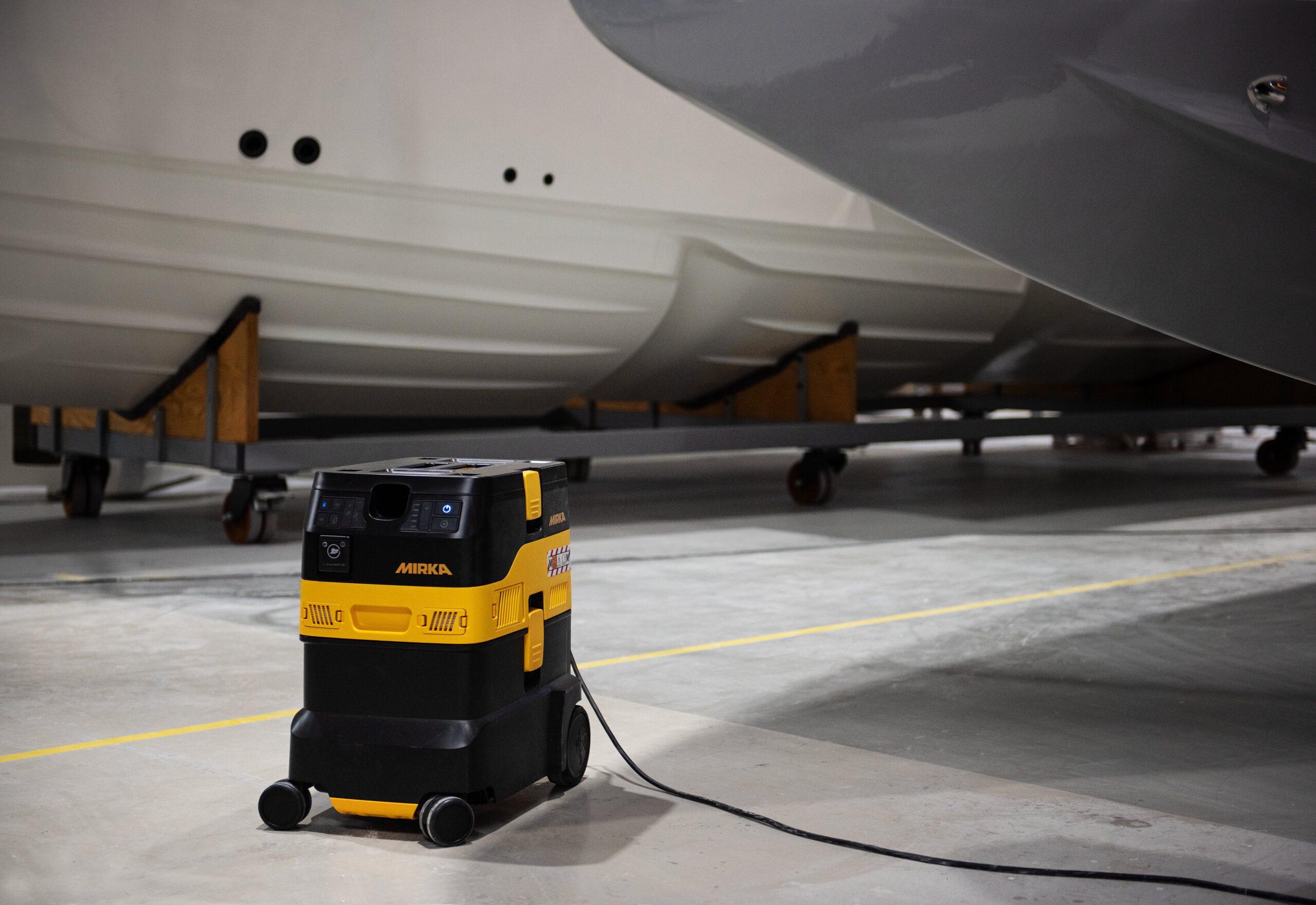
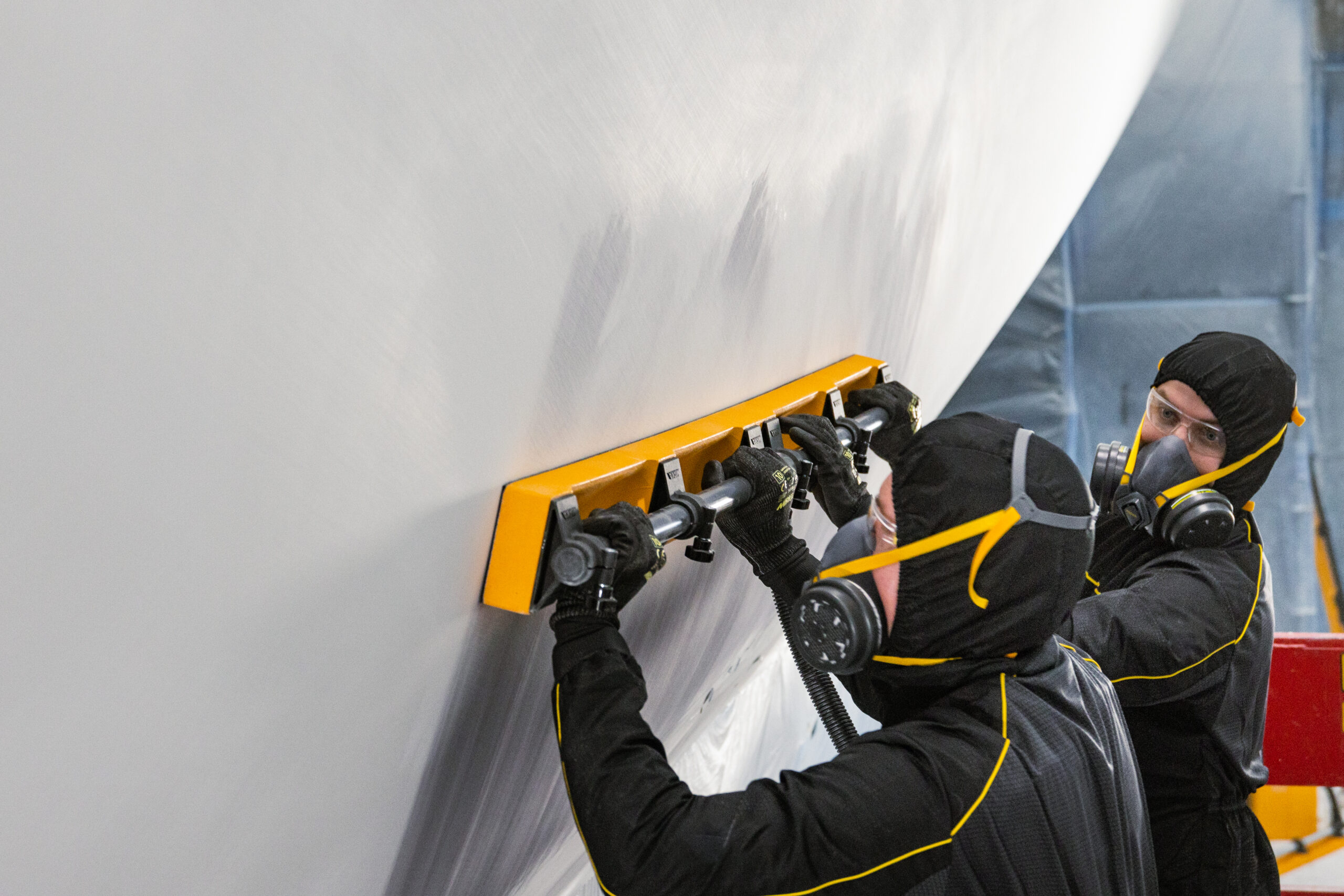
Mirka’s long file boards are designed for sanding fillers over large surfaces and are available in versions for one or two operators. Their lightweight, ergonomic design helps reduce fatigue during extended sanding operations. When connected to Mirka DEXOS dust extractors (below), they can also be operated via Bluetooth remote control, allowing users to start or stop dust extraction without climbing down from scaffolding.
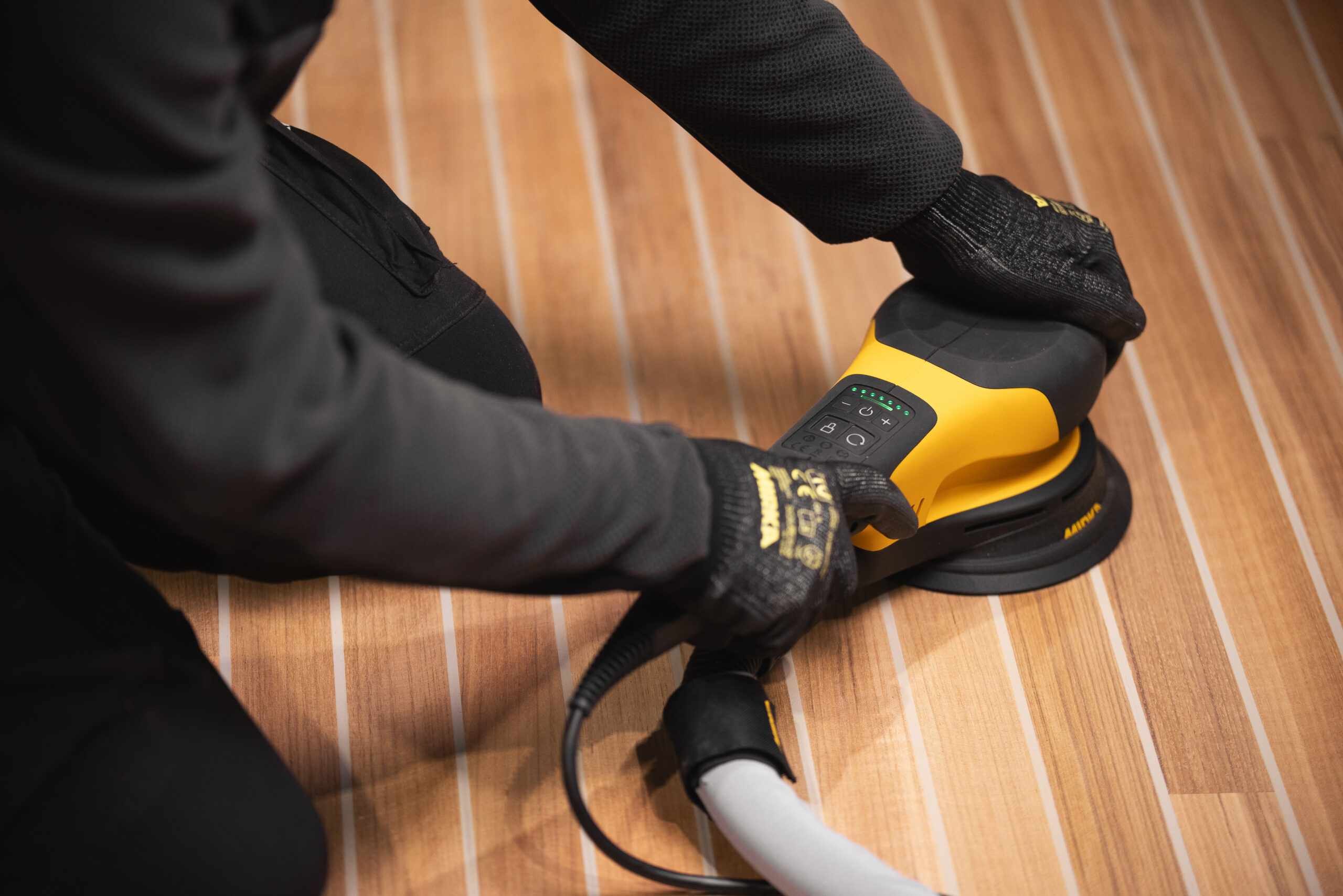
Mirka DEROS random orbital sander is renowned for its compact design, low weight and powerful brushless motor, combining high performance with excellent maneuverability even during prolonged use. For more demanding applications, such as sanding teak decks, the range also includes the Mirka DEROS RS rotary sander, engineered to provide high material removal while maintaining excellent control throughout the sanding process.
For shipyards and yacht refit professionals, Mirka’s dust-free system represents more than a collection of tools – it is a different approach to surface preparation. By optimizing the sanding process from the outset, workshops can reduce polishing time, improve finish consistency, create a cleaner working environment, and ultimately increase productivity while lowering overall process costs.