Efficient water management is becoming an increasingly important issue in the marine industry. On board a vessel, fresh water must be stored or produced, distributed and, for many applications, heated, requiring both energy and resources.
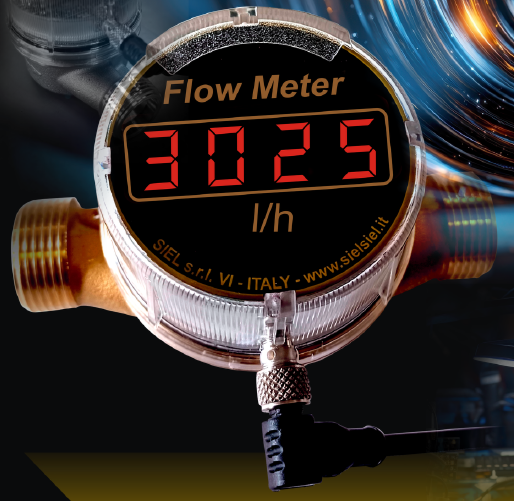
The use of digital flowmeters makes it possible to accurately determine where, when and how much water is being used, transforming simple flow measurement into a comprehensive consumption monitoring system.
By installing multiple instruments at strategic points throughout the system, water consumption can be monitored by area or type of application, including cabins, galleys, laundries, sanitary facilities, technical areas and auxiliary circuits. Data can be transmitted to the vessel’s onboard monitoring systems, providing real-time information on flow rates, totalised volumes and consumption trends over time.
The role of continuous monitoring
Continuous monitoring also makes it possible to quickly identify leaks and anomalies. Persistent water consumption when a specific application should be inactive, for example, may indicate a leak that could otherwise remain undetected for days.
Historical data can also be used to compare different operating periods, establish consumption indicators and assess the actual effectiveness of efficiency improvement measures.
Reducing water waste provides an additional benefit: it decreases the amount of water that needs to be produced, pumped and heated, indirectly contributing to lower energy consumption.
On an increasingly digitalised vessel, the SIEL flowmeter therefore becomes much more than a measuring instrument: it is a sensor capable of providing valuable information for a more efficient, responsible and sustainable management of onboard water resources.