Composite materials often enter the market accompanied by bold claims: lighter structures, greater strength, improved durability and enhanced sustainability. Yet technical data sheets alone are not sufficient to demonstrate real-world performance.
The true test takes place in the shipyard, where materials must prove their value under practical construction and operating conditions. This is the context in which the Cusati Shipyard, based in Marina di Camerota, evaluated Rohacryl, a next-generation acrylic foam produced by Evonik and distributed in Italy by Vink Italia
From evaluation to testing
Rohacryl is a closed-cell expanded methacrylate foam featuring a fine, isotropic microcellular structure. Designed as an alternative to conventional PVC and PET core materials, it offers low resin absorption and consistent mechanical properties. Rather than relying on laboratory data alone, the Cusati team chose to assess the material through hands-on testing and practical application, providing valuable insight into its performance in a real boatbuilding environment.
According to Matteo Cusati, who runs the shipyard together with his brother Fabrizio, the initial reaction was one of caution. The material was completely new to the company, prompting a gradual evaluation process. After receiving sample panels, the team produced a demonstration prototype: a 60 cm-long step laminated with three layers of fiberglass on each side. Displayed at a trade show and tested under a cantilever load exceeding 100 kg, the structure showed virtually no noticeable deflection. This simple but convincing test helped overcome initial skepticism and opened the door to a full-scale application.
The project: a lightweight, structural hardtop
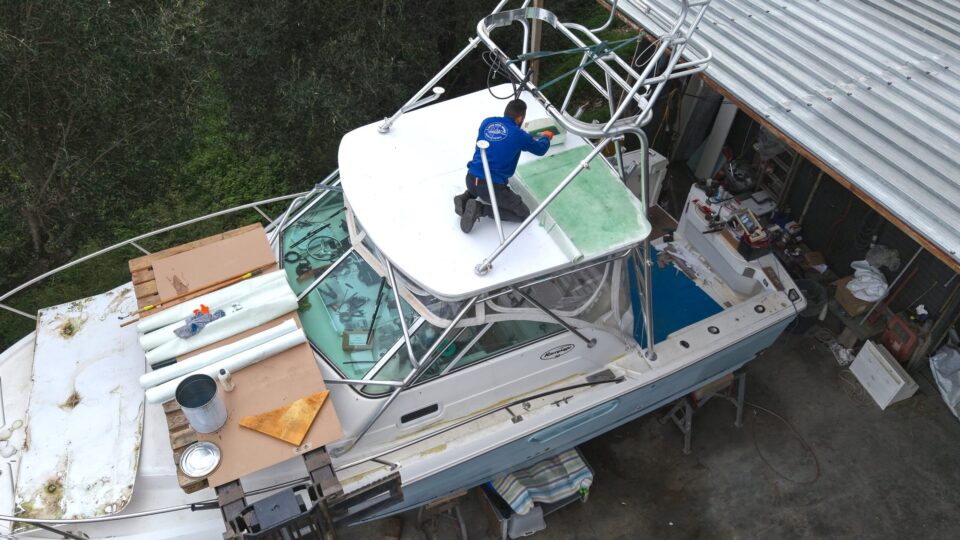
The opportunity arrived during the refit of a Rampage 30, an American offshore fishing boat equipped with a tuna tower. The owner wanted to replace the original T-Top, a tubular structure with a canvas cover that was not designed to be walked on, with a fully structural hardtop. Several construction options were considered, including marine plywood and traditional composite panels with PVC cores. Ultimately, Rohacryl was selected because it offered an attractive balance between strength and low weight.
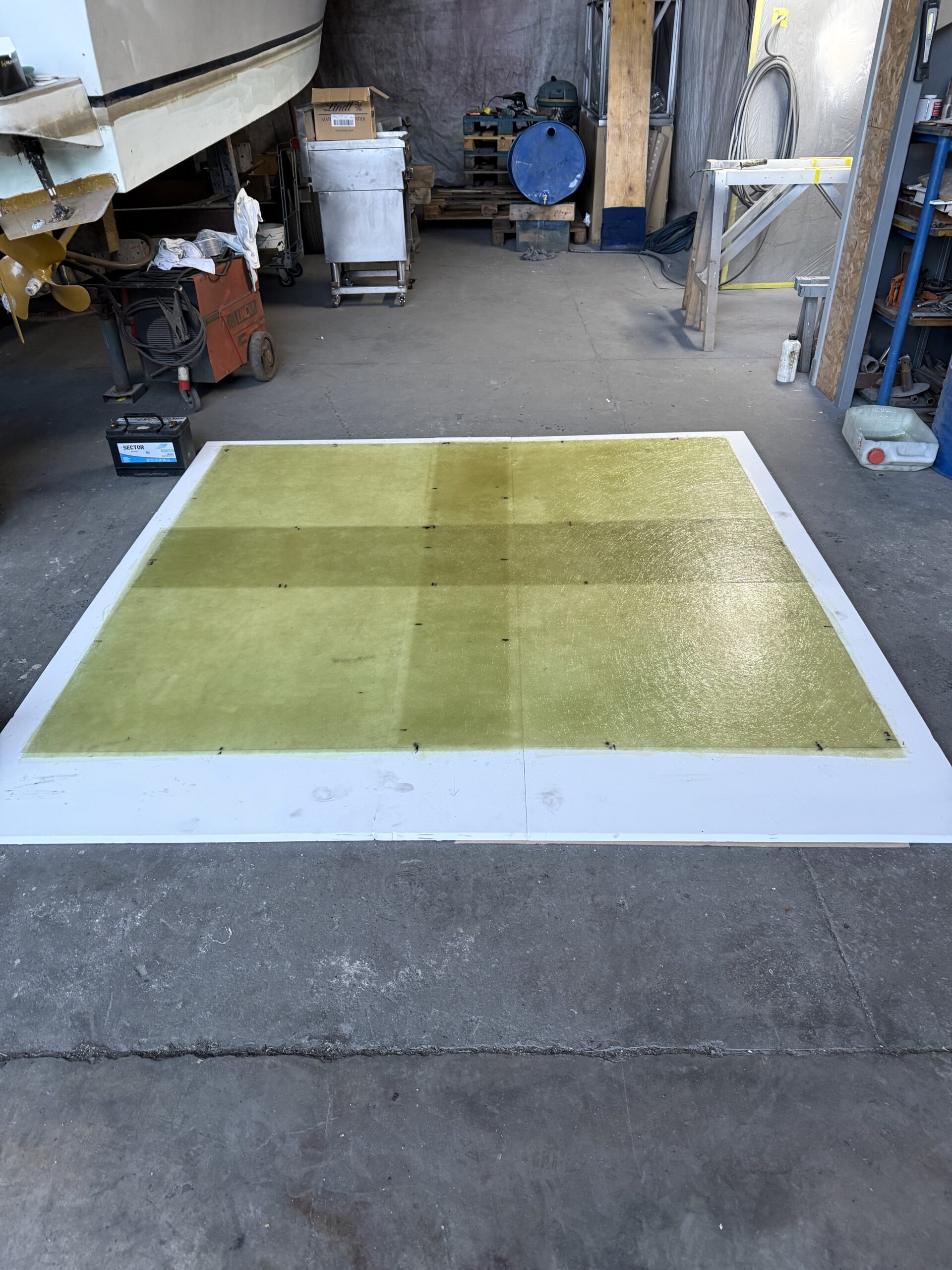
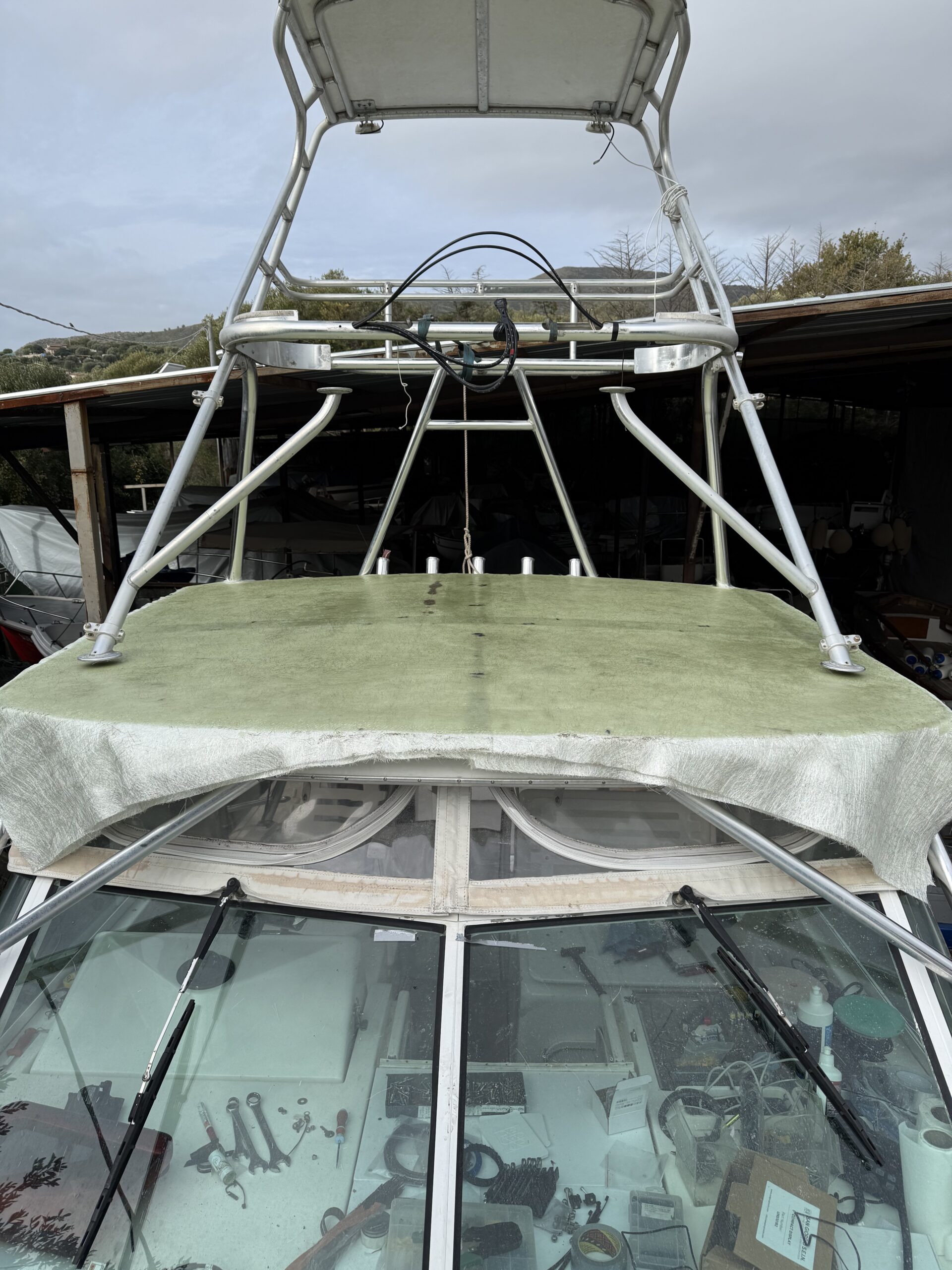
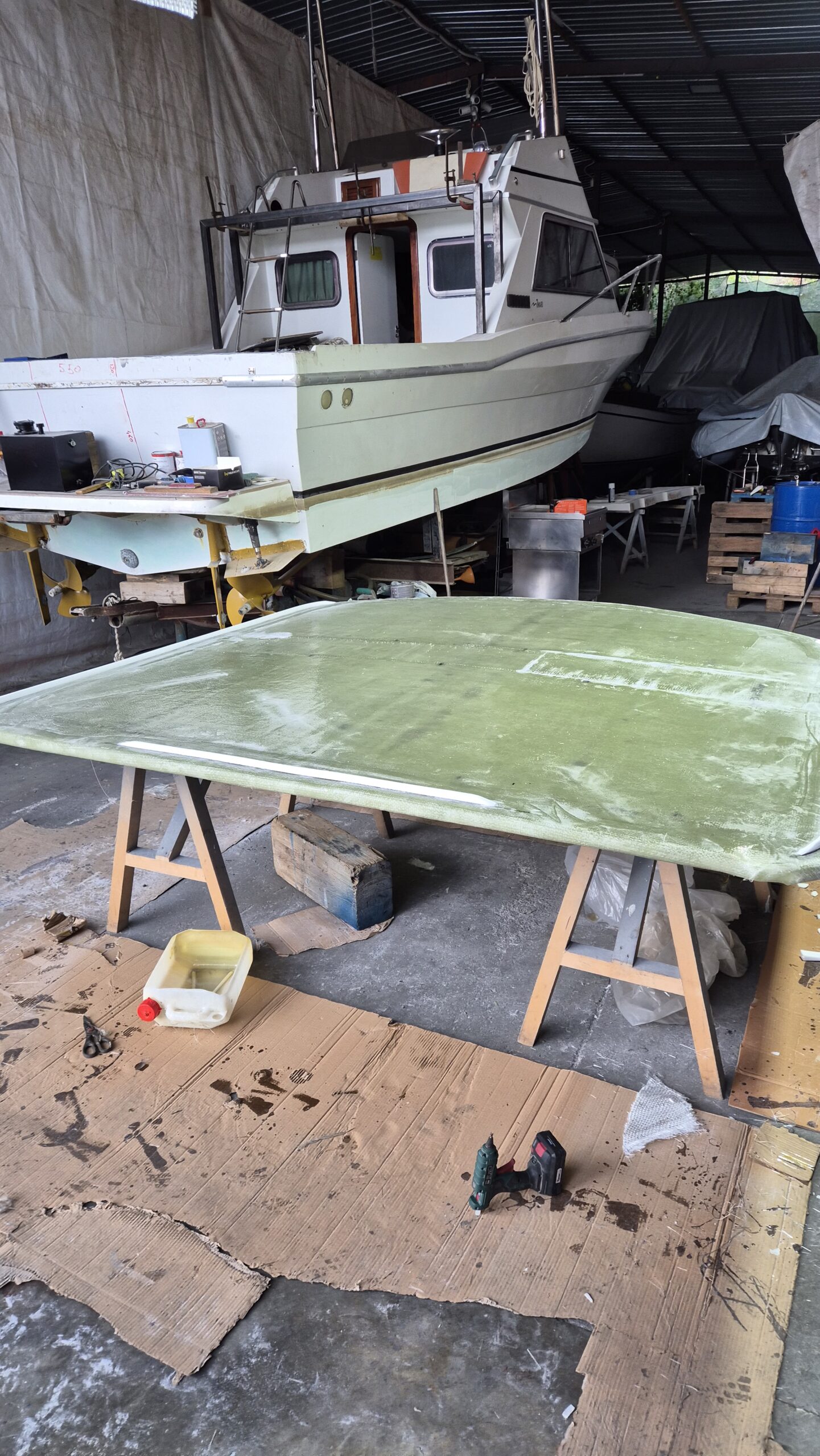
The Cusati Shipyard built a 2.5 × 2.5 m hardtop panel using a Rohacryl SW 80 core and fiberglass laminates, achieving a lightweight yet highly rigid sandwich structure. The final panel was about 4 to 4.5 cm thick and required no intermediate supports. One major advantage was its ease of processing, as it could be cut and shaped with simple tools directly on the boat without using moulds.
Thermoforming was also straightforward, with the material heated to around 120°C and retaining its shape without spring-back. During lamination, Rohacryl showed excellent resistance to curing heat and allowed multiple fiberglass layers to be applied in a single operation. Its low resin absorption reduced weight while ensuring strong bonding.
The finished hardtop weighed only about 200 kg, far less than the 500 kg or more expected from alternative methods. Despite integrated storage, cabling, and lighting features, the structure remained extremely stiff. Following this success, the shipyard adopted Rohacryl for stern platforms and structural repairs. The project showed that the material’s true value lies in its practical benefits, enabling faster, more flexible, and mould-free boat construction.