Support functions represent the connective tissue that enables safer, more efficient and more sustainable yacht operations. In a rapidly evolving technological environment, investing in Support Functions means reducing dependence on individuals, strengthening system resilience and ensuring that safety is built into the entire life cycle of the yacht, regardless of its size or operational profile.
Failures in automated systems
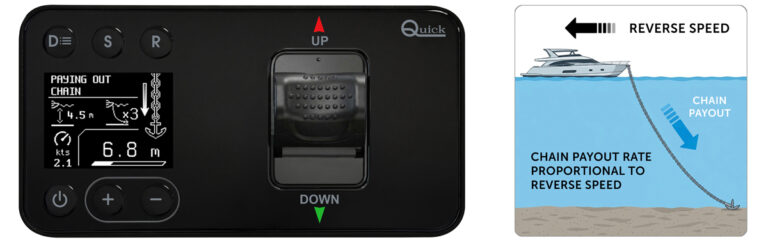
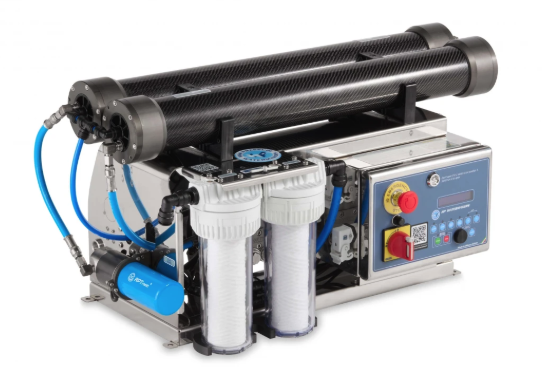
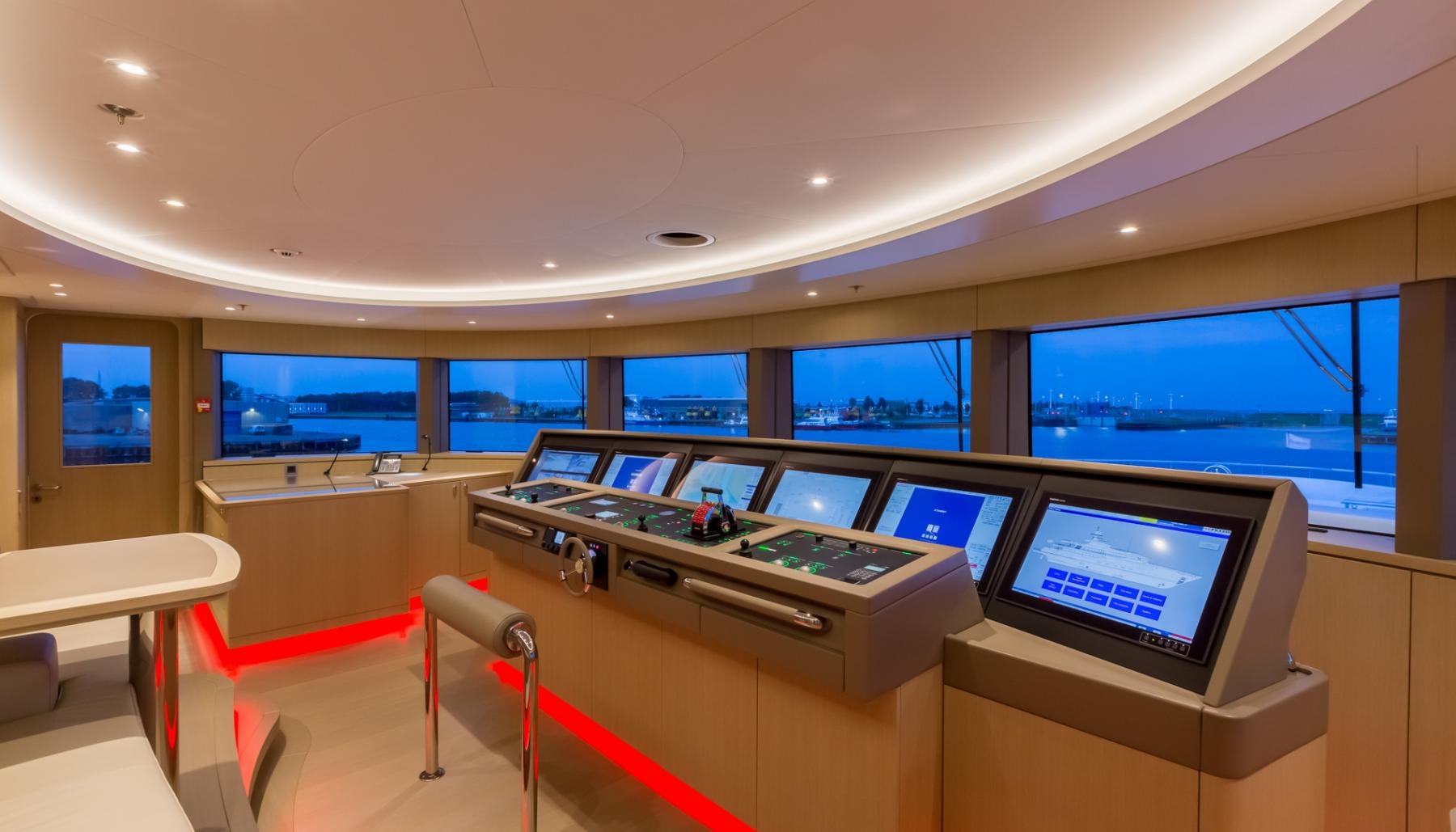
Modern yachts increasingly rely on Yacht Automation systems to enhance operational efficiency and safety. Engine control and monitoring, navigation planning and execution, HVAC management and safety systems are just some examples of functions now performed by computer-based systems.
While automation has undoubtedly improved reliability and performance, failures in automated systems can create critical risk scenarios if they are not properly anticipated and managed. Such failures rarely stem from purely technical causes; rather, they result from a complex interaction of technical, organizational and human factors.
Over-reliance on automation
Several studies highlight that over-reliance on automation by vessel crews is a recurring issue, with automatic modes often trusted more than manual backups, even when the latter may prove more dependable in specific situations.
This tendency cannot be explained solely by a lack of technical competence. It is more accurately linked to a combination of factors, including inadequate system ergonomics, insufficient redundancy of critical components, and shortcomings in system integration, commissioning and crew familiarization.
Support functions in the yacht industry
In recent years, maritime safety analysis has progressively shifted from a narrow focus on human error towards a broader examination of the systems that enable – or hinder – everyday vessel operations.
Within this framework, the report “What to learn from support functions to improve maritime safety”, published by Chalmers University of Technology and the Swedish Shipowners Association (Svensk Sjöfart), represents a significant contribution.
The report introduces the concept of support functions, referring to those organizational, technical and training-related activities that exist upstream of ship operations and decisively influence how vessels are operated in practice. Although the study primarily addresses commercial shipping, many of its findings are directly applicable to the yachting industry, particularly in light of the growing levels of electrification, digitalization and automation of onboard systems.
What we learn from the Chalmers report
One of the key messages of the Chalmers report is that accidents are rarely the result of a single wrong action. More often, they emerge from a chain of decisions, compromises and shortcomings involving designers, manufacturers, shipyards, and maintenance and support organisations.
When this perspective is applied to the yachting industry, a similar pattern emerges. Highly advanced technological systems are often installed on board yachts operated with reduced crews, heterogeneous levels of training and frequently fragmented technical support structures. In the absence of a robust and coherent support system, the crew ultimately becomes the last line of defence for upstream design, integration and organisational shortcomings.
The yachting context
In the yachting industry, support functions take forms that differ from those found in traditional commercial shipping, yet their role is no less critical. Key support functions include:
- system design and onboard integration;
- the role of shipyards and technology providers;
- planned and corrective maintenance;
- crew training and familiarization;
- software management and updates;
- shore-based and remote technical support.
Compared to commercial shipping, the yachting industry is characterised by lower levels of standardisation and a higher degree of stakeholder fragmentation and complexity. This structural feature complicates the continuity, consistency and traceability of information across the vessel’s life cycle, increasing the risk of gaps between design assumptions, actual system behaviour and operational practices on board.
Safety as a system property, not an individual attribute
The Chalmers report stresses that safety should be understood as a property of the socio-technical system as a whole. Individuals do not operate in isolation, but within contexts shaped by design choices, procedures, organisational constraints and available support.
In the yachting industry, this perspective translates, for example, into:
- human–machine interfaces designed without fully considering real onboard conditions;
- automated systems that reduce physical workload while increasing cognitive complexity;
- procedures that are theoretically sound but hard to apply in real scenarios.
In such cases, human error is more accurately seen as a consequence of systemic weaknesses rather than their root cause.
Design and technology: support functions upstream
Many operational issues encountered on board originate during the design phases. Incomplete integration between electrical systems, energy storage systems and digital control platforms, limited attention to ergonomic aspects, and inadequate technical documentation are common examples of weak support functions already present at the earliest stages of a yacht’s life cycle.
A technology that is theoretically safe and compliant on paper can become a source of operational risk if it is not designed to interact effectively with the crew. The growing prevalence of advanced control and automation systems across yachts makes this issue critical.
A User-Centred Design approach should be based on the following principles:
- modular system architectures, with clearly defined and loosely coupled components;
- early and continuous integration of user feedback;
- standardised and interoperable solutions, such as API-based integration, to avoid fragmented information flows.
Training and skills as a strategic support function
Training often focuses on basic operation, with limited attention given to system logic, failure modes or abnormal conditions.
An effective training strategy should begin with a structured assessment of competencies, providing a clear picture of each crew member’s knowledge, experience and ability to operate onboard systems under both normal and degraded conditions. This is key in yachting, where crew backgrounds vary and no mandatory standards like IMO STCW exist.
For this reason, training programmes should adopt a system-oriented perspective, recognising that onboard equipment does not operate in isolation but as part of a tightly interconnected socio-technical system. Key elements of such training programmes include failure mode analysis, emergency and recovery procedures, cybersecurity awareness, effective communication and teamwork.
Operational support, maintenance and the ship-to-shore relationship
Another critical factor influencing operational safety is the relationship between the crew and shore-based organisations. When operational support does not meet real onboard needs, a gap emerges that can significantly increase operational risk.
In the yachting industry, this misalignment often takes the form of reactive maintenance, poorly assessed software updates and limited user feedback.
Under such conditions, crews are required to operate complex systems that were never designed to be managed autonomously, increasing dependence on external support and reducing overall system resilience.
Towards a safer yachting industry
Improving safety means strengthening support functions rather than increasing individual responsibility. This implies greater integration between design, training and operational support, the use of digital tools as decision-support systems, the systematic enhancement of operational experience, and a system-based approach to safety that goes beyond compliance with mandatory rules.
Suggestions for an effective support strategy
Applying lessons learned from the merchant shipping sector does not require importing complex or rigid models but rather adopting a more mature and systemic approach to safety. Key elements include structured failure risk assessments such as FMEA, user-centred design approaches, clearly defined service level agreements with vendors, designated points of contact both on board and ashore, and structured sharing of operational data and feedback.