Specialised in the in-house design and production of models, moulds and finished components, Yacht Design is a valuable supplier for the nautical sector. With General Manager Alessandro Potenza, we explore the company’s operational philosophy, production capacity, and collaborative approach to developing advanced technical solutions, evidencing the role of YachtDesignSrl as a trusted partner for leading yards.

In a sector where innovation must go hand in hand with reliability, Yacht Design Srl is a prime example of the balance between craftsmanship and industrial mentality. Based in Leinì, near Turin, the company is a long-standing partner of some of Italy’s leading shipyards, including Azimut, Sanlorenzo, Ferretti, Cantiere del Pardo, Sacs, and Bluegame, for which it manufactures models, molds, and finished components, handling every stage in-house, from design to painting, with strong expertise in Mold Making Nautica for premium series.
A in-house production process
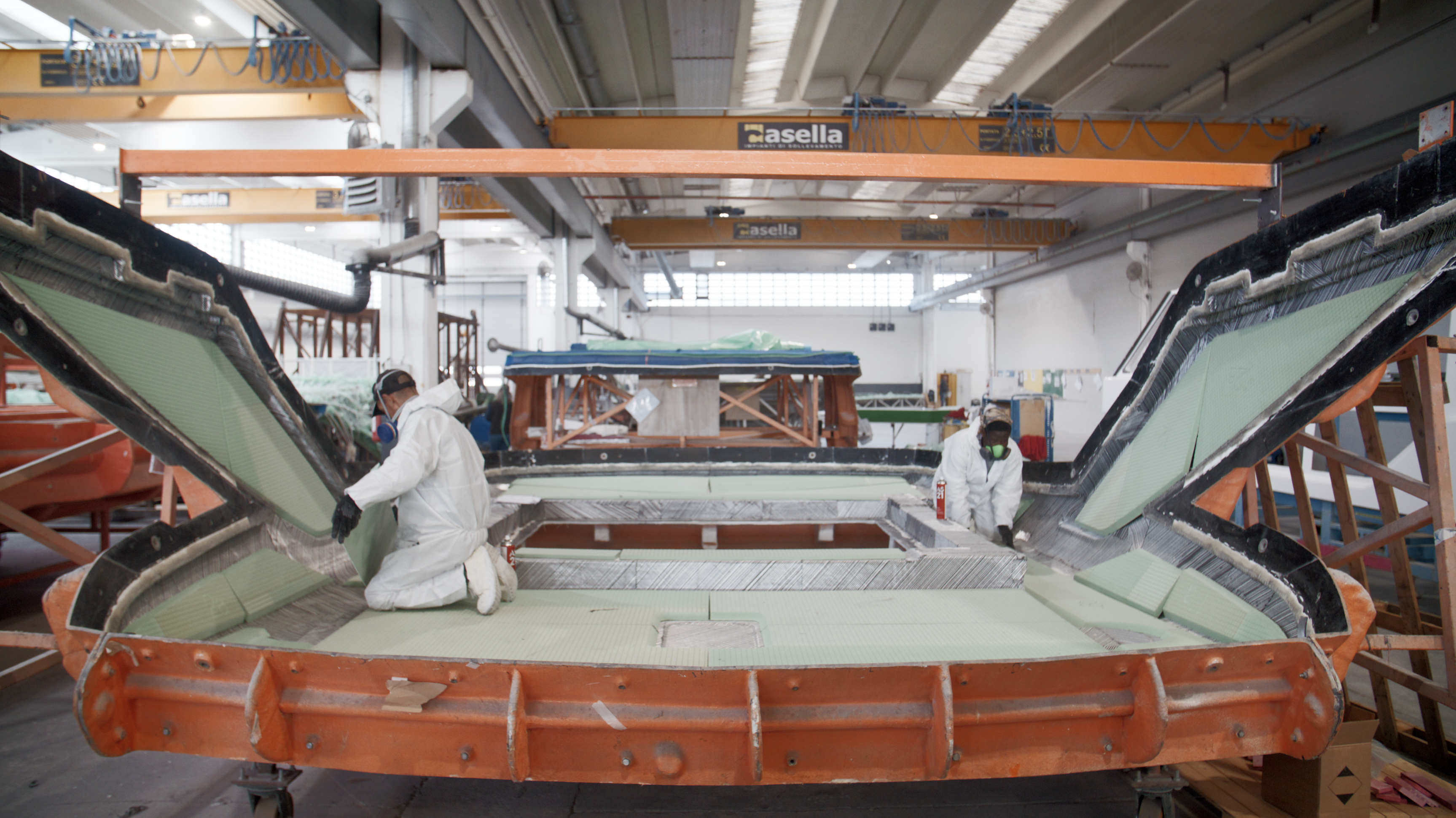
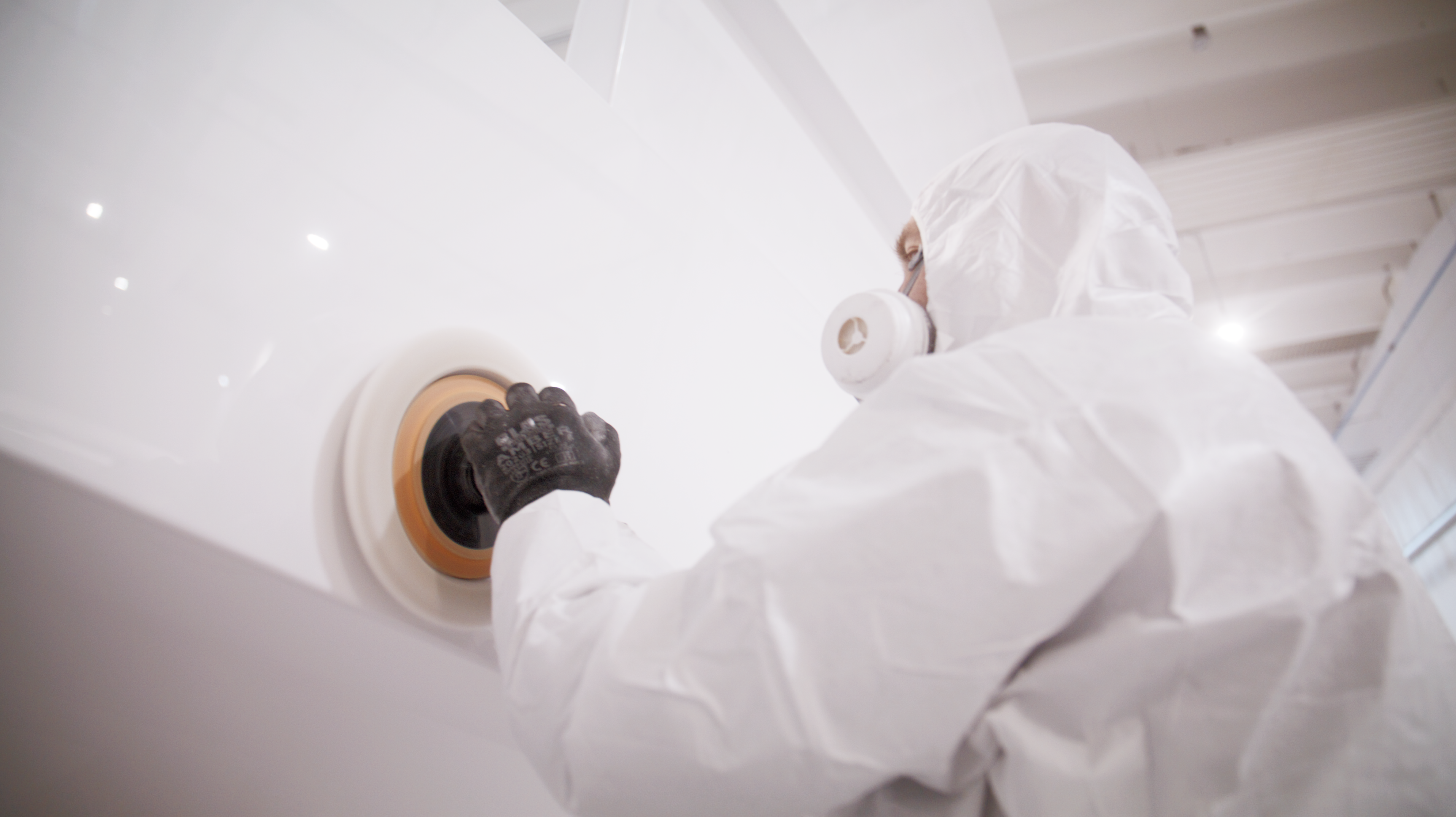
Even in an age dominated by digitalization and robotics, Yacht Design continues to believe that certain manual skills still have irreplaceable value. The company manages the entire production process in-house at its 3 plants in Leinì: total control that translates into consistent quality, traceability, and operational continuity, especially across CompositiNautici and high-finish coatings.
Translating technical requirements into production solutions
A point of reference for the company and for managing relations with large shipyards is Alessandro Potenza, born in 1983, who joined the company in 2021 after managerial experience in various sectors (from design to production). With a pragmatic and relationship-oriented approach, but above all a focus on organization, Potenza has earned Yacht Design the trust of its customers thanks to his ability to translate technical requirements into effective production solutions, aligning Cantieri Navali Italia expectations with manufacturability.
The value of practicality
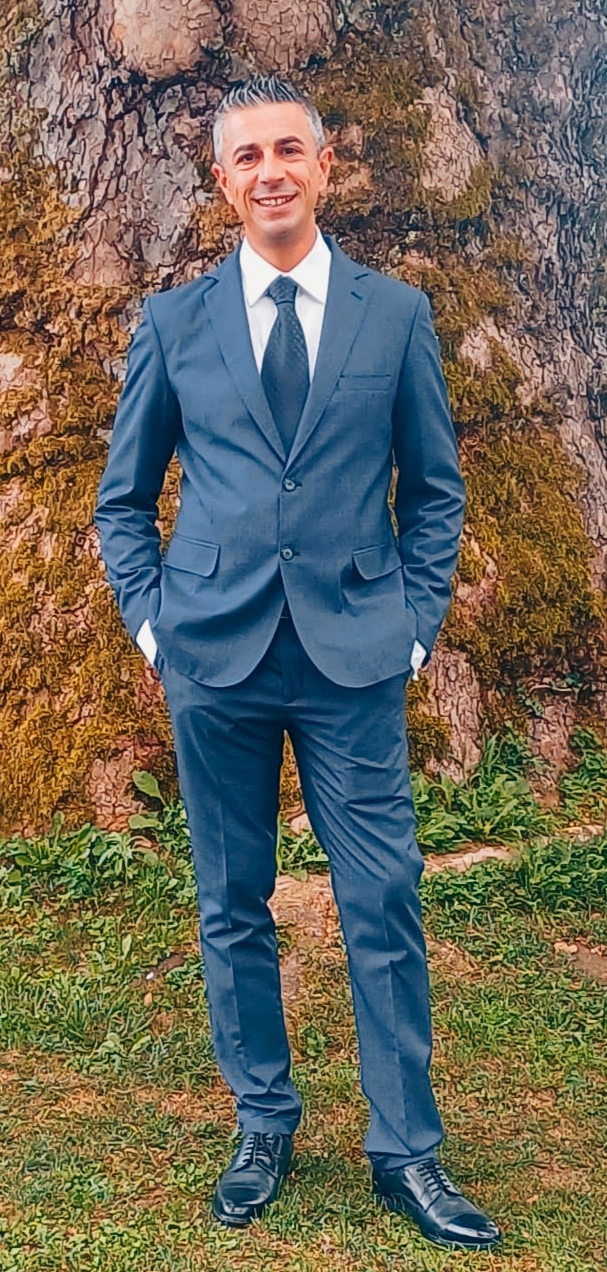
Potenza’s work is part of a well-defined entrepreneurial vision, that of founder Antonio Ricciardi: “One of the most important lessons he taught us,” says Potenza, “is practicality. Every project is approached with method, seriousness, and a constructive spirit, without ever losing sight of the end result. It’s an approach that has spread throughout the company, creating an environment where every employee knows they can count on a solid structure that is also open to discussion and continuous improvement.” This mindset underpins Yacht Design Srl delivery standards.
A rigorous and transparent production method
This approach is also reflected in the company’s production organization.
“Ours is essentially a craft-based job, but we’ve chosen to approach it with an industrial mindset. Every phase has been structured to be monitored and traceable, both in terms of production and management. This allows us to maintain high quality standards, plan accurately, and meet deadlines, without ever losing sight of economic efficiency.”
Upstream of the process, the selection of materials plays a crucial role. Each component undergoes rigorous testing, using materials specifically designed for the marine environment and advanced production processes. The compatibility between resins, composites, metals, and adhesives is essential to ensure performance and durability, including the use of AdesiviStrutturaliPlexus where specified.
The partnership with Vaber
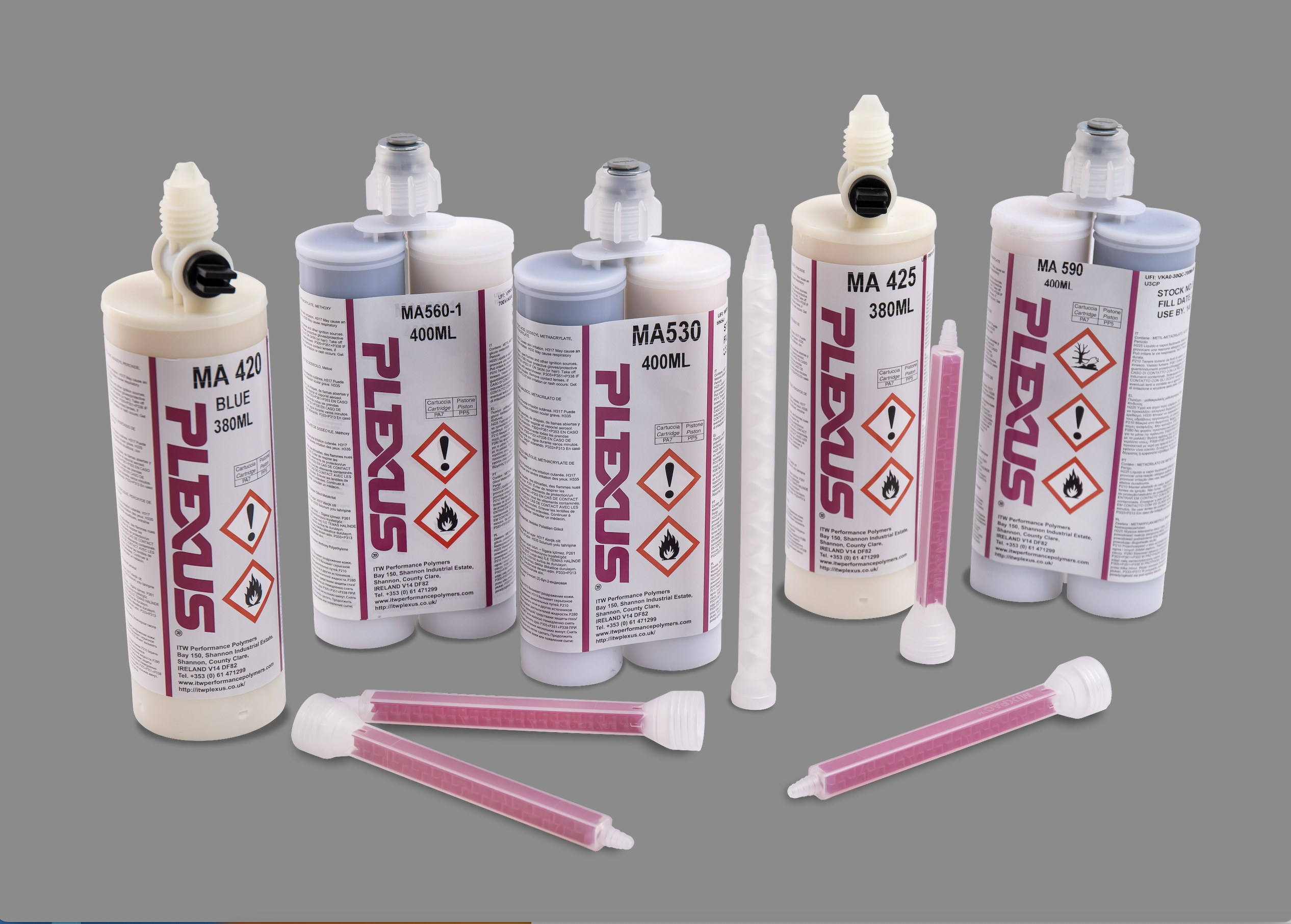
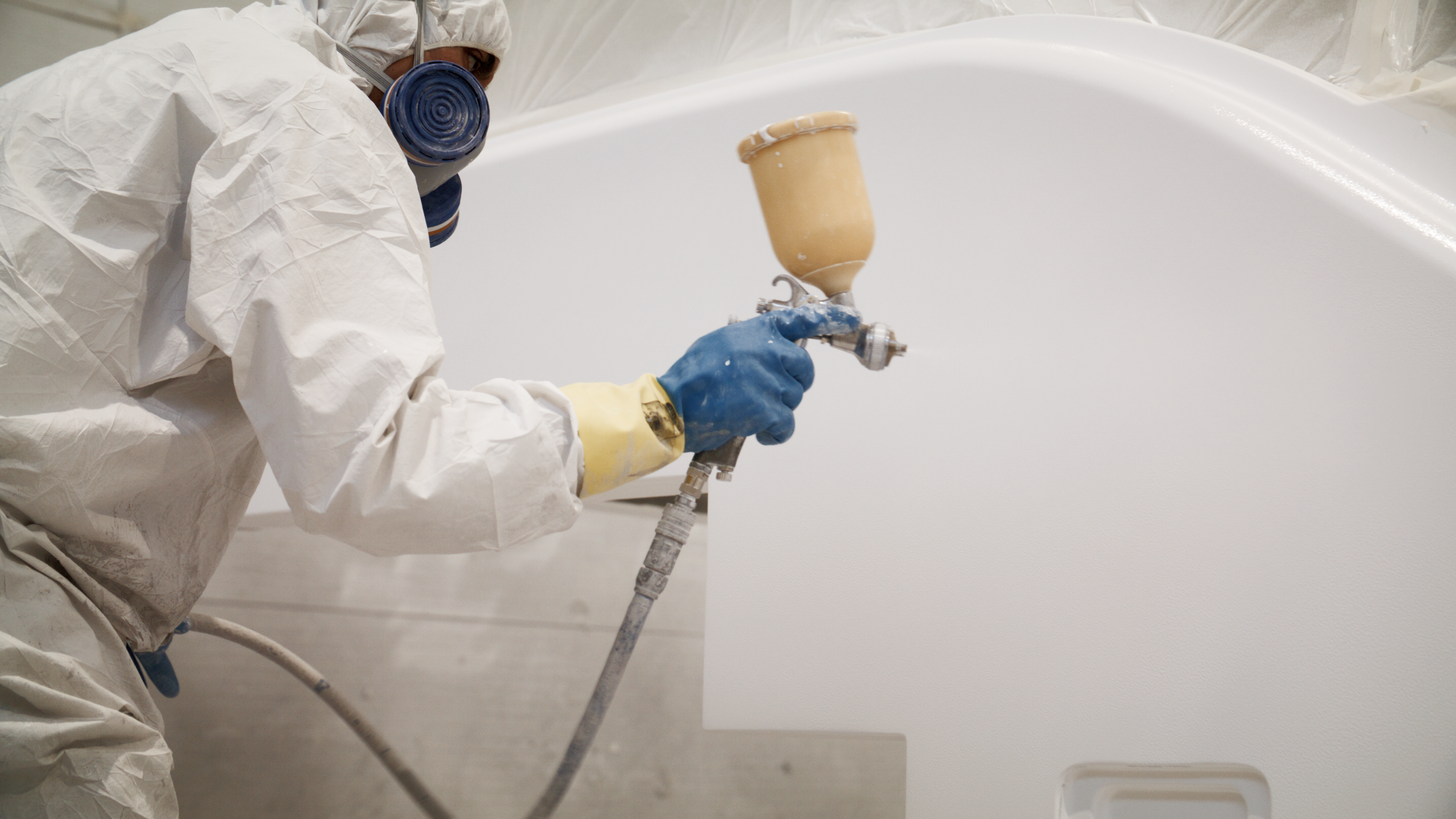
In this context, Yacht Design collaborates with specialized suppliers, including Vaber, a Turin-based company specializing in the production and distribution of adhesives, sealants, paints, and protective coatings for highly technical sectors such as automotive, transportation, and boating. In particular, the dialogue between the two companies has led to the introduction and refinement of the use of Plexus structural adhesives, designed to meet the most advanced production requirements of the nautical sector, consolidating best practices su AdesiviStrutturaliPlexus.
A replicable but never standardized approach
The excellence of Yacht Design lies not only in the quality of its products, but also in the consistency of its method. “Every project,” emphasizes Potenza, “is approached with the same rigor, regardless of the customer or complexity. There are no A-list or B-list customers. All projects are handled with the same care, adapting to specific technical requirements, but without any difference in approach or dedication.” A significant example? “Every time I see a 75-foot hull leave our shipyard, I feel a special emotion. It is an imposing, beautiful, complex boat. Knowing that we build it entirely ourselves is a source of great pride.” This replicability is a competitive edge for CantieriNavaliItalia that demand reliability.
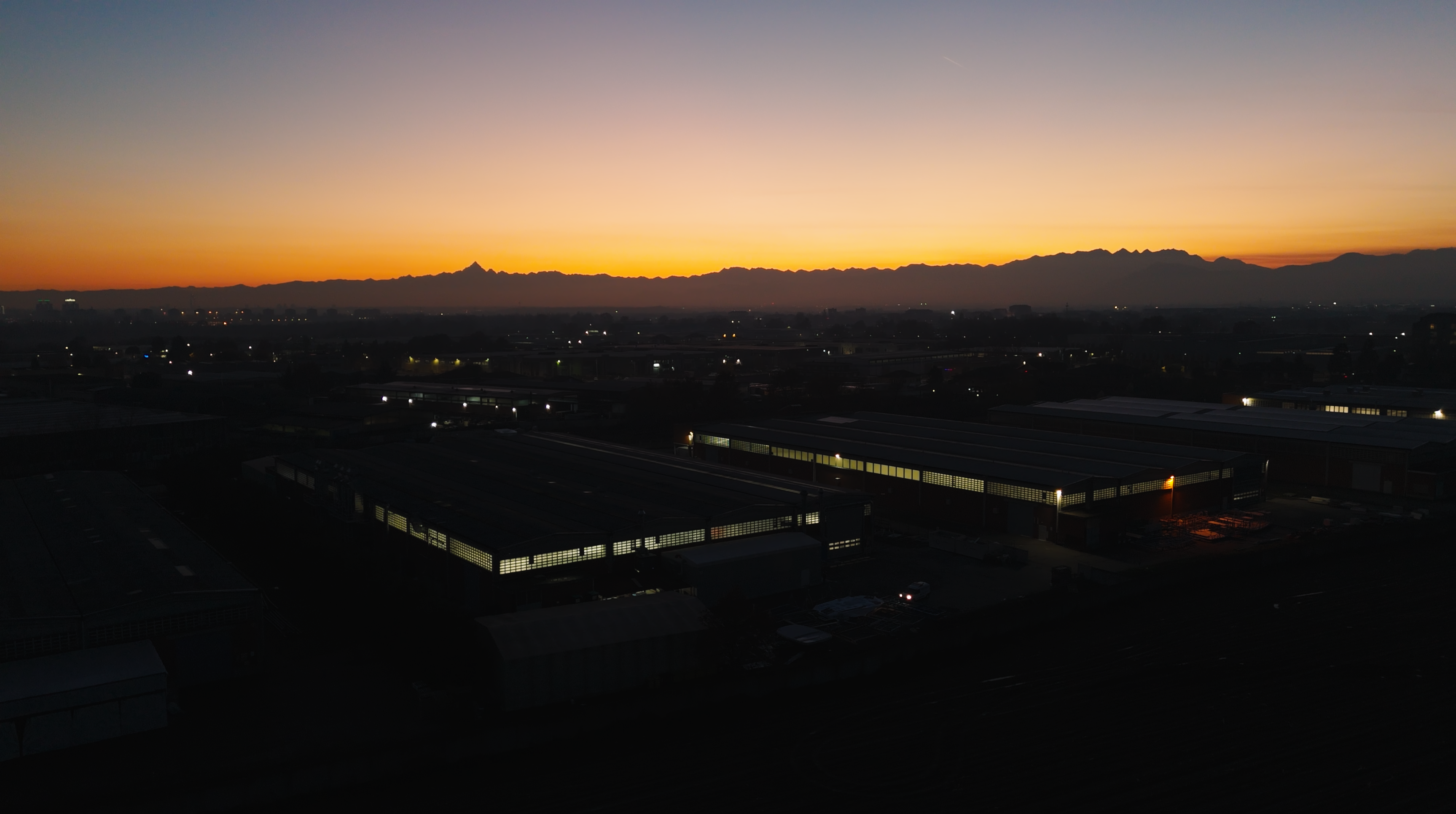
Looking ahead
According to Potenza, the evolution of boating will follow the same path as the automotive industry, with a growing focus on the sustainability of materials and processes. “The market will reward suppliers who share green values, reliability, and transparency. The difference will be made by companies that are able to evolve without losing touch with reality.” When asked to summarize the philosophy of Yacht Design in 3 words, his answer comes without hesitation: professionalism, reliability, collaboration, a synthesis that guides YachtDesignSrl in every engagement.
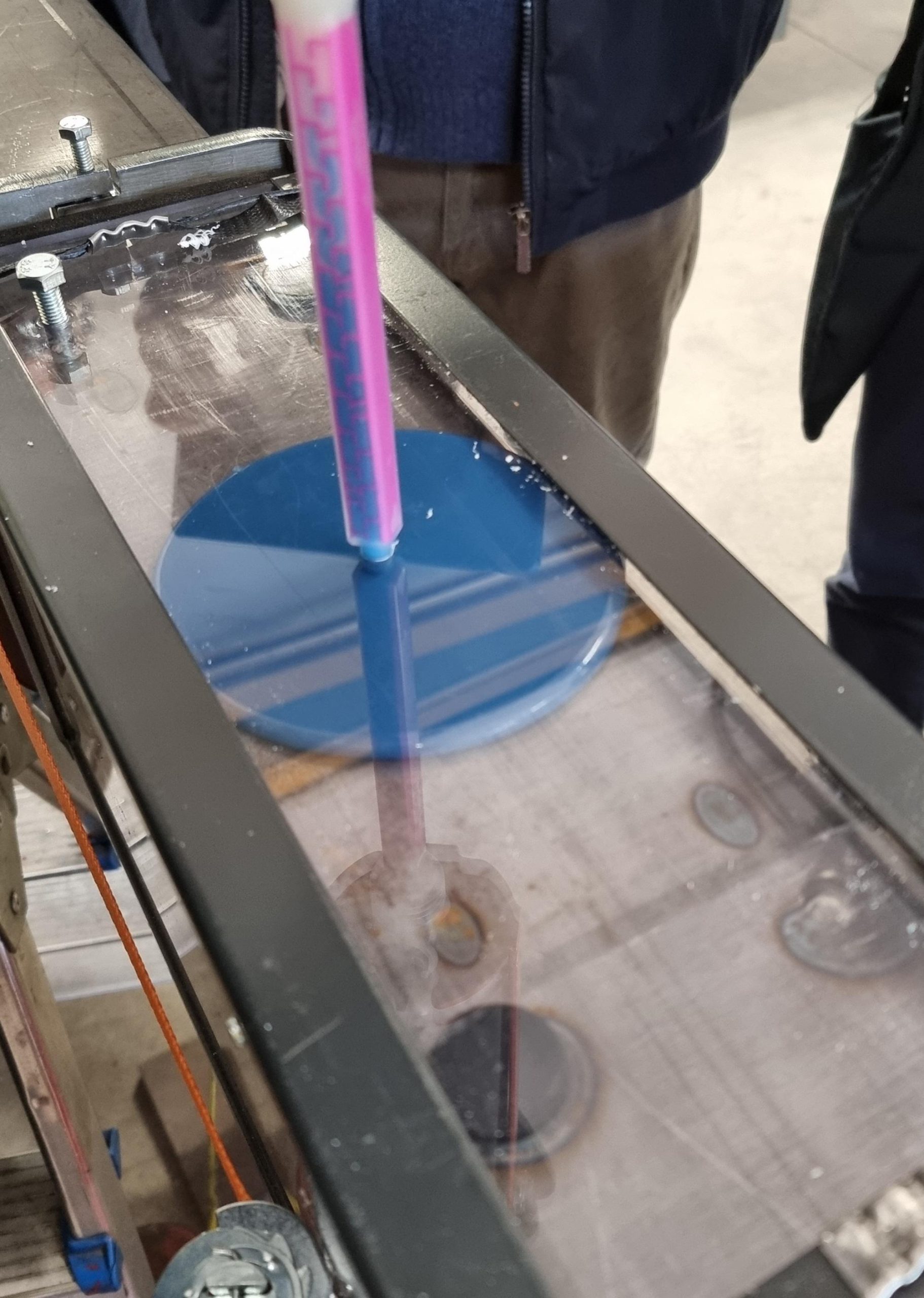
“Our collaboration with Vaber is now well established and is based on continuous synergy between our application experience and their technical expertise” comments Alessandro Potenza. “Together, we have developed and optimized a new adhesive product, working both in the laboratories and directly on our production lines. It is a four-handed job: we test, observe, and improve. The goal is to adapt the products to real production needs and simplify the work of operators, ensuring high performance.”
Efficiency and adaptability The products in the Plexus range have delivered concrete results in terms of efficiency, adaptability, and compatibility with other materials.
“They offer the perfect balance between technical performance and application versatility: they adhere to a wide range of materials, guaranteeing excellent results. Furthermore, their compatibility with other components – from AOC resins to Angeloni glass or carbon fabrics, right through to metal frames – makes the entire process smoother and more efficient.”
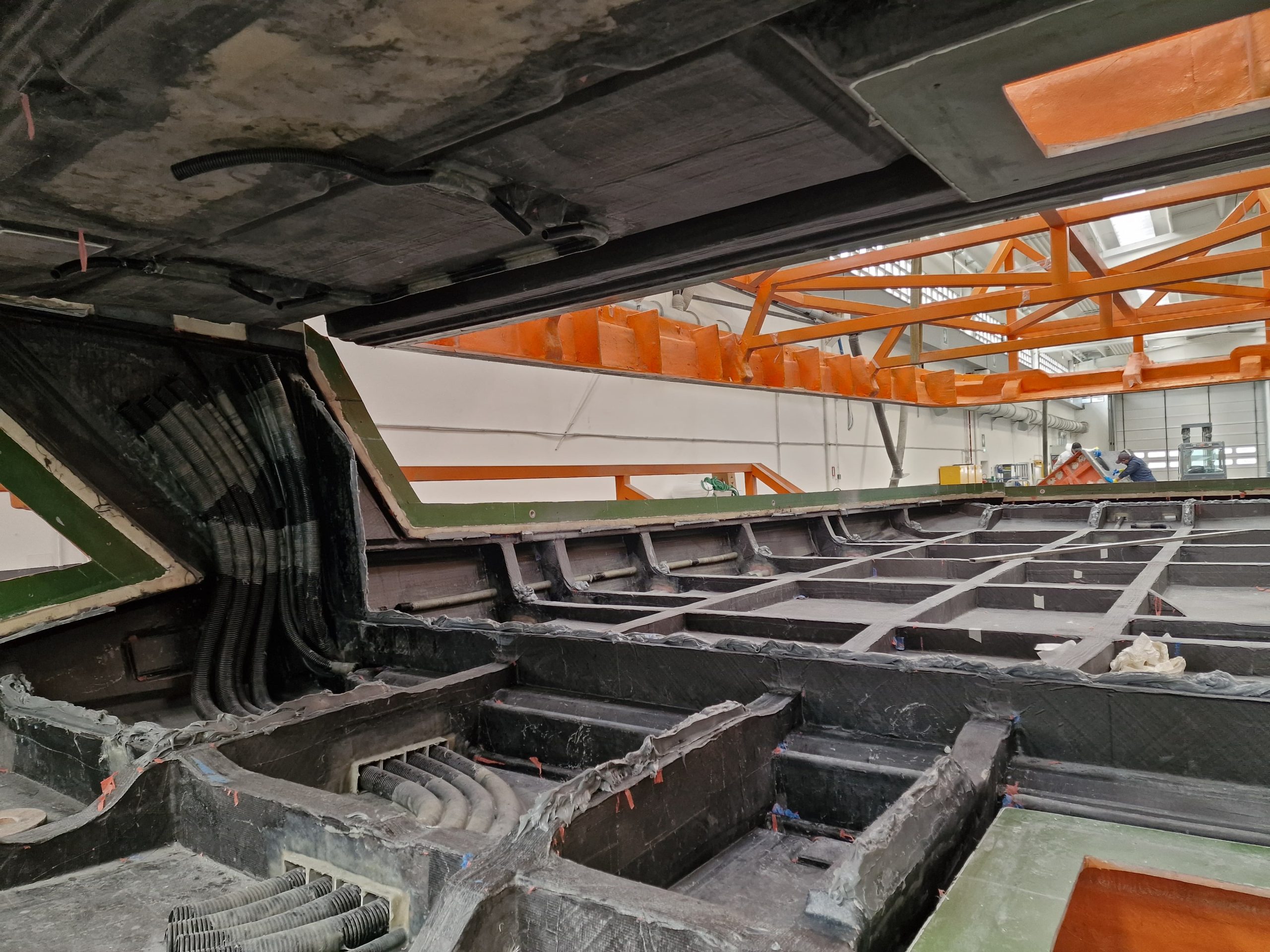
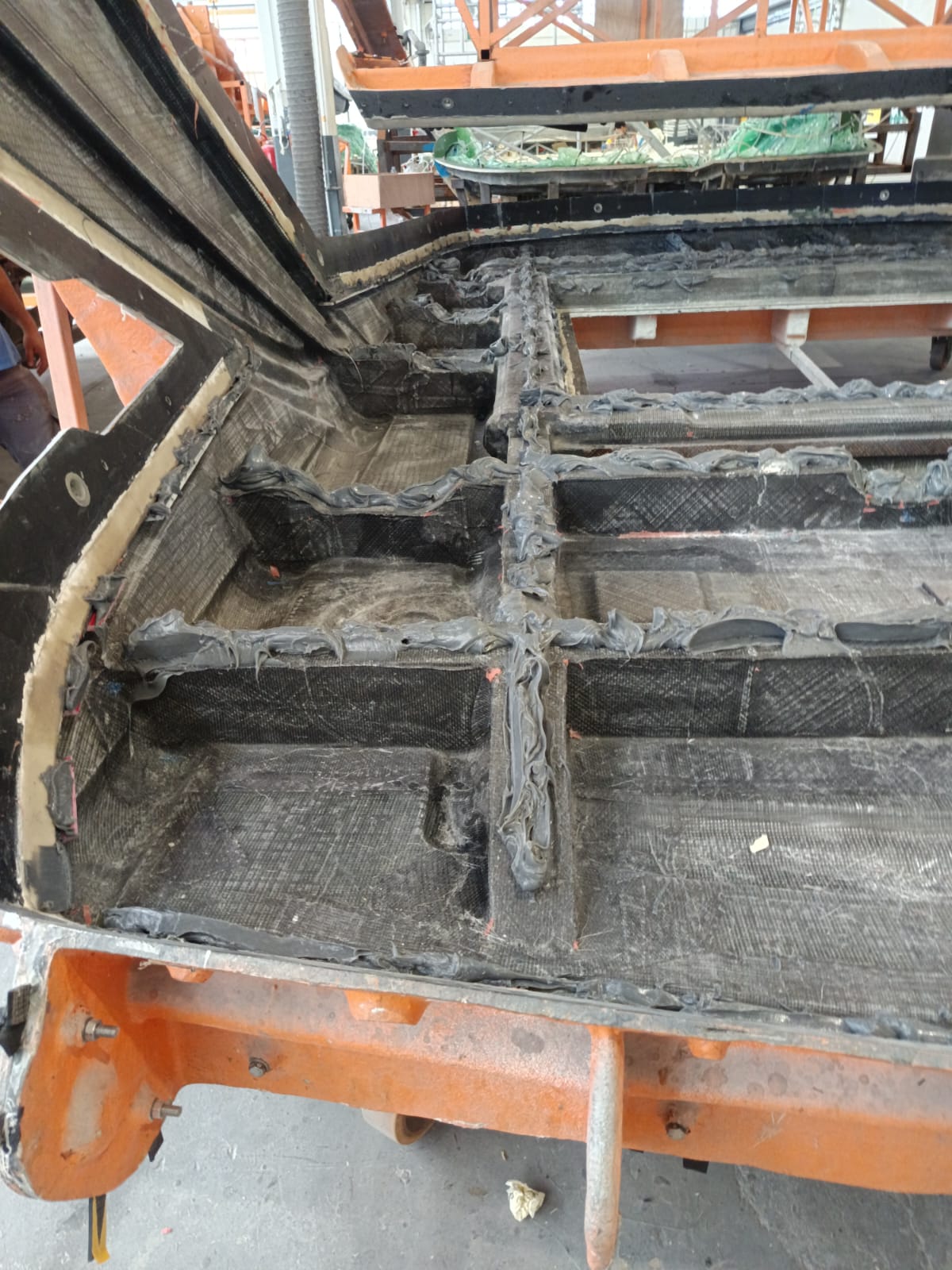
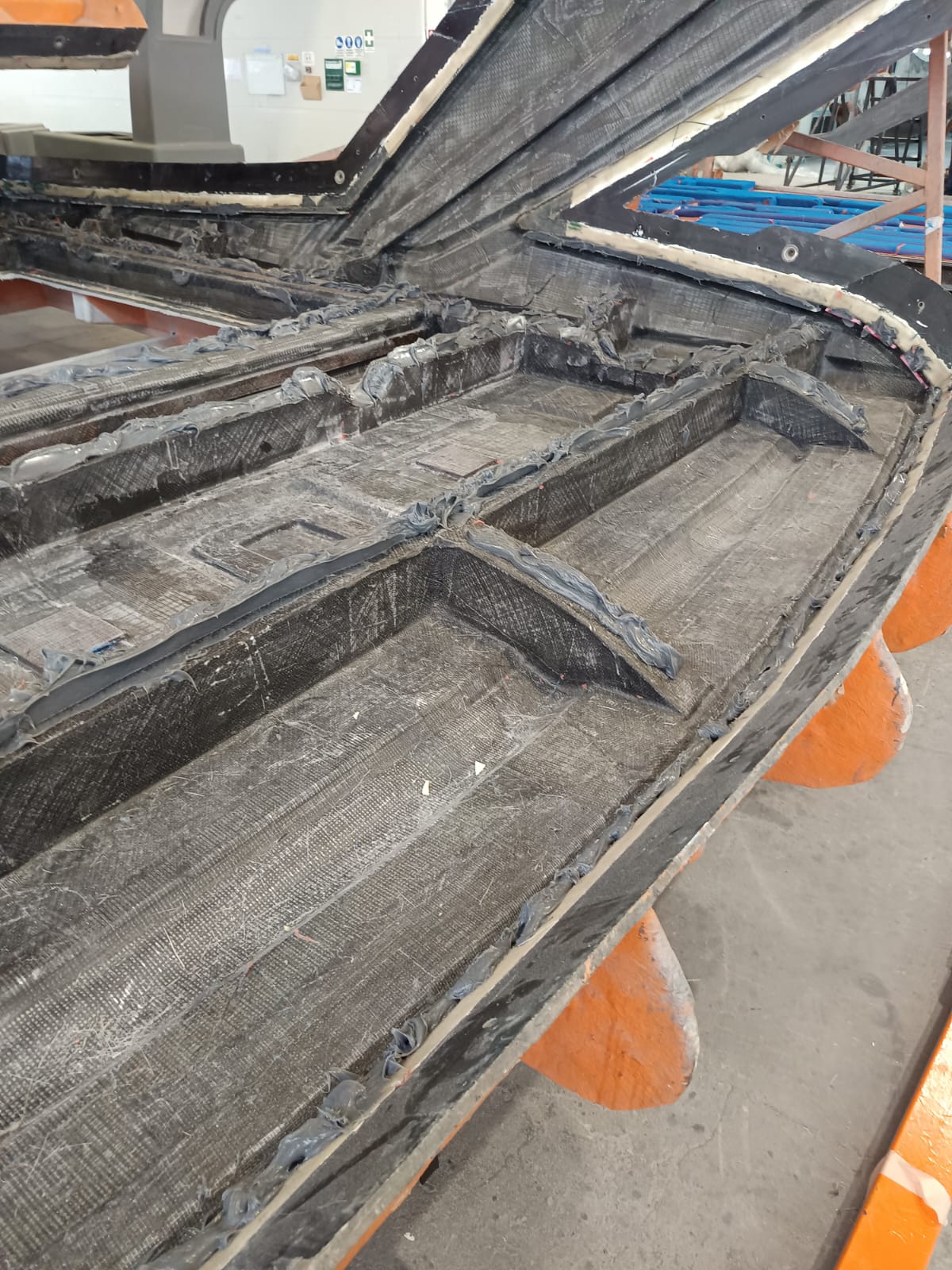
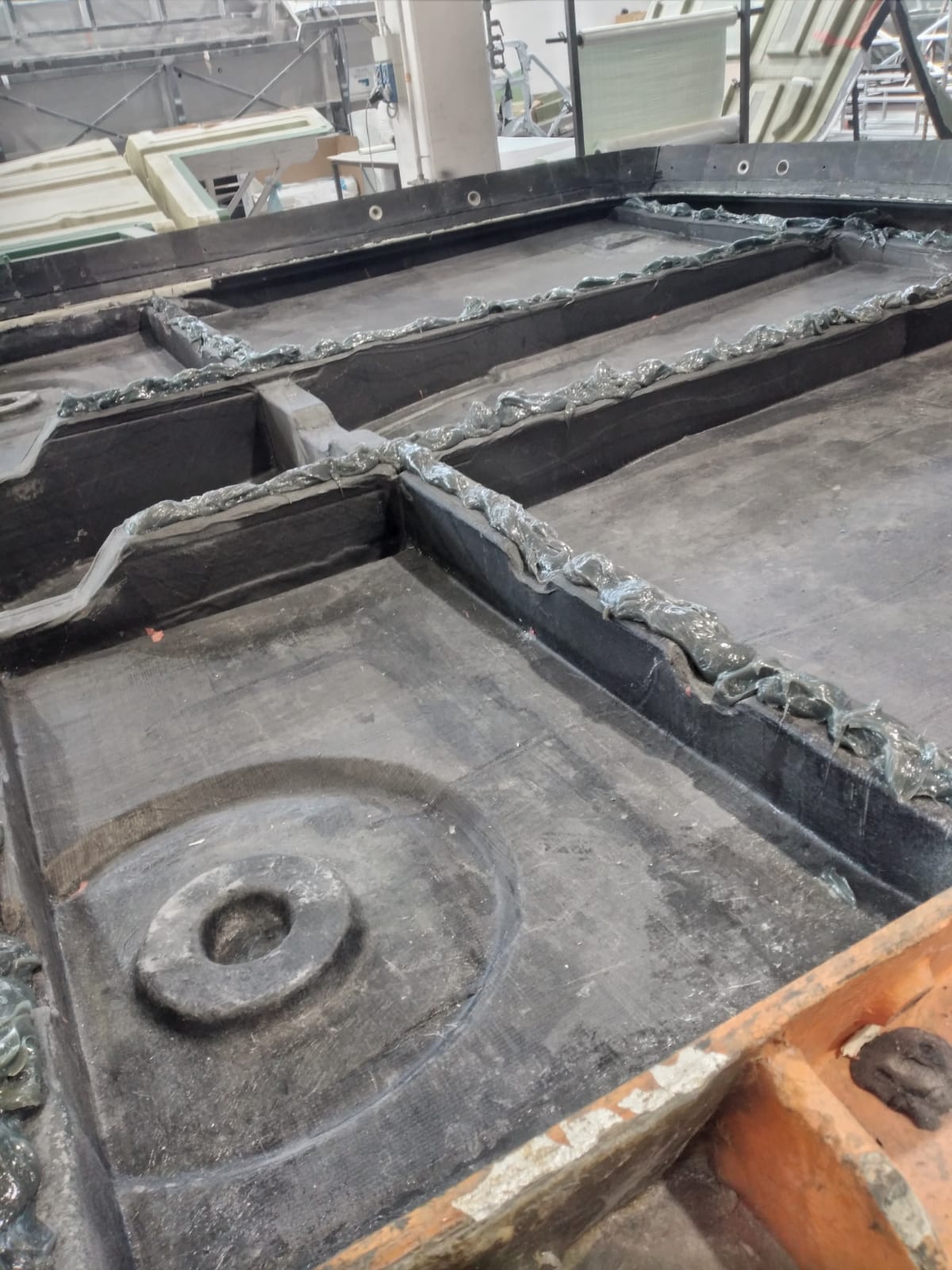
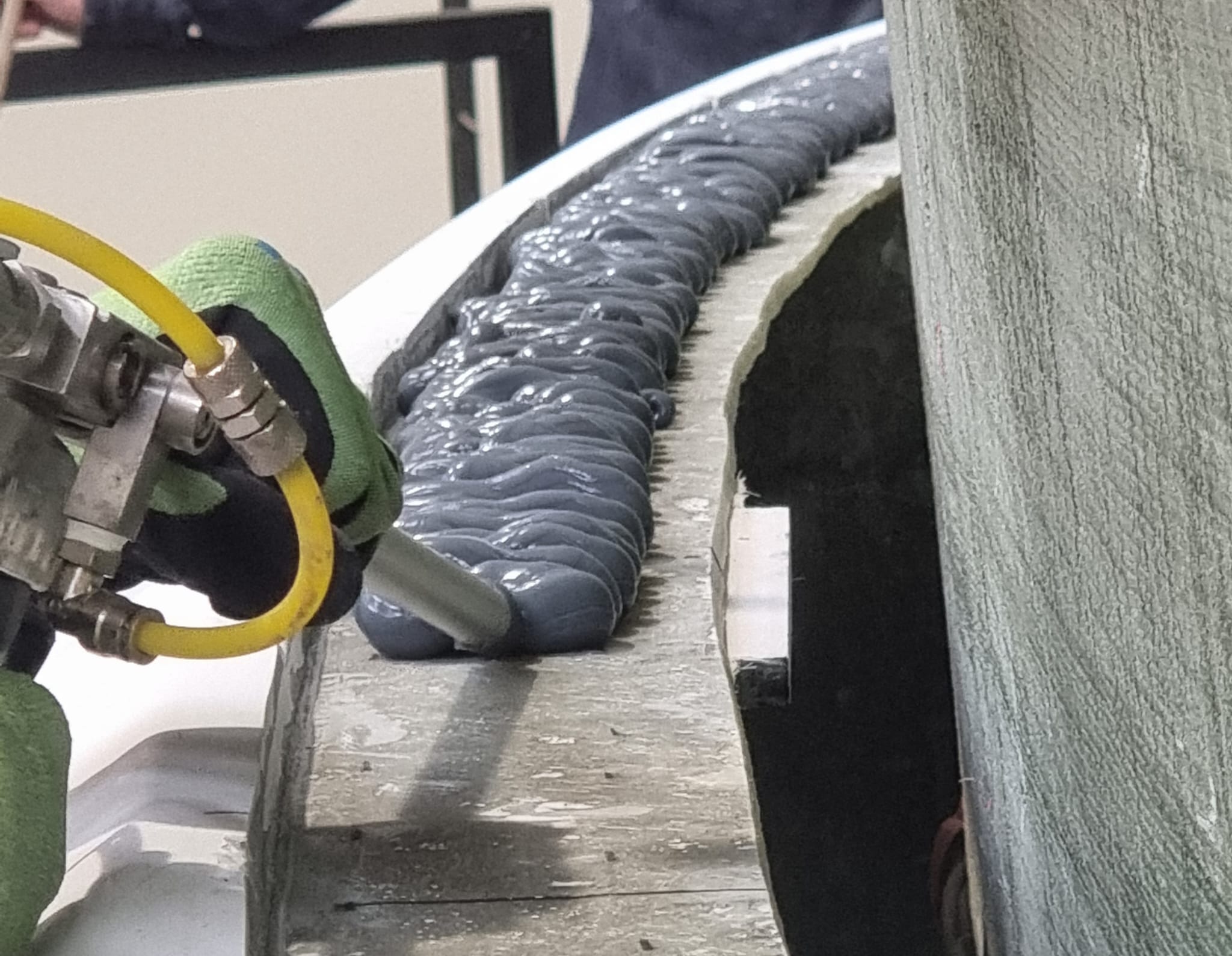
Structural bonding with Plexus MA590
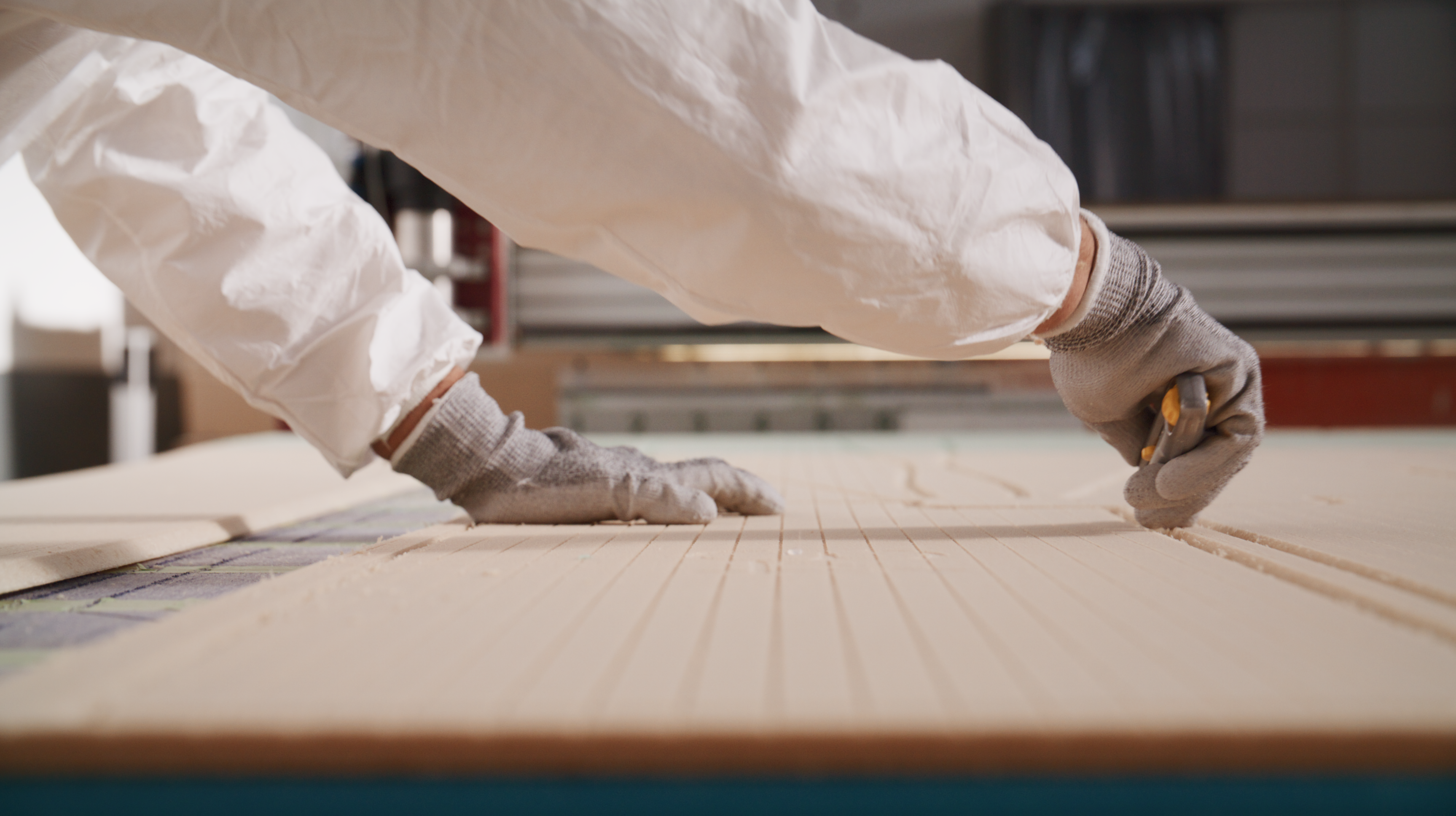
A. Inside of the mould with stiffening structure and integrated cable passage.
B. Structural joint with adhesive inside the ship mold.
C: Bonding of stringers and crossbeams onto the hull mould.
D: Technical area reinforced with shaped insert on composite bottom.
Sealing the sea
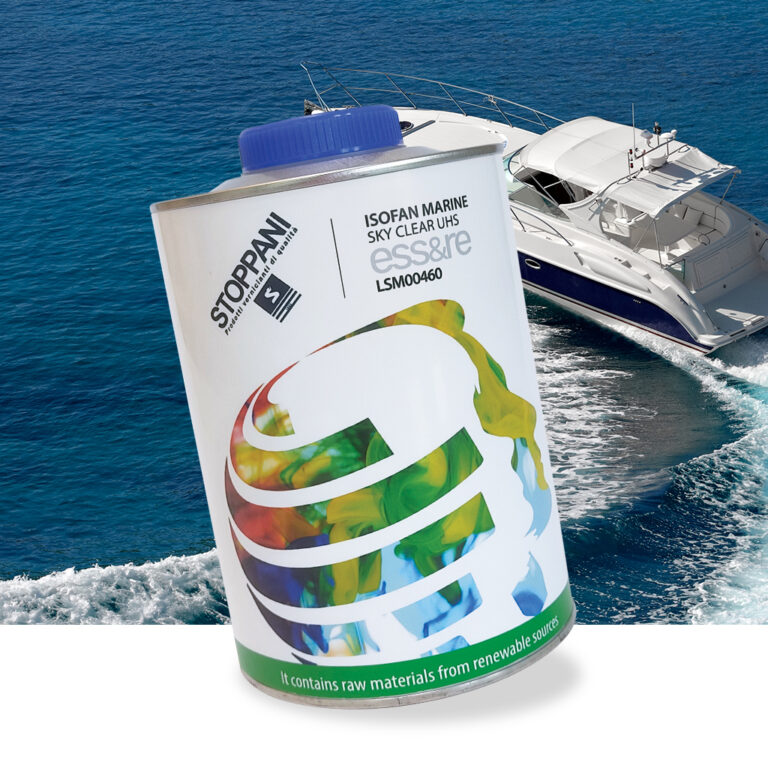
Developed through Vaber’s research, Advantseal DC is the new sealant designed to meet the highest standards of performance, aesthetics and safety in teak deck installation. We talk about it with Noemi Giorcelli, Head of R&D at the company
Where wood meets metal and composites, and craftsmanship meets chemistry, even a sealant can tell a story of innovation. This is the case with Advantseal DC, the new sealant developed by Vaber: an Italian company with over 60 years of experience in the formulation of adhesives and technical materials for highly specialized sectors.
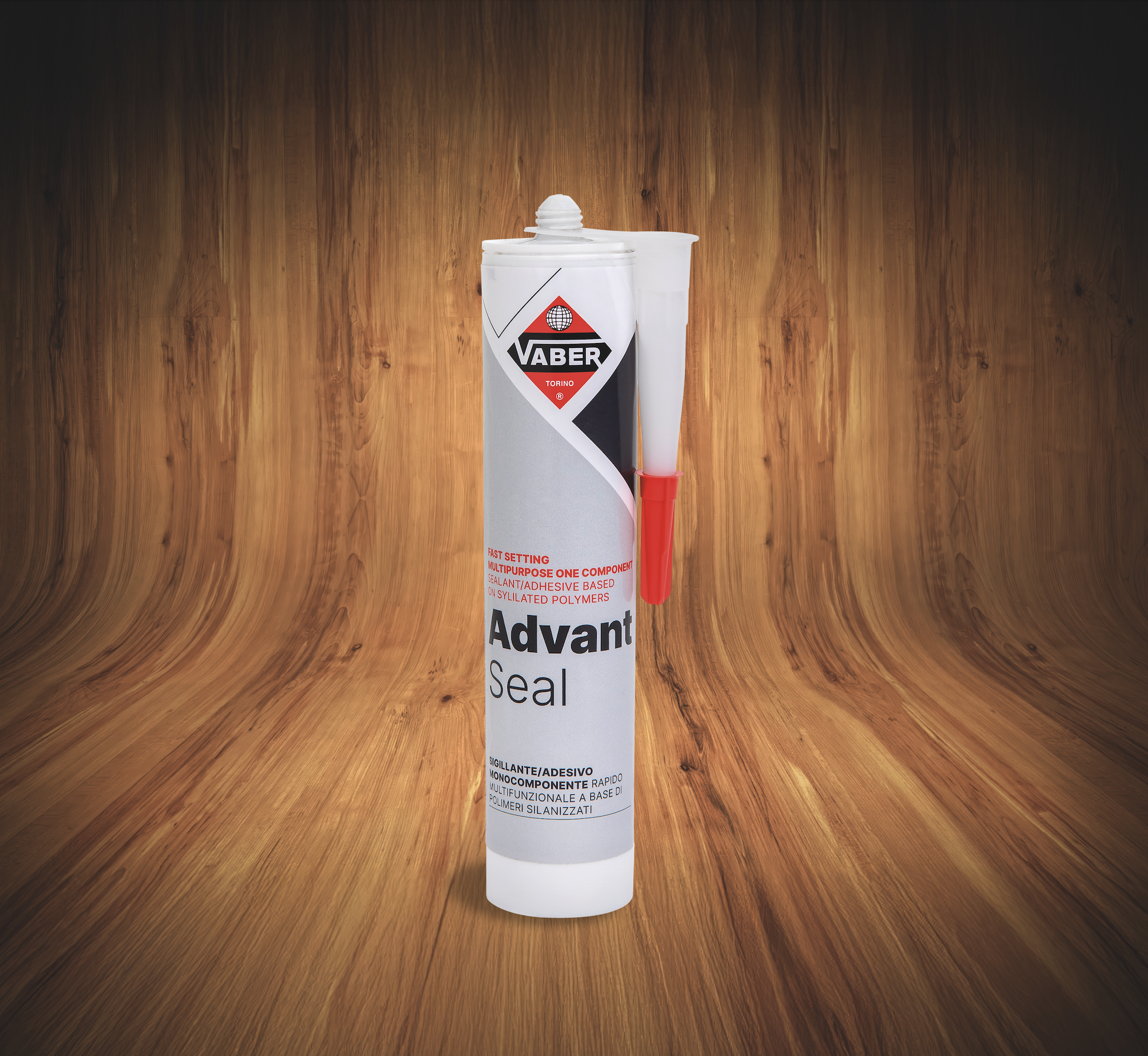
A sealant created through dialogue with shipyards
Designed specifically for application on teak, Advantseal DC was created to meet the needs of installation and refitting professionals: zero solvents, excellent workability, UV resistance, IMO certification, and durability designed for marine environments. But, above all, it is a product that was created through dialogue with shipyards, through direct interaction with those who work every day on the perceived – and real – quality of boats.
Engineer Noemi Giorcelli, Head of Research and Development at Vaber, tells us about how Advantseal DC came about and its main features.
How important is materials research today, even for seemingly ‘mature’ applications such as sealing?
Much more than you might think. Even the most established materials can be rethought in light of new technical, environmental, and regulatory requirements. At Vaber, we invest in R&D with a multidisciplinary approach, where the laboratory is not only a place for testing but also for vision. A sealant such as Advantseal DC is the result of this type of thinking: it is not just a matter of ‘sealing’, but of integrating performance, aesthetics, and responsibility into a single formulation.
What prompted you to develop such a specific product for teak?
The request came directly from the field. Our partners in shipyards were looking for a reliable caulking solution that could combine durability and aesthetic finish without compromise. Teak, with its beauty and physical characteristics, demands respect. A good sealant must follow its natural movements without breaking, maintain its appearance over time, and withstand the marine environment. It’s not easy and finding the right chemistry to do it well wasn’t easy either.

In practical terms, what changes for those working on a teak deck when choosing a product like Advantseal DC?
I would say that the experience changes, even before the result. Those who apply it immediately notice its balanced consistency, ease of application, compatibility with materials, and comfort even in poorly ventilated environments, thanks to the absence of solvents. After cross-linking, the product can be sanded to achieve a clean line, without smudges or hard edges. In short, it is designed for quality work, which professionals recognize from the first use.
A distinctive feature is IMO certification. How difficult was it to obtain?
It is a rigorous process, but also a natural step if you work seriously. IMO certification is not just a formal requirement: it is recognition that the product has been tested and validated according to international standards in terms of reaction to fire and safety on board. It was essential for us to offer this guarantee even on a non-structural product such as a teak sealant. It is a confirmation rather than a goal.
Research is often associated only with large composite materials or propulsion. Do you think that “ancillary” products also play a role in the overall quality of a boat?
Absolutely. The perceived—and real—quality of a yacht is also built in the details. A good adhesive, well-applied mastic, and a seal that lasts for years are elements that don’t make the headlines, but they make all the difference. It’s like interior finishes: no one notices the work that’s been done well, but everyone notices the work that’s been done badly. That’s why innovation is never secondary for us, even when it comes to seemingly “accessory” products.
Are there already shipyards using it in production or refitting?
Yes, Advantseal DC has already been adopted by several customers, especially in the refitting sector where precision and adaptability are everything. We receive positive feedback in particular for its ease of use and aesthetic appeal. But what pleases us most is when people tell us that “it’s not just a good product, it’s a smart product”: it means that we understand the needs of the industry.
Can we expect any other innovations from your R&D division for the nautical sector?
Absolutely. The nautical world, particularly that of composites and new materials, is very stimulating for us. We are working on new formulations and are also strengthening our dialogue with shipyards to better understand their real needs. True research always starts with a good question.
Active in the marine sector since the mid-1990s, Vaber is the exclusive distributor in Italy of Plexus structural adhesives, used for critical bonding applications such as hulls and decks, superstructures, spider frames, and much more. Over the years, the range of products for the nautical sector has expanded to include advanced solutions for composite production processes (vacuum bags, peel ply, release films, butyl sealants, spray adhesives, etc.) and innovative materials such as Foamtech aluminum foams: lightweight, recyclable, with excellent sound-absorbing properties, ideal for reducing noise and vibrations in engine rooms.