Smartgyro, specialized in marine stabilization technology, has completed an advanced R&D program launched in 2024 to develop a tailored gyro solution for multihull vessels – beginning with the Bluegame BGM75.
The aim was to overcome the challenges of stabilizing a new class of luxury power catamarans. The results are a testament to Smartgyro’s engineering capabilities, agile development process, and commitment to innovation.
Stabilizing Multihulls vs. Monohulls
From the outset, this project set an ambitious goal of surpassing the comfort levels traditionally associated with stabilized monohulls. The Bluegame BGM75 presented Smartgyro’s R&D team with unique challenges compared to single-hull designs.
The closer proximity of the 2 hulls enabled a seamless lower deck and a full beam owner cabin, but it also limited the available installation points for a gyro stabilizer, making the precision of the algorithmic solution even more critical.
The fundamental distinction between monohulls and multihulls lies in their motion dynamics. In a catamaran, the 2 hulls do not roll in unison, as waves impact each hull at slightly different moments; this results in one hull often being immersed at a different level than the other, creating an asynchronous motion response. Consequently, a catamaran of comparable size requires greater stabilization forces, applied with concise timing.
A Tailored Engineering Solution
A standard gyroscopic stabilizer, without software adaptation, does not synchronize effectively with the specific motion of a multihull. Without dedicated software modifications, the system would not provide effective stabilization.
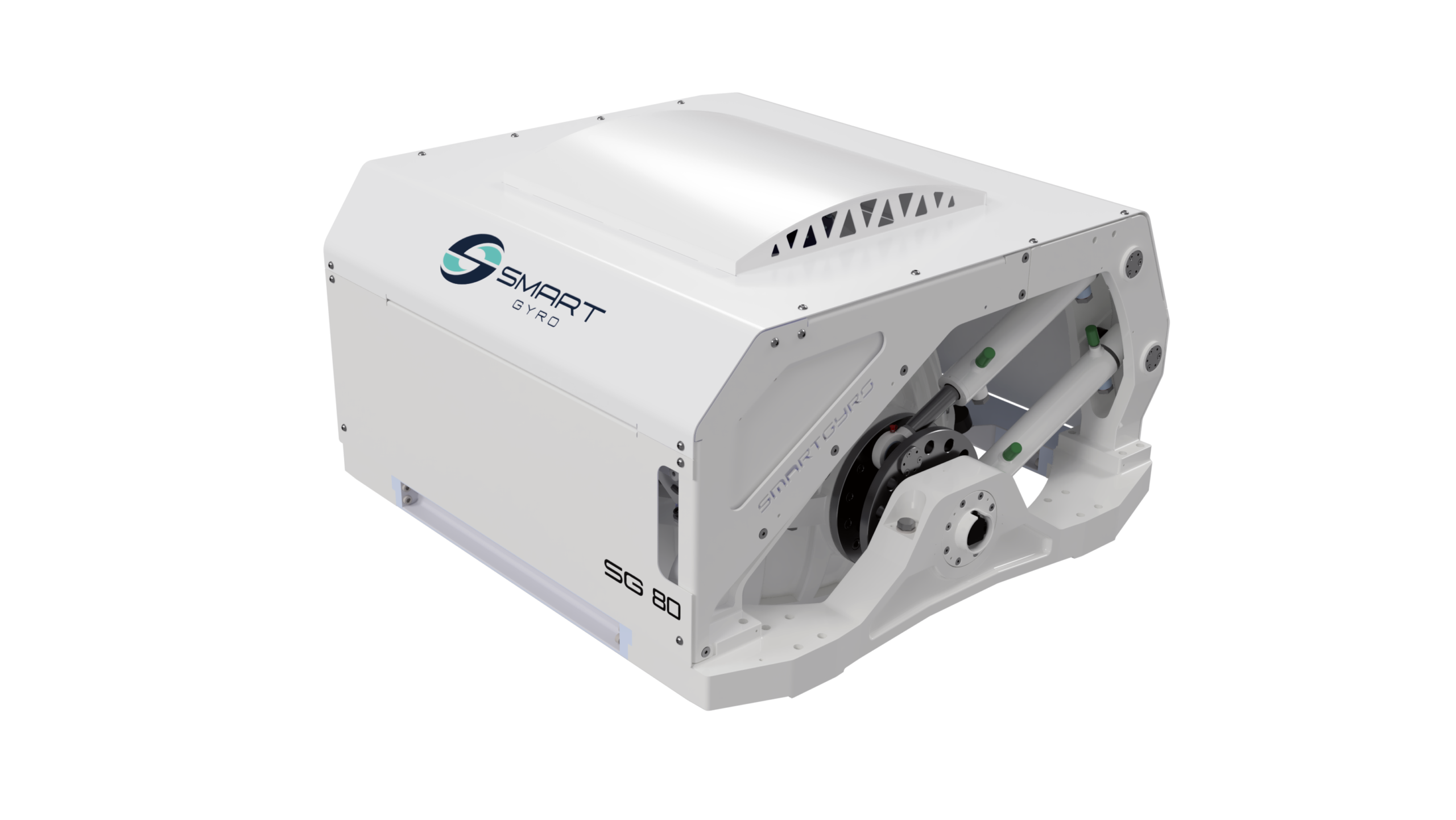
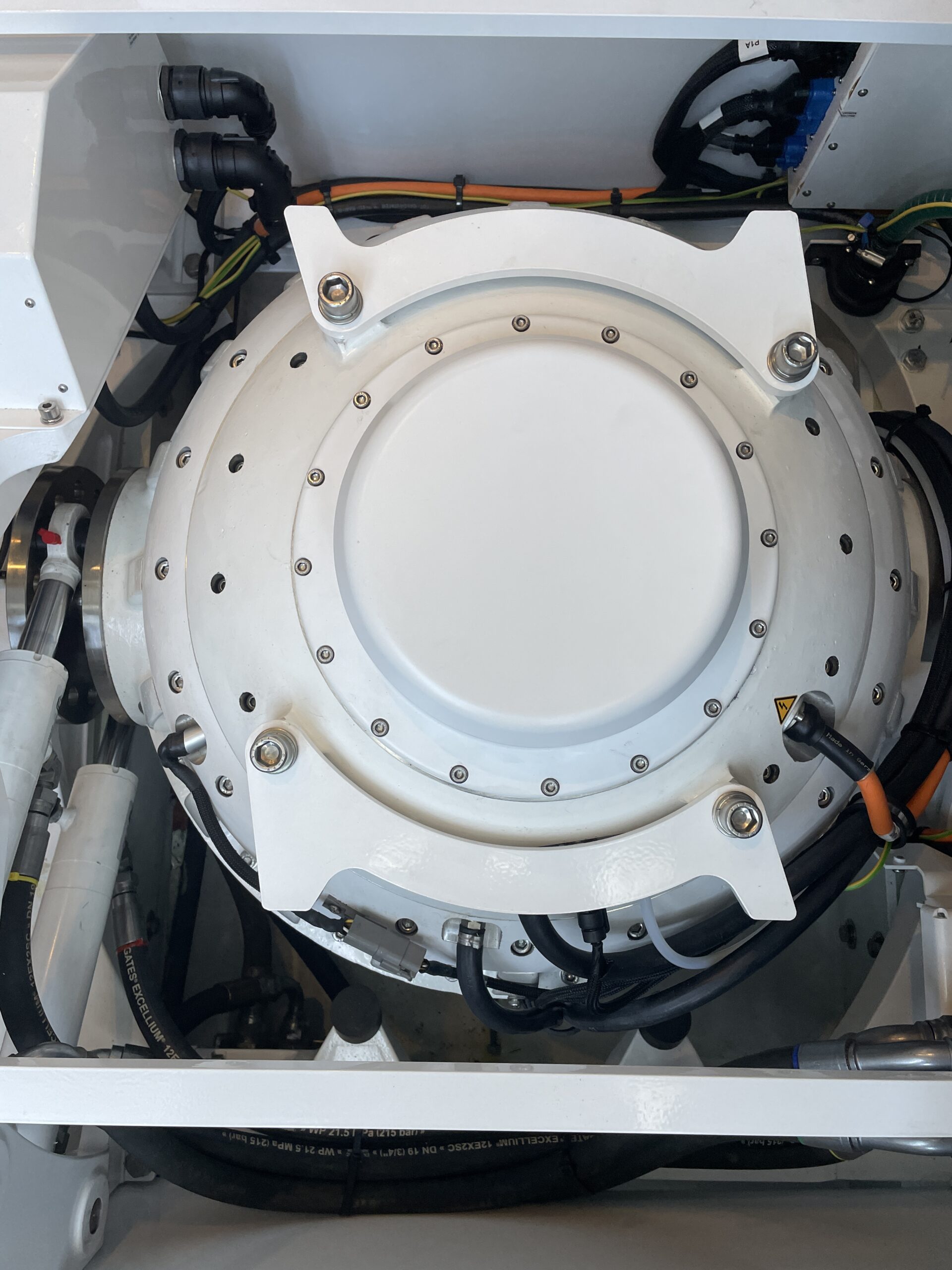
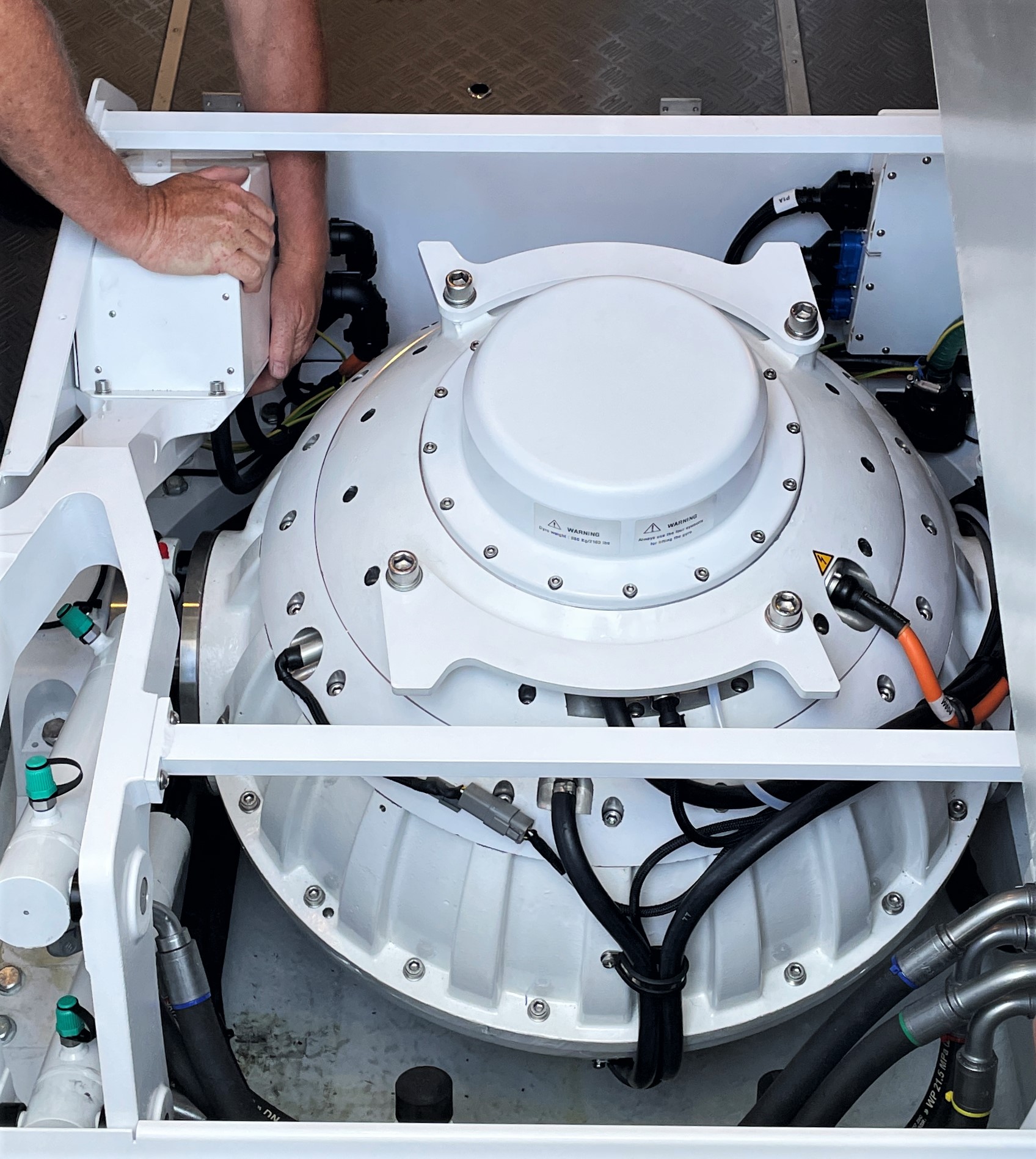
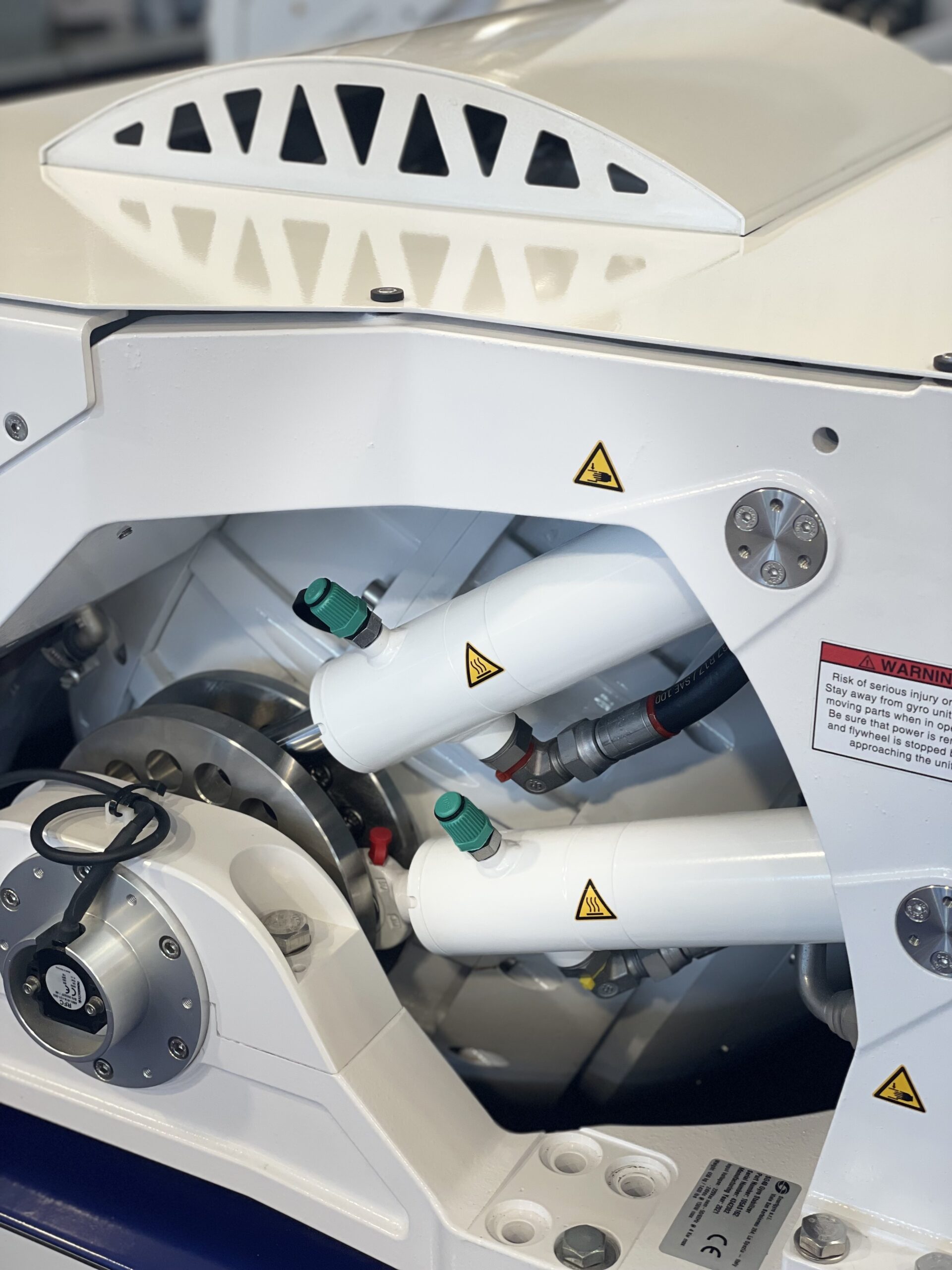
To meet the challenge, Smartgyro’s engineers installed 2 SG80 units, one in each hull of the BGM75, and developed a custom algorithm to control force output with precise timing. Software modifications enabled the gyros to deliver higher-than-normal torque, but only when required by the vessel’s dynamic motion – a critical factor for effective stabilization in asymmetric sea conditions.
From Theory to Sea Trials
Alongside extensive onshore development, the team followed a rigorous and articulate testing program on the open seas. Adjustable ballast was used to simulate different behaviors on the BGM75 test hull, replicating a range of metacentric height variations.
Multiple sea trials were conducted using different algorithmic setups, with continuous data collection. These insights drove iterative refinements, culminating in a performance level that met the high expectations of both Bluegame and Smartgyro.
Parameters monitored included:
- DYNAMIC VESSEL BEHAVIOUR. Considering the feasibility and safety of berthing a vessel across a variety of conditions.
- SEA STATE DATA. Including wave height and wave period, precisely recorded with technical instrumentation.
Strengthening the Innovation Pipeline
Although the solution was tailored for the BGM75, the methodology can be adapted to other multihull configurations. It proves that Smartgyro can engineer to specification – and deliver results.Fabrizio Stifani, R&D Manager at Smartgyro
The insights gained through this extensive testing enabled Smartgyro’s R&D team to further develop its predictive algorithms and refine stabilization logic. The learnings have already contributed to firmware updates across the Smartgyro range, reinforcing system performance, design integration, and onboard comfort.
Benefits
The program also confirmed Smartgyro’s ability to deliver flexible, high-performance solutions while maintaining core advantages such as onboard serviceability and modular installation – benefits increasingly valued by both builders and operators.
The Bluegame BGM75 featuring Smartgyro stabilization made its official U.S. debut at the Fort Lauderdale International Boat Show.
- Maximum Rated speed: 5.500 RPM
- Angular momentum at max. rated speed: 15.400 Nms
- Max. Anti-rolling torque at max. rated speed: 42.300 Nm
- “Spool-up” time to max. rated speed: 50 minutes
- “Spool-up” time to stabilization: 27 minutes (65% of rated speed)
- Input voltage: (AC) 220V nominal ; 50/60 Hz, single phase
- Control DC power input: 24 Vdc
- Max. “Spool-up” AC power (sea water pump excluded): 4.9 kW
- Operating AC power (sea water pump excluded) (sea state dependent): 2.0 – 3.5 kW
- Control DC power (“spool-up” and operating): 150 W (including display)
- Sea water supply :15 (min)-30 (max) LPM [4 (min)-8 (max) GPM]
- Operating temperature: 0 – 60 °C [32 – 140 °F]
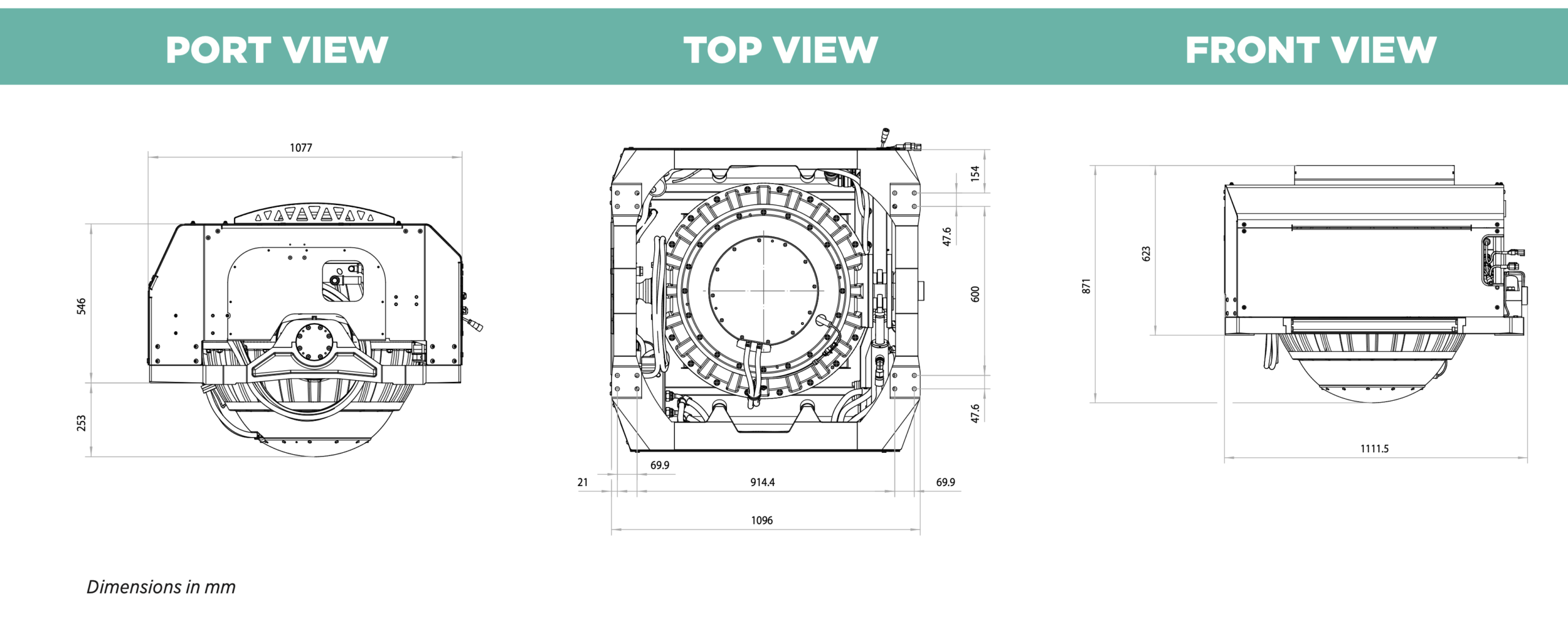
- Envelope dimensions: 1.08 x 1.11 x 0.87 m [42.4 x 43.7 x 34.3 in]
- Weight: 980 kg [2160 lbs]
- Noise output: 68 – 70 dBC @ 1 m