A new 75-metre long range explorer yacht project, Project 575, is currently being built at the Italian Sea Group facilities. Project 575 is the 575th vessel in build since the group’s foundation in 1948, and her completion is expected by 2018.
The overall design is that of an elegant yet robust platform with large exterior deck spaces. The expansive aft deck is spacious enough to host an Agusta Grande helicopter, and it also features a storage and refuelling hangar below deck.
The interior layout makes the most of the four decks: finishes and styling are expected to be timeless and yet to feature contemporary detailing. As the owner wishes to spend a long time onboard, the whole 300 square metres main deck has been dedicated to his own suite. Five additional suites located on the lower deck will provide comfortable accommodation for guests as well.
The forward upper deck will host bridge operations, with a VIP stateroom directly aft.
Giuseppe Taranto, CEO & Worldwide Sales Director of the Group, commented: “We are proud of this construction and are confident she will be a benchmark in her category. She is a yacht with a unique style that will attract attention in every port. Project 575 is also a great achievement in terms of technology”.


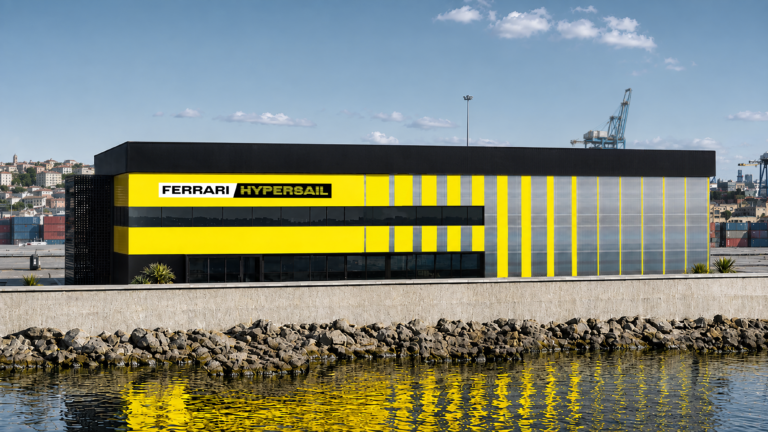
Ferrari Hypersail chooses Livorno as the project’s base
The creation of the facility forms part of the broader collaboration agreement between Ferrari Hypersail and Azimut Yachts, two Italian companies united by a shared commitment to innovation, research and a culture of performance.