The latest 20-metre Aeroboat S6 yacht by British design studio Claydon Reeves and BMT Nigel Gee has recently been unveiled at the Saatchi Gallery in London.
The aluminium and carbon-composite yacht is both a speedboat and a luxury craft, as it perfectly combines comfort with performance; various luxury features are available onboard and the vessel is powered by a pair of Rolls-Royce MTU V10 2000 M96 engines, allowing for an impressive top speed of 48 knots.
Based on the larger model SV12, the Aeroboat S6 is 19.6 metres overall, 4.99 metres abeam with a draft of 1.15 metres and displacing 47 ton.
The Aeroboat S6 features an aerodynamic hull with bluff nose, sweeping transom, and recessed lights and mooring ports.
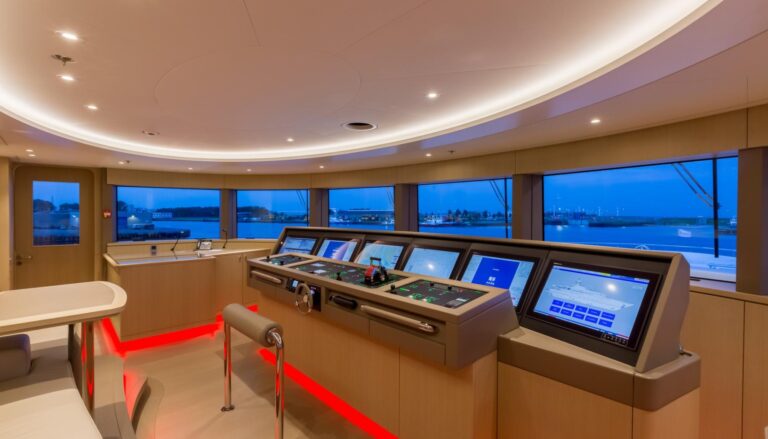
Her superstructure is dominated by the teardrop cockpit, which is available in three options: either open, or as a hardtop or fixed bimini for sightseeing and al fresco dining. Forward is the helm with Rolls-Royce joystick controls for easier manoeuvring. A bench with the Header Rail Readout, which provides passengers with updates on speed, course direction, and estimated time of arrival is located next to the helm station.
Two sun beds that can be converted into a single sun-lounger are located aft. Hidden television screens sliding away when not needed are also part of this area. A passerelle connects to the “Aerostairs”, that is a stepped transom with disappearing rails that raises for boarding or lowers for swimming. There are mooring stations in the bow, accessible through bomber-style doors revealing space for a life raft, lines, fenders, and anchors.
An expansive owner’s lounge, and master suite for sleeping, with view ports, a complete galley with optional fresh water maker, a second Pullman cabin aft for the crew or guests and shower room are located below-deck. The yacht can carry up to 12 passengers and accommodates four guests in full of comfort. Below deck, a garage provides enough space for a 3.8-metre tender or two jet skis.
The twin Rolls-Royce Series 2000 M96 engines punching 1,500 bhp each combined with Kamewa waterjets allow for a range of 400 nautical miles at 40 knots, while a gyro stabilizer allow for comfortable seakeeping.
“The positive reception from the market to the first Aeroboat spurred us on to develop the project into a new brand and line of yachts,” says James Claydon of Claydon Reeves. “Each aluminium and carbon built yacht shares the same DNA and form language, and is adorned with user-focused features to deliver an unparalleled experience.”