Modern yachts rely on increasingly complex electrical architectures where even brief power interruptions can compromise safety and system integrity. This article examines marine UPS systems, battery technologies, and integration strategies that ensure a continuous and stable supply to critical onboard loads.
It reviews design criteria, redundancy schemes, class requirements, and operational considerations relevant to marine applications, offering a structured framework for engineers and operators aiming to enhance the reliability and availability of onboard power systems through advanced yacht power systems engineering.
Introduction
Modern yachts depend on electrical and electronic systems that operate continuously, from navigation and communication to automation, comfort, and safety equipment. As onboard power networks grow in complexity, uninterrupted electrical supply has become a central design priority. Even a brief voltage dip or unexpected blackout can compromise safety and degrade system performance.
For this reason, integrating marine UPS systems and reliable battery backup for yachts is now a fundamental aspect of yacht engineering, ensuring that vital functions remain operational under demanding conditions. The following sections explore UPS and battery solutions from a practical and engineering perspective, outlining selection criteria, integration principles, and operational strategies for shipyards and crews seeking true electrical resilience onboard.
Power No-Break Challenges in Yachts
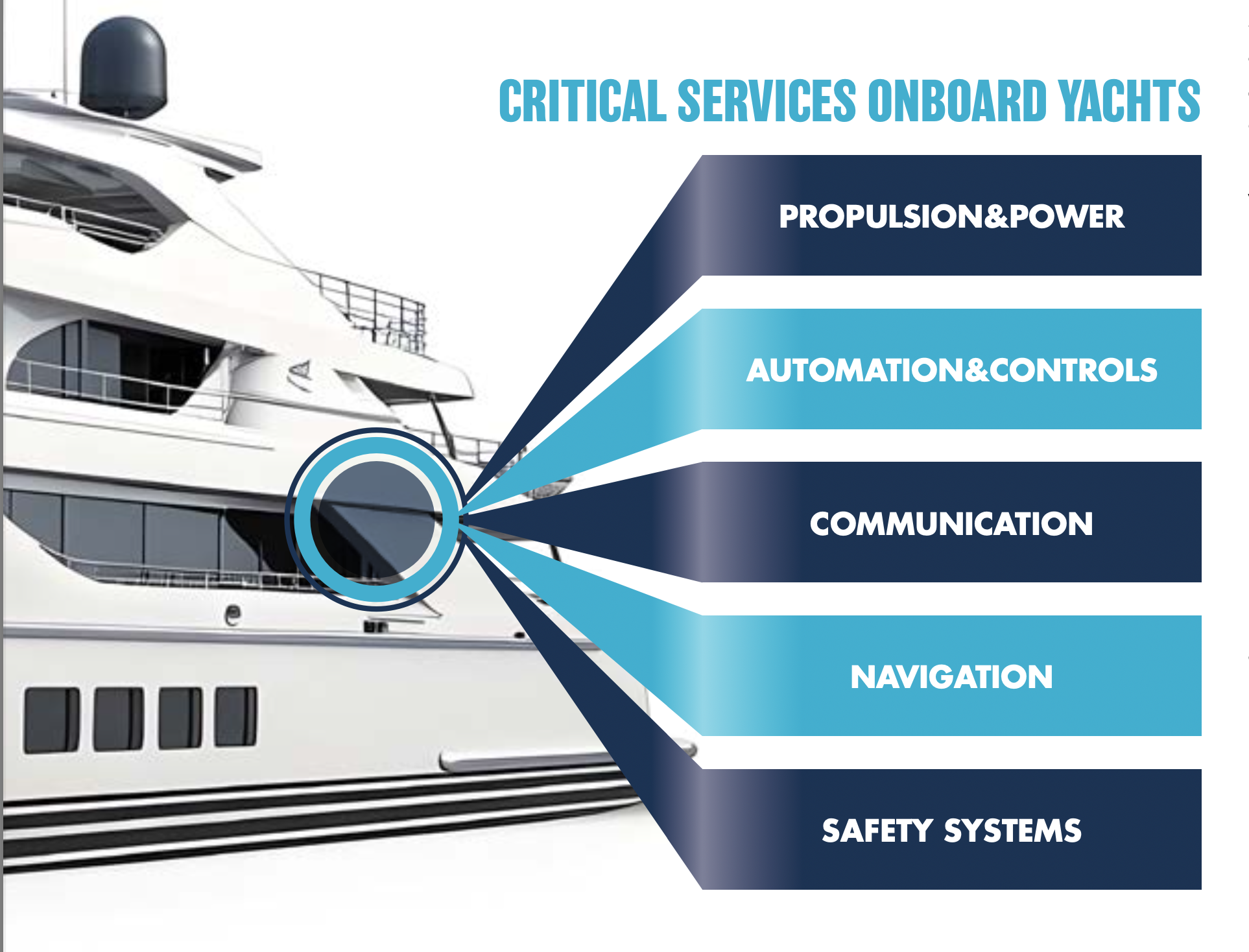
Modern yachts incorporate advanced electrical and digital infrastructures in which navigation, automation, and safety functions depend on a stable and continuous power supply. Unlike shore-based installations, onboard systems must operate under variable conditions, including voltage transients, generator load fluctuations and temporary blackouts during switchovers or maintenance activities.
The challenge goes beyond redundancy: it requires guaranteeing true no-break continuity for critical services, including navigation sensors, communication networks, fire detection systems, and automation controllers. A loss of power lasting only a few seconds can trigger system resets, alarms, or data corruption, undermining both safety and reliability.
Furthermore, the coexistence of conventional AC networks and modern DC-based architectures – often linked to hybrid propulsion and energy storage systems – demands careful coordination between generators, converters, energy storage units, and marine UPS systems. In high-end vessels and superyachts, superyacht electrical systems require even stricter continuity parameters and advanced redundancy strategies. A resilient, marine-certified UPS solution is essential to prevent cascading failures and maintain service integrity under all operating conditions.
Design and Selection Criteria for a UPS
Selecting a suitable UPS for a yacht requires balancing reliability, performance, and integration constraints. The process begins with a detailed load classification to identify equipment that must remain powered under all circumstances, including navigation electronics, automation controllers, communication devices, IT networks, and safety systems. These critical loads are typically segregated from comfort or hotel services through dedicated distribution panels.
The following table shows the number and power ratings of UPS units installed on yachts of various sizes:
Number of UPS installed onboard yachts (Values shown in the table are provided for guidance only)
| YACHT CLASS | AVG. NUMBER OF UPS | AVG. TOTAL POWER | CONFIGURATION | TYPE OF BATTERY | BATTERY LIFE CYCLE |
| up to 25 m length | 1 | 3-10 kVA | Online | VRLA | 3 – 5 years |
| 26 to 50 m length | 2 to 3 | 35-40 kVA | Online consider modularity | VRLA or LiFePO4 | VRLA 3 – 5 years LiFePO4 8 – 10+ |
| over 50 and up to 80 M | 3 | 45-50 kVA | Online consider modularity or N+1 | VRLA LiFePO4 (marine certified) | VRLA 3 – 5 years LiFePO4 8 – 12+ |
Power sizing
Power sizing depends on the total critical load and the required backup time – typically 5 to 30 minutes – which provides sufficient autonomy for generator changeover or controlled shutdown of sensitive equipment. Oversizing should be avoided, as it increases heat production, footprint, and lifecycle cost without improving resilience.
UPS configurations include:
- OFFLINE UPS – Compact and efficient for non-critical applications.
- LINE-INTERACTIVE UPS – Provides voltage regulation and short transfer times.
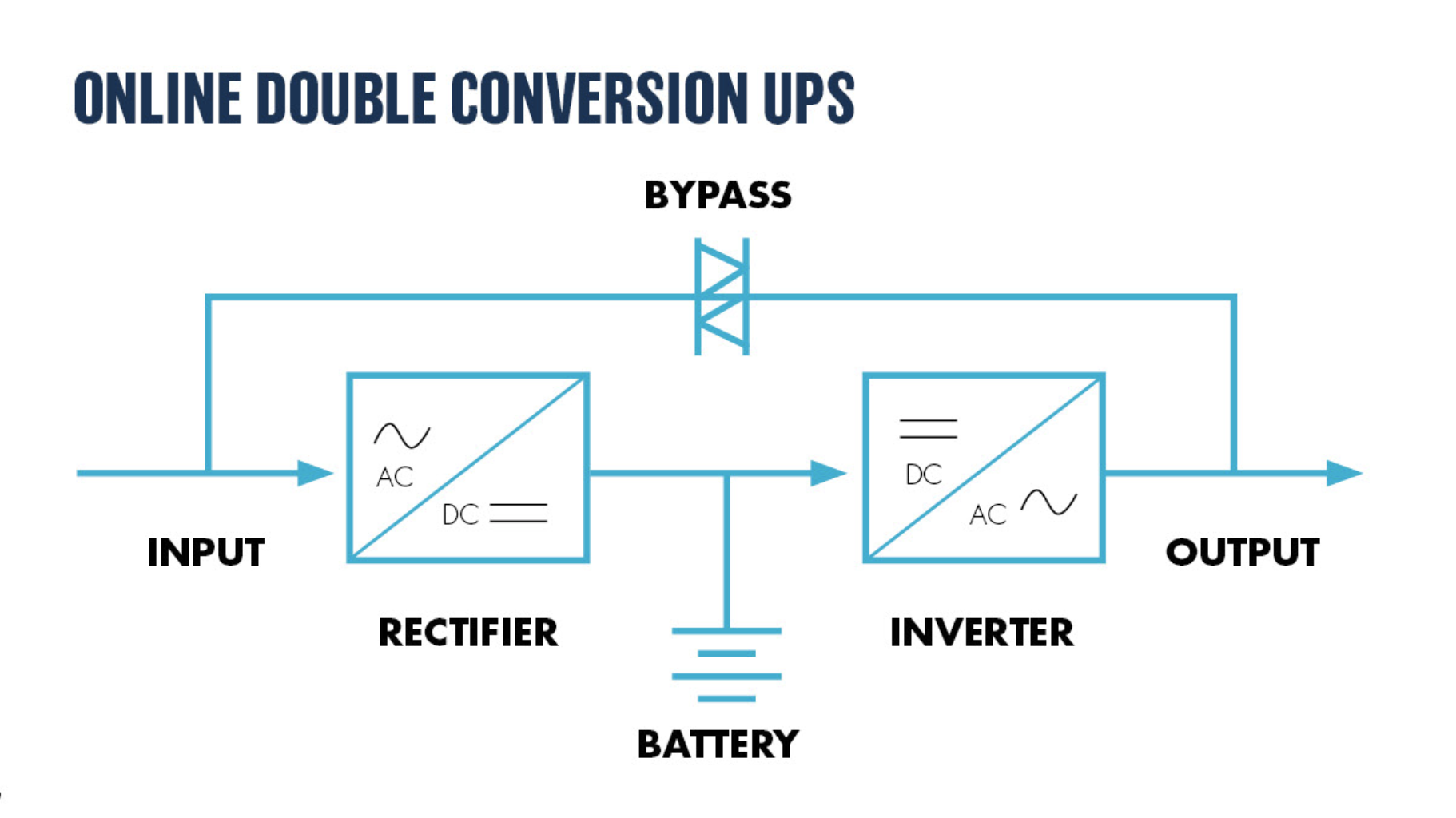
- ONLINE DOUBLE-CONVERSION UPS – Ensures true no-break operation and galvanic isolation; recommended for bridge and automation systems [see Fig.1].
Redundancy strategies to strengthen availability:
- N+1 REDUNDANCY for fault tolerance.
- PARALLEL OPERATION for scalability and maintenance without downtime.
- MODULAR ARCHITECTURE with hot-swappable modules.
- FUNCTIONAL SEGREGATION through dedicated UPS units for bridge, engine room, and IT systems.
- STATIC AND MANUAL BYPASS for safe maintenance.
- REMOTE MONITORING for proactive fault detection and support.
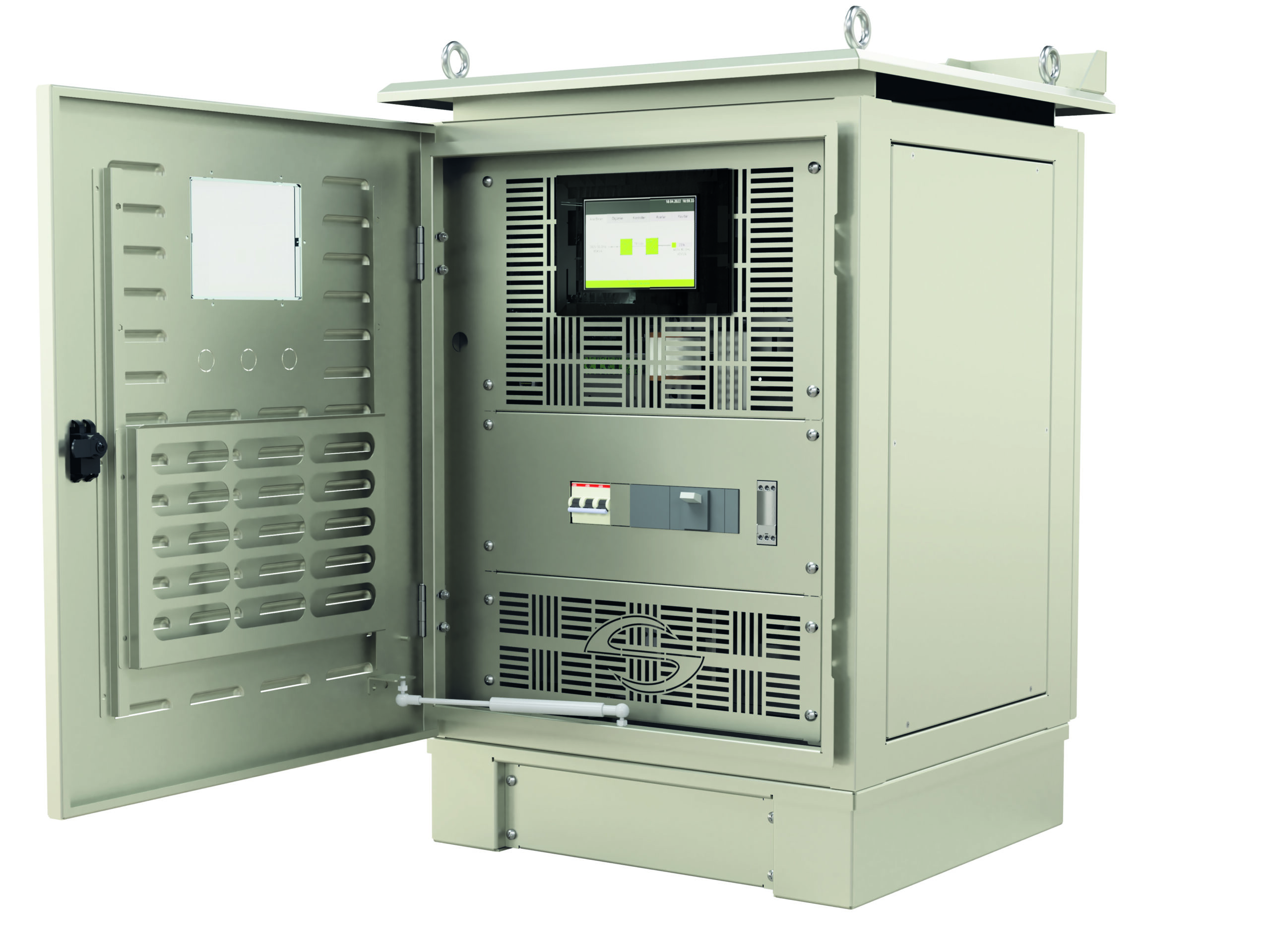
Marine environments impose strict requirements. UPS units must comply with IEC/EN 60945 and relevant class rules (DNV, RINA, ABS), ensuring resistance to vibration, electromagnetic interference, and temperature variations. Proper ventilation, maintenance access, and coordination with the vessel’s energy-management system are essential for long-term reliability.
Battery Technologies and Integration
Batteries form the core of UPS energy storage, ensuring continuity during power interruptions. Selection depends on technology, capacity, autonomy, maintenance, and installation constraints.
Traditional systems use Valve Regulated Lead Acid (VRLA) batteries:
- AGM BATTERIES – Reliable, maintenance-free, spill-proof, and vibration-resistant; a solid and cost-effective choice for marine UPS applications.
- GEL BATTERIES – Improved deep-discharge performance, extended cycle life, and high thermal stability; ideal for demanding installations.
- LITHIUM IRON PHOSPHATE (LiFePO₄) – Excellent thermal stability, intrinsic safety, long cycle life, and suitability for frequent charge–discharge cycles. Key advantages of lithium technology include high energy density, reduced weight, fast recharge, and minimal maintenance, providing notable lifecycle benefits despite higher initial cost.
Battery selection criteria include:
- Capacity (Ah) or Energy (kWh) according to required backup time.
- Depth of Discharge (DoD): percentage of capacity used relative to total rated capacity.
- Life Cycle: number of full charge-discharge cycles before capacity drops to 80% of original value (200–300 cycles for AGM; 2,500–3,500 for LiFePO₄).
- Weight and volume.
- Capability to withstand marine environmental conditions and class approvals.
- Safety considerations such as fire and explosion risks.
UPS Selection and Onboard Operation
The first step in selecting a UPS for onboard use is choosing the right configuration. The online double-conversion type offers significant advantages in terms of no-break performance and is therefore the preferred option for critical loads. Redundancy criteria should then be evaluated to enhance availability.
A detailed assessment of the loads to be supplied (kW/kVA) must include an appropriate margin – typically around 20% – for future expansion. Additional factors include installation location, ventilation, ingress-protection rating, accessibility for maintenance, environmental conditions (temperature, humidity, vibration, EMC), class approvals, and integration with electrical power plant, shore power, and automation systems.
Periodic maintenance and clear checklists extend UPS service life and reduce failure risks. Crew training on operation and maintenance, together with remote monitoring capabilities, further improves troubleshooting and diagnostic efficiency.
Conclusions
In the yachting sector, UPS systems are not merely safety devices but strategic components that ensure operational continuity and support a high-quality onboard experience. Beyond protecting navigation and communication functions, they safeguard essential comfort systems such as HVAC, lighting, and entertainment – features central to modern yachting expectations.
The shift from traditional VRLA batteries to advanced lithium technologies mirrors the industry’s broader move towards efficiency, sustainability, and digital integration. LiFePO₄ batteries, with their superior cycle life, safety, and reduced weight, offer clear advantages for contemporary yacht design. Coupled with smart monitoring and predictive maintenance, UPS solutions now contribute to improved energy management and lower operating costs.
Ultimately, investing in a well-designed UPS is both a safety measure and a strategic decision – one that enhances reliability, sustainability, and the overall reputation of the yacht. In an environment where downtime is unacceptable, UPS systems stand as a cornerstone of technological excellence at sea.
| UPS IN YACHTS: WHY IT MATTERS ✔ No-break continuity is essential for navigation, safety, and automation systems. ✔ Online double-conversion UPS is the preferred choice for critical loads. ✔ Redundancy strategies (N+1, modular architecture) enhance reliability. ✔ Marine compliance (IEC/EN 60945, DNV, RINA, ABS) ensures roustness ✔ Lithium batteries (LiFePO₄) offer superior cycle life and weight reduction. ✔ Battery choice: AGM/Gel for cost; LiFePO₄ for premium performance. ✔ Integration: Energy management and monitoring systems. | UPS Design Checklist ✔ Load classification: Identify critical vs. comfort loads. ✔ Power sizing: Backup time + 20% margin for expansion. ✔ Configuration: Online double-conversion for critical systems. ✔ Redundancy: N+1 or modular architecture. ✔ Environmental compliance: Vibration, EMC, temperature. ✔ Battery choice: AGM/Gel for cost; LiFePO₄ for premium performance. ✔ Integration: Energy management and monitoring systems. |