The cost-of-living crisis and the energy price hikes of 2022 may have helped to drive a certain mind shift. Public anger over inflated gas and electric bills, accompanied by a round of protests across cities in the UK, has led some to reconsider nuclear power as a cheap, sustainable energy source – not to mention a safe one, if handled correctly. And, in most cases, nuclear power is handled correctly and in accordance with long-established regulations.
NUCLEAR POTENTIAL
The International Maritime Organization (IMO) has mandated a 40% reduction in shipping’s carbon intensity by 2030 to reach net zero by 2050. Although it doesn’t directly target yachts, there is clear pressure to evolve in the leisure sector.
Moreover, alternative fuels such as methanol, ammonia and hydrogen face their own headwinds. Nuclear has the potential to cut through it all.
From an environmental perspective, the technology produces zero greenhouse gas emissions at the point of use, making it a far cleaner alternative to traditional fossil fuels. Nuclear energy provides stable and reliable power without the environmental footprint associated with fuels like hydrogen, making it a compelling solution as the industry faces increasing pressure to decarbonise.
PUBLIC OPINION
Ideally, floating nuclear power plants could also be established to produce synthetic fuels using only seawater and air, further supporting decarbonisation efforts.
However, there are still significant challenges to be addressed before nuclear-powered yachts become a mainstream concept, and for good reason. The association of nuclear energy with accidents like Chernobyl and Fukushima continues to shape public opinion, so safety concerns and public perception remain major hurdles.
The hardest obstacle in the way of splitting the atom as a viable futuristic source of superyacht energy remains public opinion. Educational campaigns will serve the purpose of positioning the new nuclear as a publicly accepted energy option for the future.
Recent technical reports highlights that modern nuclear designs are far safer, incorporating “passive safety features” that make them fail-safe even in the event of malfunction.
For instance, Molten Salt Reactors (MSRs) feature passive cooling systems that automatically activate in case of overheating, reducing the likelihood of accidents. HOWEVER, Regulatory frameworks must evolve to support the adoption of nuclear propulsion for the nuclear vision to be realised.
Existing regulations, such as those in SOLAS Chapter VIII and the IMO’s Code of Safety for Nuclear Merchant Ships, are outdated and need revision to accommodate modern reactor technology.
International Regulators suggest that furthered collaboration between the IMO and the International Atomic Energy Agency (IAEA) will be vital in developing the necessary regulatory standards for the safe operation of nuclear-powered vessels.
THE TECHNICAL REPORTS
The most recent reliable Reports on the possible adoption of nuclear energy on yachts come from Lloyds Register and RINA, not by chance the most active Class Societies in the Yachting Industry.
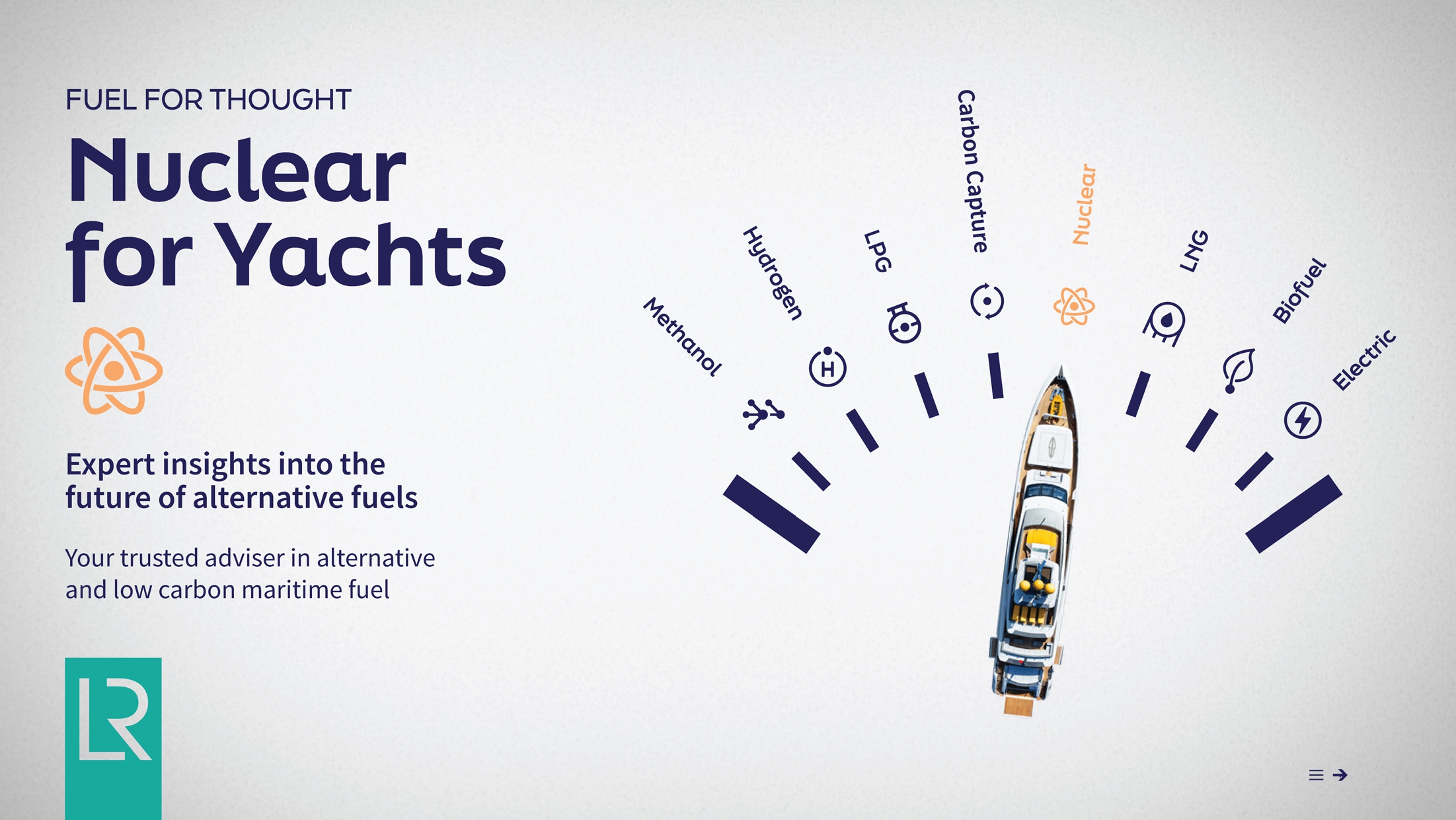
“Fuel for Thoughts – Nuclear for Yachts”, a recent report by Lloyd’s Register unveiled in September 2024 at the Monaco Yacht Show, suggests that the innovative technology could usher in a new era of sustainable, high-performance yachting (Fig. on cover).
According to the LR Report, nuclear power holds significant potential for transforming the yachting industry by providing a sustainable, efficient, and powerful energy source.
Despite the promising prospects, the adoption of nuclear propulsion in yachts faces considerable challenges, particularly in terms of regulatory development, safety concerns, waste management, and public perception.
The safety record of nuclear power generation is well established, supported by a network of engaged regulatory bodies overseeing the safe development of new reactor technologies.
TECHNOLOGY ADVANCEMENTS
As advancements in nuclear technology such as Small Modular Reactors (SMRs) and microreactors (Heat Pipes) continue to emerge, these systems offer improved safety features, ease of transport, and reduced costs, making them potentially viable for marine propulsion.
Small Modular Reactors (SMRs)
Pressurized Water Reactors (PWRs) have been developed into small modular reactors (SMRs) that could be used onboard. They use uranium as fuel to generate heat through a controlled nuclear fission chain reaction. The heat is transferred to the coolant, which in a PWR is typically ordinary water.
The heated coolant remains in a liquid state at high temperatures due to the high pressure maintained within the reactor vessel. This heat can then be used for conversion to electrical power, mechanical power, or direct thermal energy for heating purposes (Fig. 2).
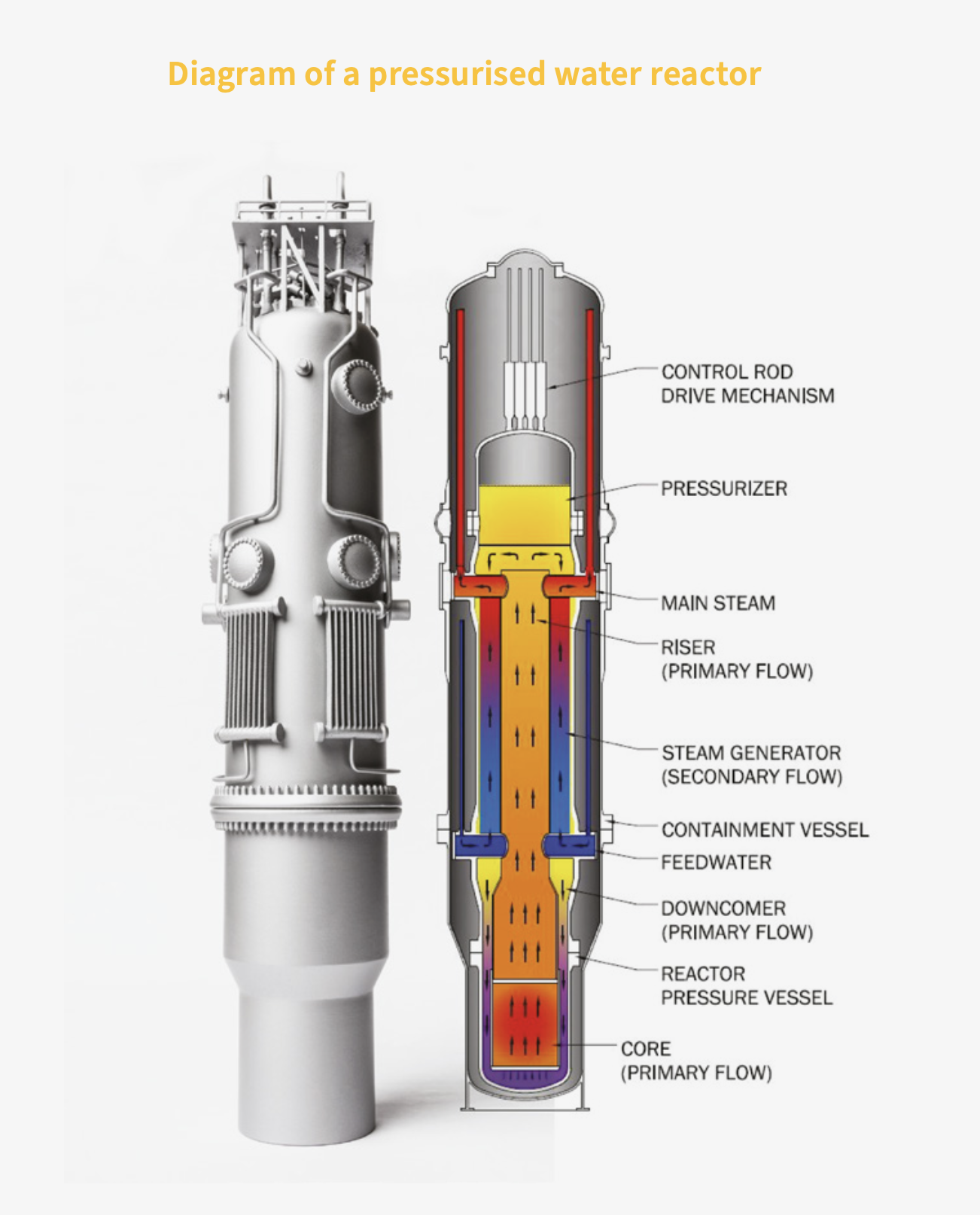
For maritime applications, the development of smaller PWR designs suitable for factory fabrication with passive safety features brings the prospect of commercial deployment. PWRs are unique among reactor technologies in that there is experience operating such reactors in marine environments through multiple militaries, as well as a few historic examples of government-backed merchant vessels.
For production of the small modular PWR necessary for broader adoption in the maritime sector, development is at a similar level to other technologies where validation of an integrated prototype is underway in a test environment.
Microreactors (Heat Pipes)
A nuclear Heat Pipe (low pressure microreactor) is a passive heat transfer device. Uranium is used as fuel to generate heat through a controlled nuclear fission chain reaction in the reactor core. The heat is transferred to a working fluid in the heat pipe.
This heat can then be used for conversion to electrical power, mechanical power, or direct thermal energy for heating purposes (Fig. 3).
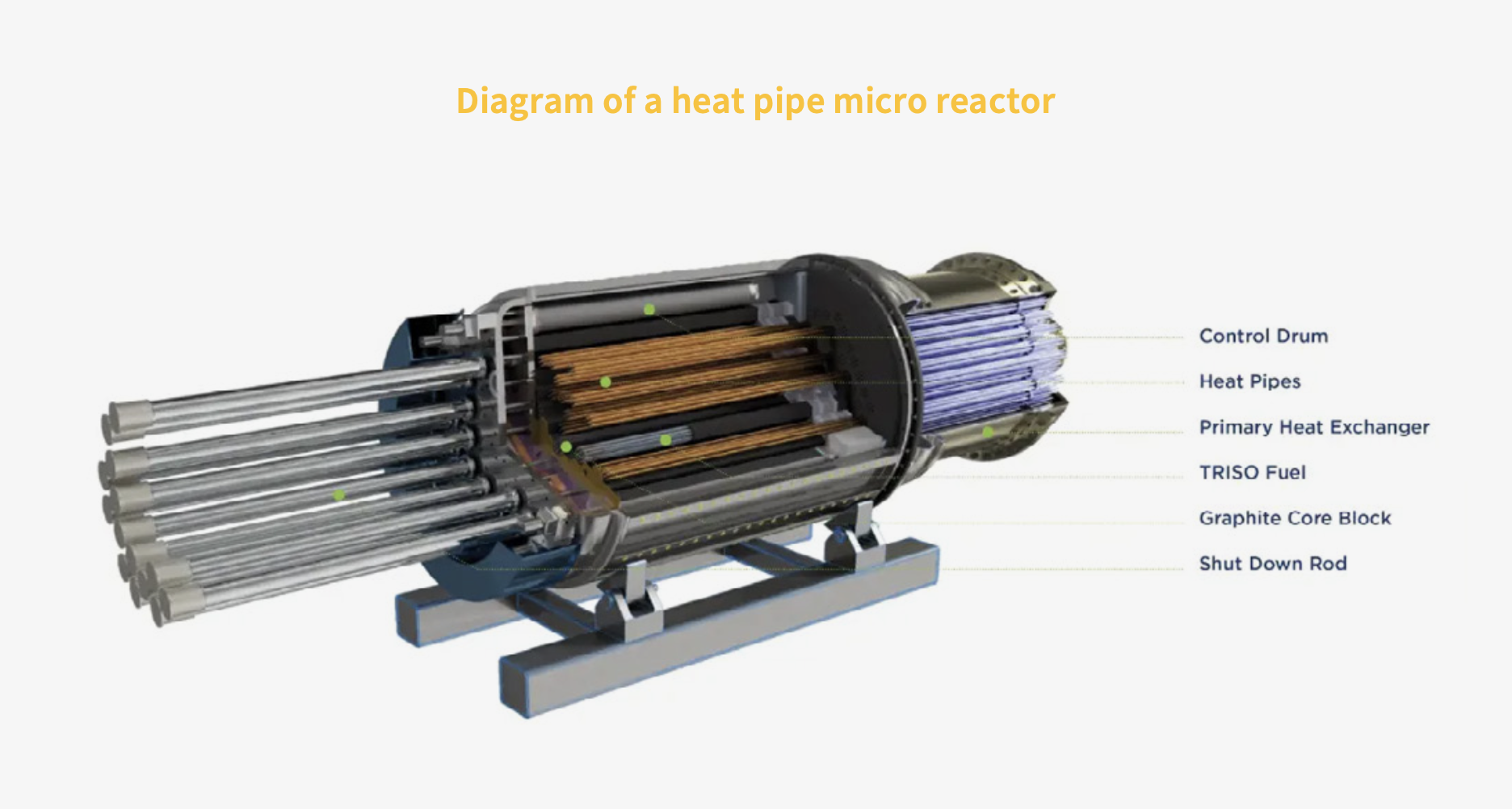
Fig. 3 – The reactivity control drums are used to moderate the power output of eVinci such as for load following applications or shut down. Otherwise, they are stationary
REGULATIONS
However, introducing nuclear-powered yachts into the maritime industry will necessitate widespread updates to existing regulations, including those outlined in the IMO SOLAS Chapter VIII.
The roles and responsibilities of key stakeholders such as the International Maritime Organization (IMO), the International Atomic Energy Agency (IAEA), the Maritime and Coastguard Agency (MCA), and Class Societies such as Lloyd’s Register as a Certifying Authority are still under discussion and refinement.
Collaborative efforts among these entities will be crucial to developing a comprehensive and adaptable regulatory framework that supports the safe and responsible use of nuclear technology in yachting.
While significant challenges remain, the potential benefits of extended range, high power output, environmental sustainability, and technological prestige make nuclear-powered yachts an intriguing and possibly transformative prospect for the industry.
As research and development in nuclear science progresses, the maritime industry may very well enter a new era where luxury yachts are powered by the boundless energy of the atom.
RINA’S WHITEPAPER
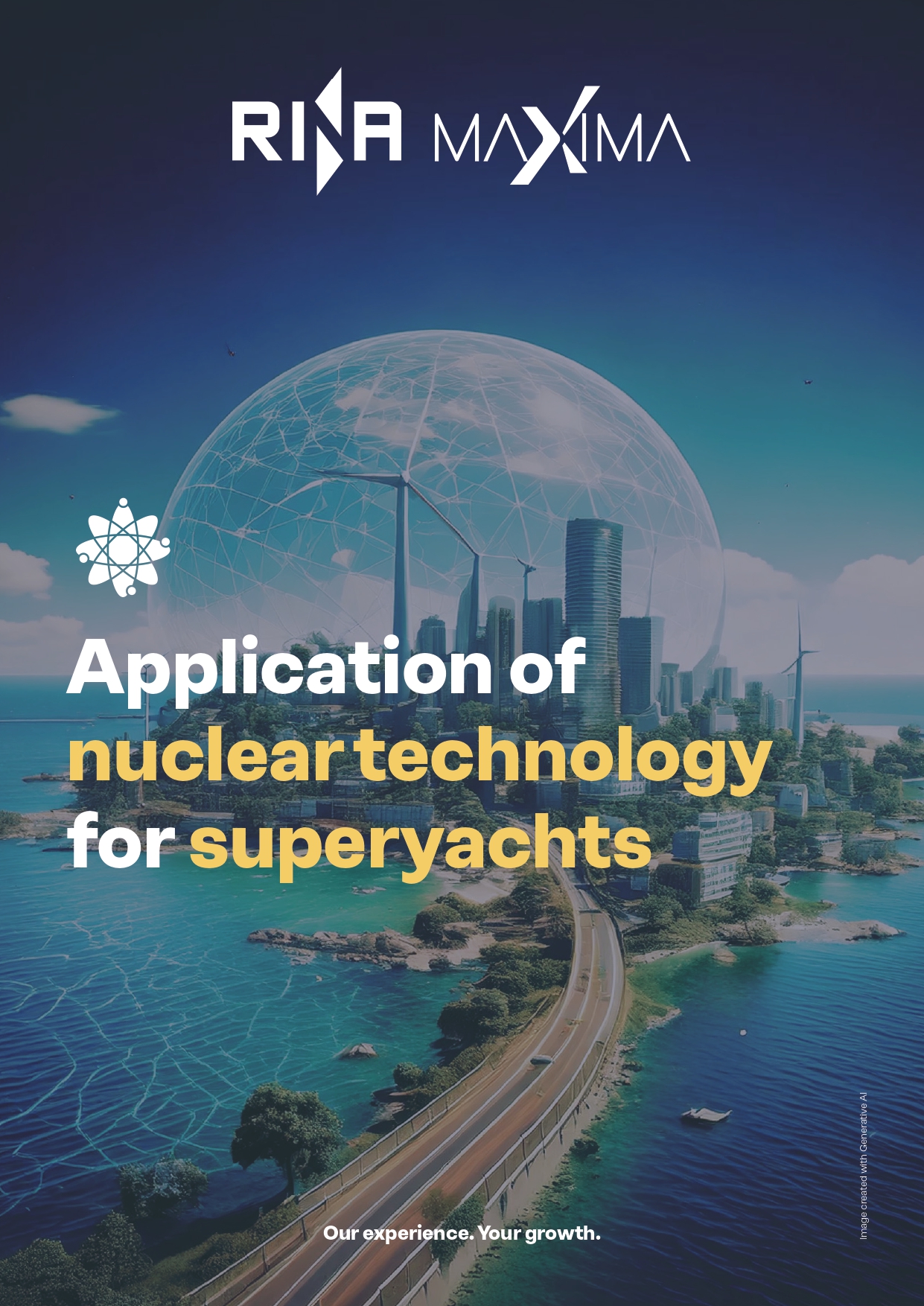
The whitepaper “Application of Nuclear Technology for Superyachts”, published by RINA in January 2025, explores the potential application of nuclear energy on marine commercial vessels, specifically superyachts, weighing both its advantages and the associated challenges with its application (Fig. 4).
Key factors for consideration with regards to the adoption of nuclear-powered superyachts involve the overall yacht design, technological readiness, construction and operational costs, regulatory framework, safety concerns, and public perception.
Within the broader energy sector, reports suggest that a future energy mix incorporating both conventional large-scale nuclear power plants and Small Modular Reactors (SMRs) could reduce nuclear energy costs over the next decade.
Several SMR designs are expected to be commercially deployed within the next 10 years. Nonetheless, the continuous reduction in costs associated with solar power, energy storage solutions, and increased availability of other renewable energy sources may reduce the comparative attractiveness of nuclear energy investments.
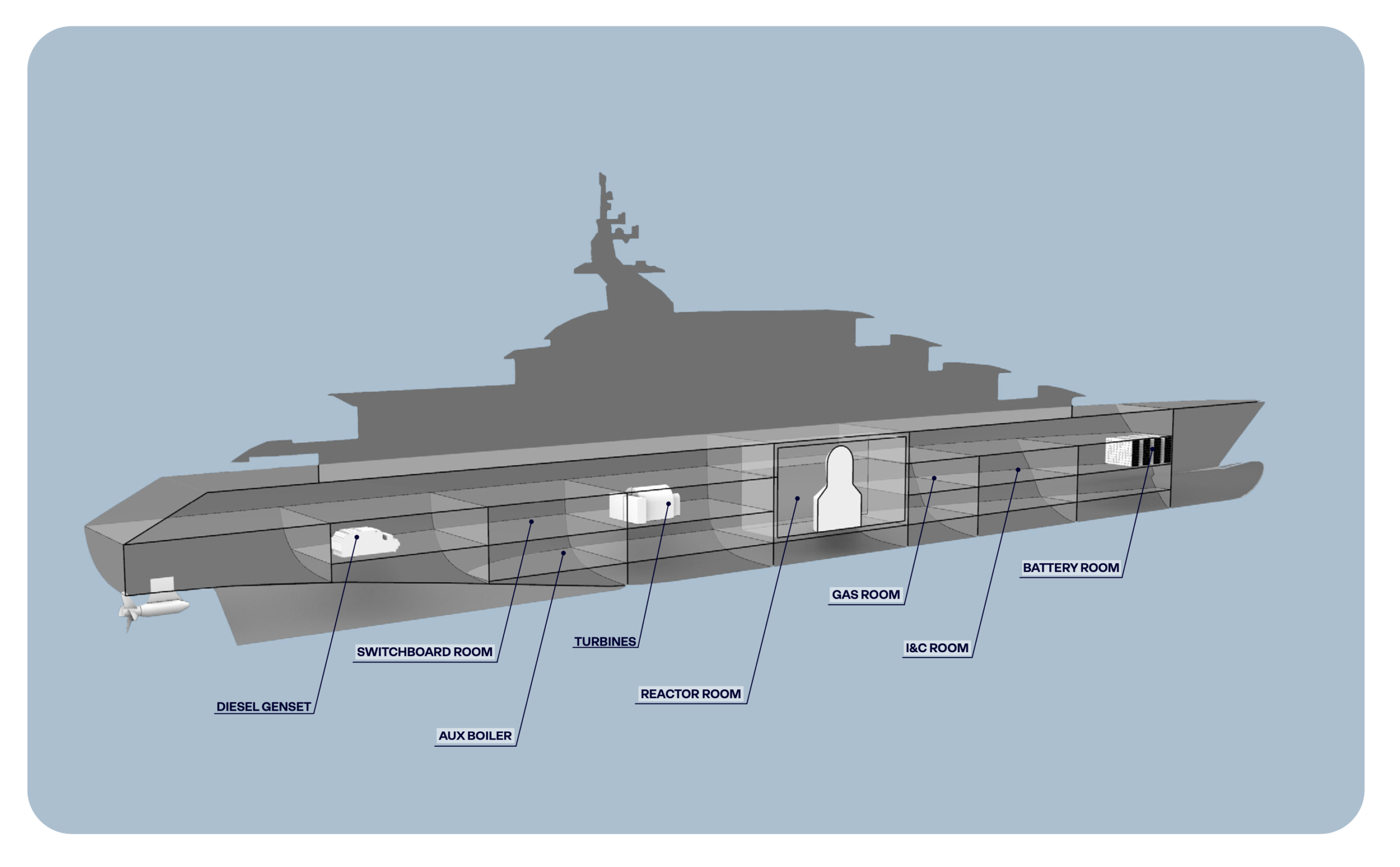
In RINA’s whitepaper, a preliminary concept for a superyacht with nuclear energy generation is presented as powered by an onboard lead-cooled fast reactor (Fig. 5).
The proposed yacht is a supersized boat electrically driven, with a length of 150 m, breadth of 23 m and draught of 5 m. Being an early-stage concept, the analysis was simplified by initially only focusing on the spaces below the main deck (9 m ABL) as dedicated to the ship’s systems for safety, propulsion, electrical and energy generation.
TECHNICAL DETAILS
One reactor is installed with thermal power of 110 MW and final electrical power delivered to the main electrical system of 40 MW.
The nuclear reactor, together with its primary coolant loop and auxiliaries, is middle-aft longitudinally located. The reactor room is 20 m long and, to reduce the risks of reactor damage in case of side collision, its transversal boundaries are within the B/5.
A single compartment encloses the reactor room and another space for possible waste. The nuclear compartment is separated from other compartments fore and aft by means of cofferdams, 2 m each.
The working fluid selected to extract heat energy from the reactor used in the secondary loop is steam, directed to two turbines fitted on the lower deck (6,300 m ABL) in two separate and independent compartments.
For a compact arrangement, the related condensers are fitted just underneath the turbines on deck 2,500 m ABL.
GENERATORS AND PROPULSION SYSTEM
In addition, two diesel engine-driven generators, working as stand-by units, are fitted aft in two separate and independent compartments.
These generators are required as redundancy systems in case the main generators or the main electrical system experience malfunctions.
The aft part of the yacht is dedicated to the pod electrical propulsion system, which allows optimisation of space since the pods also work as steering devices, increasing manoeuvrability and reducing vibration in the energy generation space, thereby reducing risks of vibration-induced damage.
Compartments forward of the reactor room are dedicated to HVAC and heat recovery systems, necessary to remove or reuse the heat produced by the reactor in its room, and to spaces with instruments and controls.
Furthermore, two battery rooms are also fitted as additional energy sources to monitor the reactor in case it is shut down.
REDUNDANCY
The superyacht is also provided with two shore connections, one on each side.
They allow an additional electrical source in case of need. Moreover, they enable the “reversed OPS”, meaning the electrical energy normally produced by the yacht’s reactor can be supplied to marinas and ports.
The whole design concept is based on the principle of redundancy applied to two perspectives of safety: the reactor must operate safely itself without bringing any risks to the yacht and the crew onboard.
On the other hand, the yacht must be designed considering the safety requirements applied to conventional propulsion, enhanced by those features required to assure the operability of the reactor.
Regarding safety aspects, the concept design refers to new nuclear designs that can assure full protection of people from nuclear radiation produced by the reactor and, in case of technical accidents, prevent any loss of contaminants.
A MORE TANGIBLE REALITY WITHIN THE NEXT DECADE
“The energy transition faced by humanity is a highly polarised topic. Initially conceptualized as a ‘50-year marathon’ through frameworks such as the Paris Agreement, questions arise as to whether this transition may more accurately resemble a series of shorter, intensive sprints. Led by technical rigor and devoid of vested interests, maintaining a persistent agnostic approach is crucial.”
This whitepaper presents an overview of the potential field of application for nuclear technology on a superyacht platform. A nuclear-powered superyacht has the potential to become a more tangible reality within the next decade.
SAFETY LEVELS
The small modular concept, combined with advanced nuclear technologies, promises simplified designs, reduced costs through replication, and enhanced safety.
Several SMR designs are being developed specifically for marine applications. According to technology providers, it is plausible that safety levels on nuclear-powered ships will be higher than those of traditional diesel-powered vessels.
The RINA report highlights how all major nuclear powers have returned to modernisation and expansion of nuclear technologies. This, combined with the search for energy security and the development of SMRs, has created the conditions for a potential third nuclear age.
Generation IV power plants use new coolants such as liquid metals or molten salts, increasing safety aspects and reinforcing passive safety features while reducing challenges related to nuclear spent fuel management.
FUTURE PROSPECTS
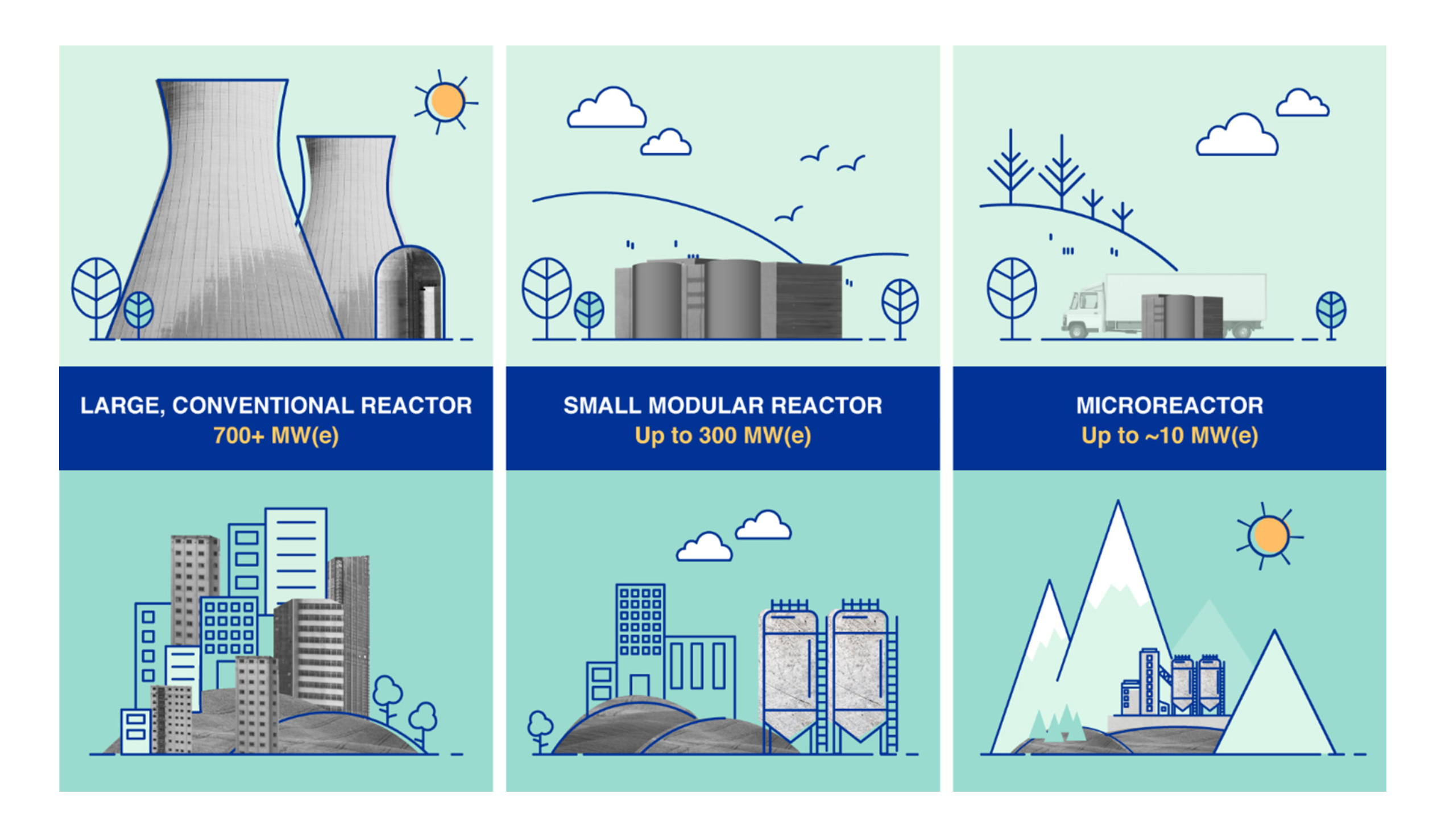
Due to their small size and modularity, SMRs can be built more efficiently, at reduced cost and with updated redundancy requirements in place. The Emergency Planning Zone, designed to minimise impacts on public health and safety, is also smaller compared to large-scale reactors.
Because of their compact size, they can be transported more easily and are better suited for remote regions.
These factors combined lead to easier financing, enabling small private investments and smaller companies, often linked with social purposes, to contribute to SMR development (Fig. 6).
With the future in mind, humanity is working towards producing more electrical power with minimal environmental impact. This trajectory is confirmed by major technology companies such as Google and Amazon investing in nuclear power to meet the energy demand of expanding data centres driven by Artificial Intelligence.
THE REGULATORY APPROACH: A RADICAL THINKING NEEDED
Historical differences of opinion over whether zero-emission nuclear power can overcome safety and environmental concerns are now being reconsidered as fourth-generation reactor technologies develop.
A growing number of ship studies, guidance from classification societies, interest from marine insurers and inclusion in IMO decarbonisation discussions demonstrate that nuclear propulsion is now being widely re-evaluated.
In April 2025, the 83rd meeting of the IMO’s Marine Environment Protection Committee (MEPC) decided on amendments to MARPOL including a proposal to introduce a levy on fossil fuels consumed by ships, with rules expected to come into effect from 2027.
As fourth-generation nuclear technology does not require fossil fuels, such measures would not apply to nuclear propulsion.
IMO INITIATIVES
But the global maritime industry, which IMO wants to achieve net zero emissions by around 2050, is also still eavily relying on fossil fuels. At last count fossil fuels contributed almost 99% to energy consumption.
Overall progress on 4th generation nuclear reactors has been sufficient for IMO to begin working towards the legislative framework necessary for future systems to be acceptable on ships and by ports.
Formally, the IMO adopted the Convention on the Liability of Operators of Nuclear Ships in 1962, but the instrument was never ratified. Despite the Code of Safety for Nuclear Merchant Ships, adopted by IMO Resolution A.491.XII in 1981 into the Safety of Life at Sea Convention (SOLAS), therefore, there is currently no marine liability convention applicable to vessels using nuclear power for propulsion.
In plain terms, due to the lack of an IMO convention that provides an accepted liability framework for nuclear powered vessels, reinsurance is not currently forthcoming in the case of liabilities caused by a nuclear fuel or
nuclear waste.
THE CG ON GHG SAFETY
The need to update the IMO’s regulatory framework for nuclear merchant ships has been discussed at an IMO meeting in June, with several Member States and NGOs calling for the work to start as soon as possible.
The 110th session of the IMO’s Maritime Safety Committee (MSC 110) discussed the outcome of the work of the Correspondence Group on development of a Safety Regulatory Framework to support the reduction of GHG emissions from ships using new technologies and alternative fuels (CG on GHG Safety). The CG on GHG Safety identified barriers and gaps in current IMO instruments that impede the safe use of alternative fuels and technologies, and developed recommendations to address them.
For nuclear, the CG on GHG Safety identified that the Code of Safety for Nuclear Merchant Ships (resolution A.491(XII)) is a barrier to deploying advanced new technologies. The Code, which has not been updated since its adoption in 1981, is prescriptive in nature and currently limited to ships withPressurized Water Reactors (PWRs) with direct steam cycle propulsion systems.
The CG on GHG Safety, which was open to all IMO Member States and NGOs in consultative status, broadly agreed with recommendations that the Code should be updated to adequately address recent advances in new nuclear technologies by ensuring a technology neutral, goal-based approach, and that it should reflect current IAEA standards. The Code, which is a supplement to SOLAS Chapter VIII – Nuclear ships, was adopted as a guide to Administrations on the internationally accepted safety standards for the design, construction, operation, maintenance, inspection, salvage, and disposal of nuclear merchant ships.
In addition to the Code, the CG on GHG Safety discussed whether changes are needed to SOLAS Chapter VIII itself, with several ideas put forward that will need to be discussed further. A review of other SOLAS Chapters is needed to identify how they relate to nuclear-powered ships was also suggested.