In this context, Greenline Yachts represents a key reference in the development of integrated yacht energy systems, where propulsion is no longer the sole focus. Instead, the entire vessel is designed as a unified architecture for energy production, storage, and distribution.
Following a post-pandemic slowdown, the yacht market is showing signs of recovery, with renewed interest in both conventional and alternative propulsion solutions in the 40- to 60-foot segment. This trend highlights the growing relevance of sustainable yacht propulsion technologies, even in mid-size recreational boats.
A central concept in this evolution is the shift from standalone systems to onboard energy architecture for yachts, where solar panels, battery banks, alternators, and shore power are coordinated through intelligent energy management systems.
Even in traditional diesel configurations, modern Greenline models integrate photovoltaic systems and scalable storage solutions, enabling partial hybridization and significantly improving onboard comfort through reduced noise, vibration, and generator usage.
The introduction of the Power Pack marks an important intermediate step in this transition, enhancing energy autonomy and enabling up to 48 hours of silent onboard operation without generator use. This solution bridges the gap between conventional diesel systems and full hybrid propulsion, supporting a gradual yacht energy transition strategy.
At the core of Greenline’s innovation is the 6th-generation hybrid system (6G H-Drive), which integrates internal combustion engines and electric propulsion within a single energy network. This enables optimized energy recovery, real-time monitoring, and dynamic distribution of onboard energy flows.
Despite rapid technological progress, fully electric yacht propulsion remains limited to specific markets such as Scandinavia and the United States, mainly due to infrastructure constraints and range limitations. However, continuous improvements in battery technology and marine solar energy systems are accelerating adoption.
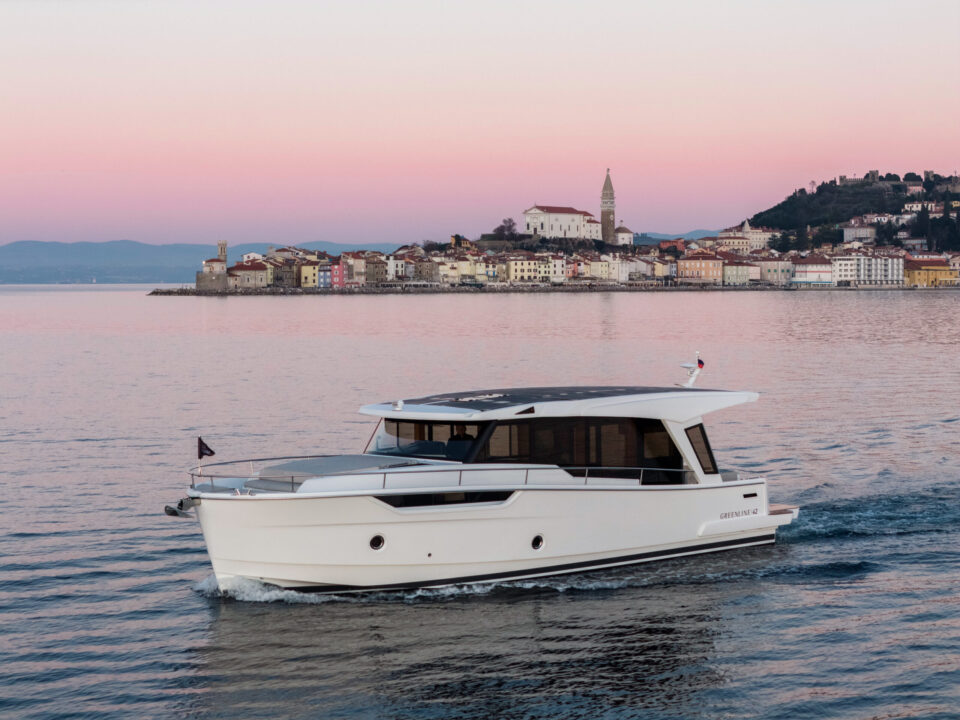
Within this framework, the new Greenline 42 represents a strategic model in the range, bridging compact yachts and larger units while offering multiple propulsion configurations, including diesel, Power Pack-enhanced diesel, hybrid, and electric systems.
It is not simply a new model, but a platform that embodies the shift toward next-generation yacht energy management, where efficiency, autonomy, and user comfort are central design parameters.