There is a thread that runs through the entire history of Lalizas and has never broken: safety at sea. From that thread, however, a much more complex and ambitious fabric has grown over the decades. The company founded in Piraeus in 1982 by Stavros Lalizas – a former national sailing champion who turned his passion for the sea into an industrial vision – began by producing buoyancy aids for professional use and has progressively built a catalogue of over 10,000 products. This is not simply a matter of expanding a product range. It is a deeper transformation of role and identity: from a supplier of individual components to a partner capable of covering a broad spectrum of onboard needs.
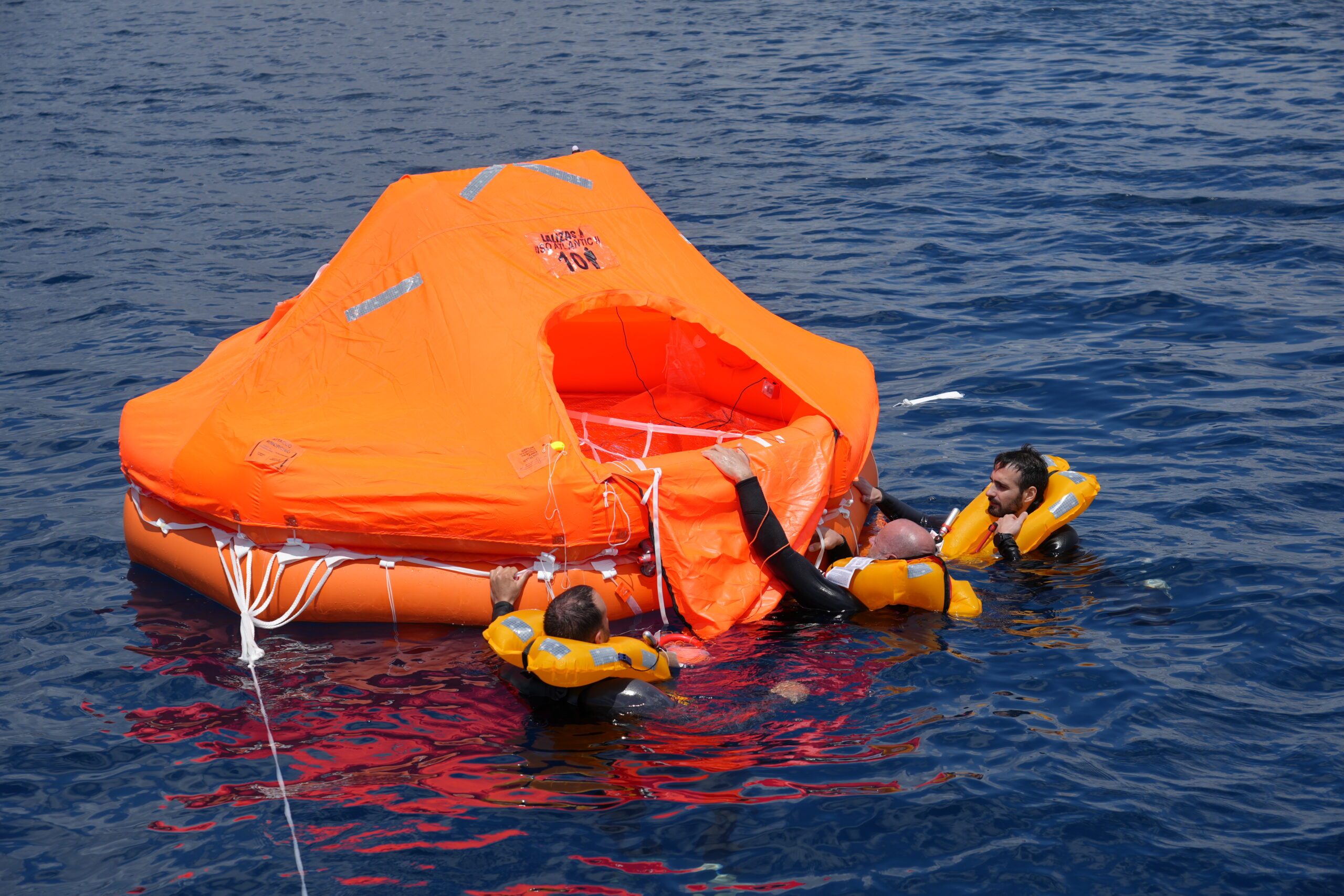
Today, Lalizas operates across lifesaving systems and liferafts, firefighting equipment, everyday marine accessories, windlasses and bow thrusters – a range that few competitors can match in terms of breadth, depth and global reach.
More functions, less complexity
Multifunctionality, safety and ease of installation are not, for Lalizas, three separate objectives to be balanced against one another in the design process. They are the fundamental coordinates of every development project, the starting point rather than the finishing line.
The pressure of limited onboard space is a reality that every naval architect, boat builder and fleet manager faces on a daily basis. A product that works well but requires a complex installation process, or that occupies more room than strictly necessary, is a product that professionals and end users tend to reject – regardless of its technical quality.
This is precisely why operational simplicity is treated as an integral part of overall performance, not as an optional extra to be added at a later stage of development.
Design that lasts
When Lalizas talks about design, the reference is not primarily to aesthetics or visual appeal: it is to functionality, usability and long-term performance under real operating conditions. The environment in which marine products must work – constant humidity, salt exposure, repeated thermal cycles, mechanical stress and vibration – leaves no room for fragile constructions or poorly conceived solutions, however attractive they may appear on paper or in a catalogue.
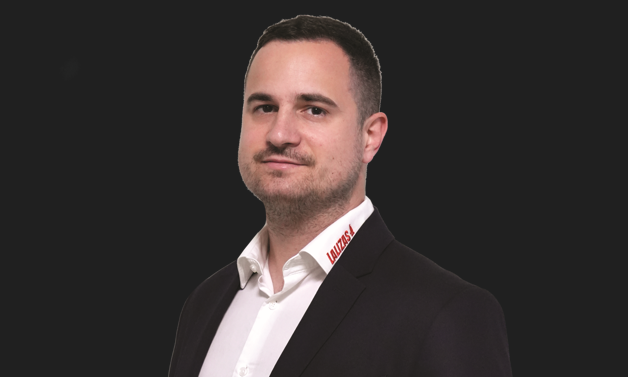
“The challenge is to create products that are strong, practical, well-designed and commercially accessible,” says Iasonas Lalizas. “This balance has always been part of Lalizas’ way of working. And I can assure you it is not an easy balance to achieve.” Cost competitiveness is therefore a genuine and permanent factor in every commercial decision, but it operates within one non-negotiable boundary: it cannot come at the expense of safety or reliability. In a market where regulations are strict, certifications are mandatory and the stakes can be a matter of life and death, dropping below a certain quality threshold is simply not an option – neither ethically nor commercially.
International by vocation
Being international, for Lalizas, is not a marketing statement or a strategic aspiration. It is a concrete, operational structure built over more than 40 years of work: 8 factories on 3 continents, 14 branches, logistics centres distributed across key geographic areas and a distributor network that brings products reliably to 130 countries.
A presence that has few equivalents in the marine accessories and safety equipment sector in terms of both reach and operational depth.
“Every market has different needs,” explains Iasonas Lalizas. “Different regulations, different vessel types, different commercial realities. A charter fleet in the Mediterranean, a ship supplier in Northern Europe and a distributor in Singapore may all need the same safety equipment, but the way we support them can be completely different.” Flexibility and adaptability are therefore not empty words in the Lalizas vocabulary, but concrete operational levers, built patiently on local partnerships, widespread and responsive after-sales support, and a genuine understanding of the specific contexts and challenges in which the company and its partners operate every day.
The next challenge
The future of the marine accessories and safety equipment sector will not be decided by technology alone. It will be shaped by the ability to respond simultaneously – and effectively – to a set of demands that often pull in different directions: more competitive costs, greater environmental sustainability, immediate product availability, continuously evolving international regulations and an industry-wide push towards smarter, leaner design.
“Customers expect products that are compliant, durable, easy to install and available when they need them,” observes Iasonas Lalizas. “At the same time, the industry is moving towards smarter design and more responsible solutions.” For Lalizas, the response to this sustained and multidirectional pressure is a commitment to continuous investment: in products, in people, in infrastructure and in support services. Not to simply chase market trends, but to anticipate them – and to remain, in an increasingly competitive global landscape, a genuinely trusted partner for marine professionals around the world.