Limescale and biofilm are persistent challenges in all water circuits, significantly reducing flow rates and, consequently, system efficiency. The Noname system, which employs a mixture of food-grade pure gases, offers an effective solution for limescale prevention and biofilm elimination.
Project Overview
The AUTNONAME technological research project focused on developing a fully functional and commercially viable prototype of an automatic system for limescale control.


This system precisely regulates the dosage of a food-grade inert gas mixture (Noname) to solubilize and prevent the formation of calcareous concretions and biofilm within the piping and accessories of naval unit water systems handling both freshwater and seawater circuits.
This advanced system continuously and remotely monitors key chemical and physical parameters of the processed water.

Photo: comparison of the specimens before and after treatment with Noname (two 24h tests)
By assessing these parameters, the action of the Noname can be verified and the dosage adjusted through feedback control, ensuring optimal performance. The Noname system aims to maximize efficiency by extending the system’s ‘Mean Time to Failure’ and maintaining operation near nominal values.

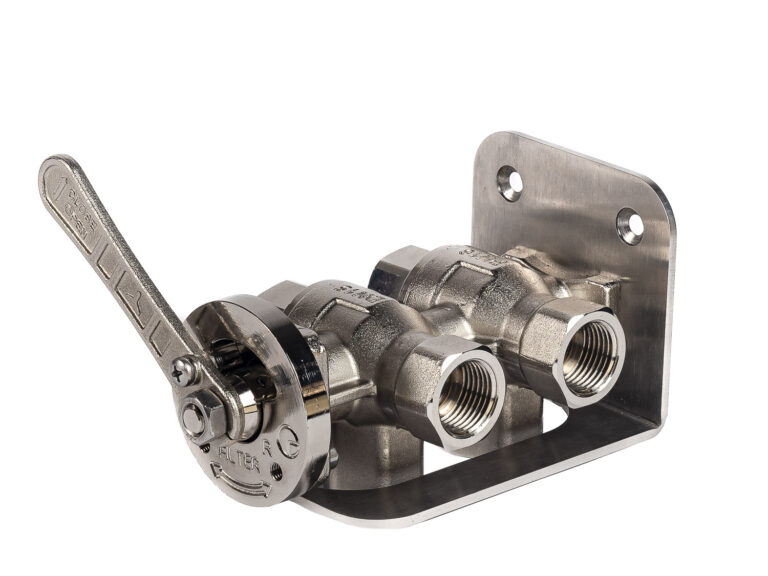
Through the AUTNONAME project, the patent holder of Noname sought to develop an interconnected system of probes and actuators, including a flow regulator that automatically and continuously adjusts the Noname dosage based on real-time conditions within the water circuit maintenance system.
This is further enhanced by remote control capabilities, allowing monitoring and adjustments from any connected location. All process data and field returns are stored in a comprehensive database, providing valuable information and operating statistics.