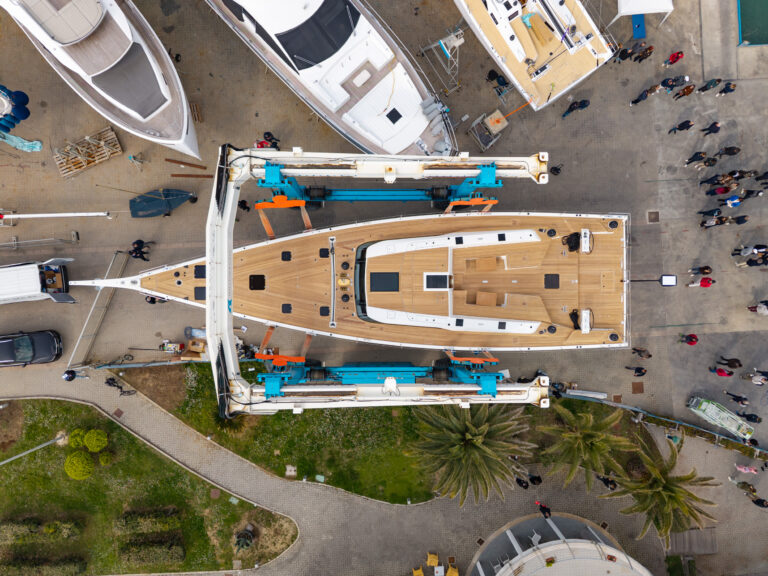
The Italian resort town of Rapallo in Liguria, destroyed by storms in 2018, has a marina again following the redevelopment of Carlo Riva Port. The new facility can berth 250 yachts from 7.5m-60m (25ft-197ft) with a maximum draft of 5m.
The port was originally opened in 1975. Designed by Carlo Riva, founder and engineer behind the iconic Riva yacht brand, it was the first private marina in Italy. The new port has been overseen by real estate redevelopment firm Bizzi & Partners with the intention of returning Rapallo to a modern and highly technologically advanced marina. It has also been named after Riva. In 2018, a major weather event affecting Tigullio led to the collapse of the breakwater, with substantial damage to the entire harbour and the boats moored there.
The new project therefore included a very challenging first phase (completed in 2022) with the complete rebuilding of the breakwater and all structural works defending the harbour. The new facility can adapt to the potential consequences of climate change, with safety standards well above those required by law.
The massive structure protecting the harbour was built using 1,600 tetrapods of 20 tonnes each, 170,000 tonnes of reefs, and a 7m (23ft)-high breakwater wall.
The architectural design was signed by architect Susanna Scarabicchi, founder of Tectoo Studio, while the work was managed by Bizzi & Partners Group and carried out by Savarese Construction and Sales. The total amount required for the work is more than €70m, more than half of which was used to resurface the breakwater. Some 200 people are working at the marina.
The marina has nine protected docks and piers and, as a result, the number of berths compared to the old marina has been reduced from around 400. In addition to fuel stations, there are also charging points for both electric cars and electric-powered boats.
A new underground parking lot has been built in the marina, and there are a number of businesses, including two restaurants, an ice cream bar, clothing and nautical equipment stores, a grocery store, and boat services, as well as concierge and security guard. The main dock also includes the opening of a panoramic Club House.
The marina is fully operational at sea, while onshore facilities will be completed in the coming months. Some 80% of the non-potable water used in the harbour comes from the Rapallo sewage treatment plant, and the Carlo Riva Harbour was also designed with an eye toward protecting the local marine flora and fauna, in cooperation with the Ministry of the Environment.