The EU’s Sea Traffic Management (STM) project is to feature new forecast and route planning tools in order to improve navigability for break-bulk shippers.
Led by the Swedish Maritime Administration, the project includes the analysis of vessel characteristics such as load, as well as weather and sea conditions (winds, waves and currents), so to provide improved and more accurate information for a safe route planning.
The developers will integrate a suite of tools from marine specialist GAC that are designed to minimize risks and predict potential dangers. These weather routing services will be delivered by GAC-SMHI Weather Solutions, a joint venture between GAC and the Swedish Meteorological and Hydrographical Institute, or SMHI.
“The STM project is based on standardizing the exchange of information between vessels and land to achieve a transparent system to helps vessels, companies, ports, terminals, authorities and other stakeholders to know where ships are, and what their planned routes are,” says Lennart Cederberg, segment manager for shipping at SMHI.
The SMHI’s ensemble forecasts will provide up to 50 estimates on the impact of weather on speed and fuel consumption and will utilize custom-built Fleetweb software to combine visualization, service design and monitoring systems.


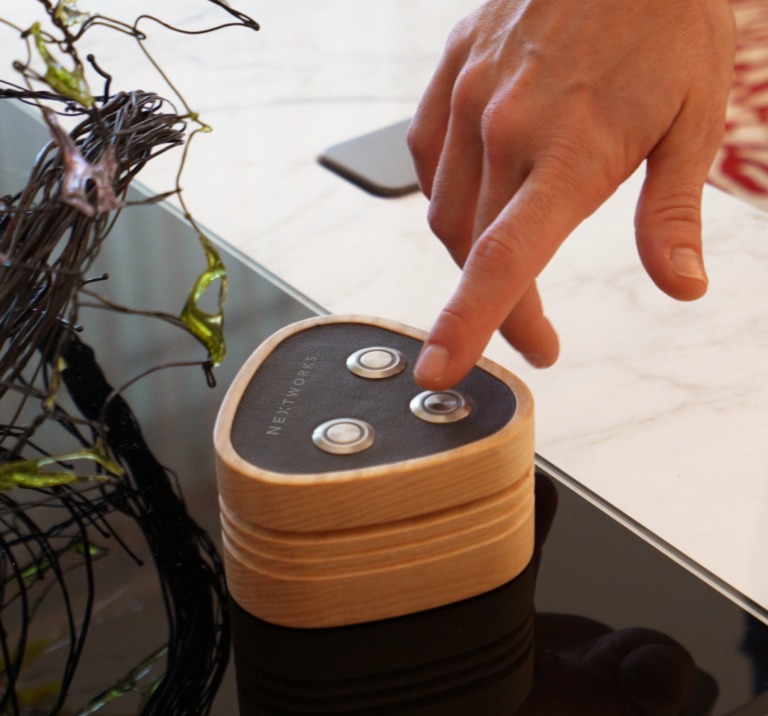
The simplest gesture to control your yacht
In the world of luxury yachting, the best technology is that which seamlessly integrates into the vessel’s aesthetic. NXAnyButton has been developed with this objective: to provide immediate, elegant, and intuitive Yacht Control of the onboard environment, reducing user interaction to a single, simple gesture.