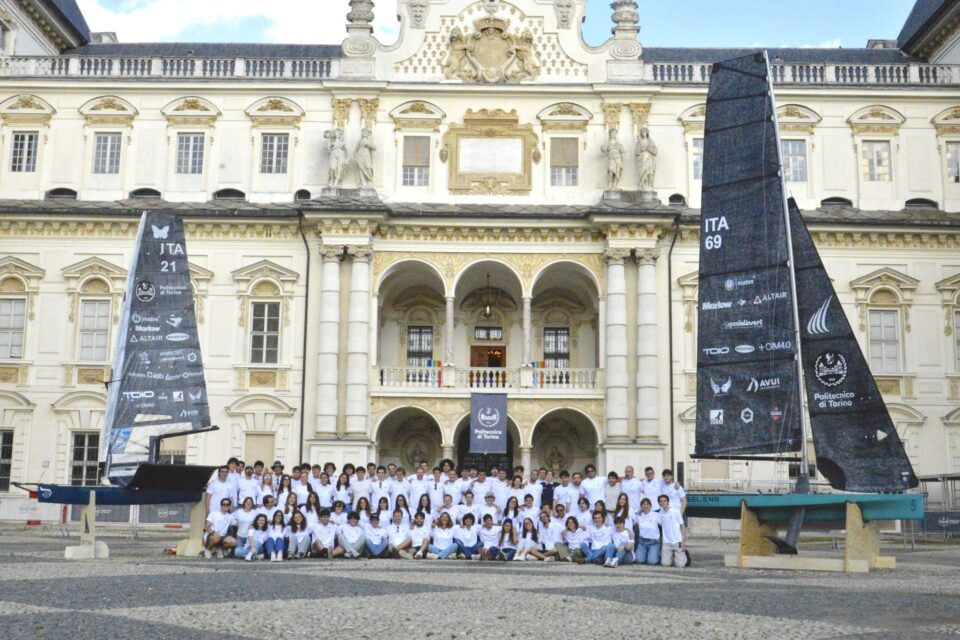
There is a point where engineering stops being a drawing and becomes matter: fibres to be oriented, surfaces to be prepared, joints to be made reliable. At the Politecnico di Torino, that transition happens every day in the workshops of the PoliTO Sailing Team and Squadra Corse. Two different competitive environments – sea and track – united by the same approach: design, build, test and refine, with advanced composite materials at the centre.
The collaboration with Vaber Industriale sits precisely at this intersection. It is not a simple product supply agreement, but a technical partnership within a context where marine and automotive engineering cross-pollinate. The common denominator is process, even before material selection. At the core: Plexus structural adhesives, spray tack and Vaber infusion consumables, fundamental tools in modern marine composites technology.
PELE – ITA 78: A Skiff as a Technology Platform
The nautical heart of this story is PELE – ITA 78, the latest prototype developed by the PoliTO Sailing Team. Not an academic exercise, but a fully engineered and built skiff, taken from concept to launch by the students themselves. A skiff is a high-performance dinghy: light, powerful and conceived to plane efficiently. In its most advanced configurations, it can also operate in foiling mode, significantly reducing hydrodynamic drag. In a platform where weight, stiffness and mass distribution are critical, every construction decision directly affects performance, highlighting the importance of high performance boat design.
PELE has been developed around 3 key principles:
• PERFORMANCE
The hull lines have been refined from existing geometries and optimised to perform both in displacement/planing mode and in foiling configuration. This requires a delicate balance between volume distribution, form stability and dynamic behaviour at high speeds.
• MODULARITY
The project has been conceived to compete in the 1001 VelaCup. Modularity is not a stylistic choice; it is a strategic one. It allows intervention on appendages, trim and configuration without rethinking the entire platform architecture.
• SUSTAINABILITY
Construction integrates recyclable fibres, bio-based resins and reclaimed materials. The objective is not only to reduce environmental impact, but to demonstrate that responsible material choices can coexist with ambitious performance targets, reinforcing innovation in marine composites technology.
1001 VelaCup: Competing Through Engineering
The 1001 VelaCup is an international regatta that brings together university teams. The competition does not reward speed alone, it evaluates the entire project: engineering quality, innovation, sustainability and technical presentation.
Boats must demonstrate coherence between design rationale, construction choices and on-water performance. The marine environment becomes an unforgiving test bench: humidity, salinity, thermal cycles and dynamic loads stress both structures and bonded joints, emphasizing the importance of composite materials engineering.
Composites and Process Control
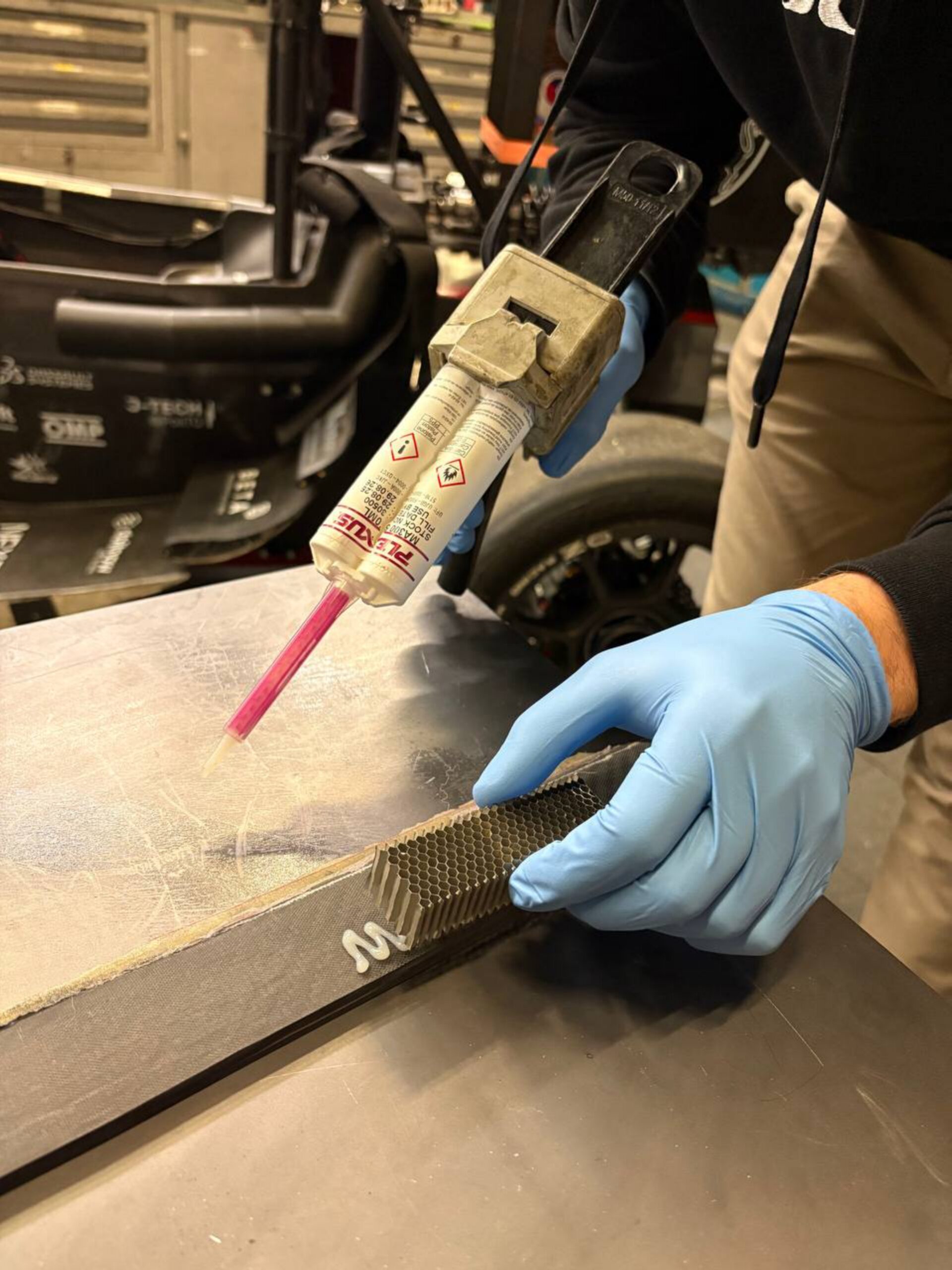
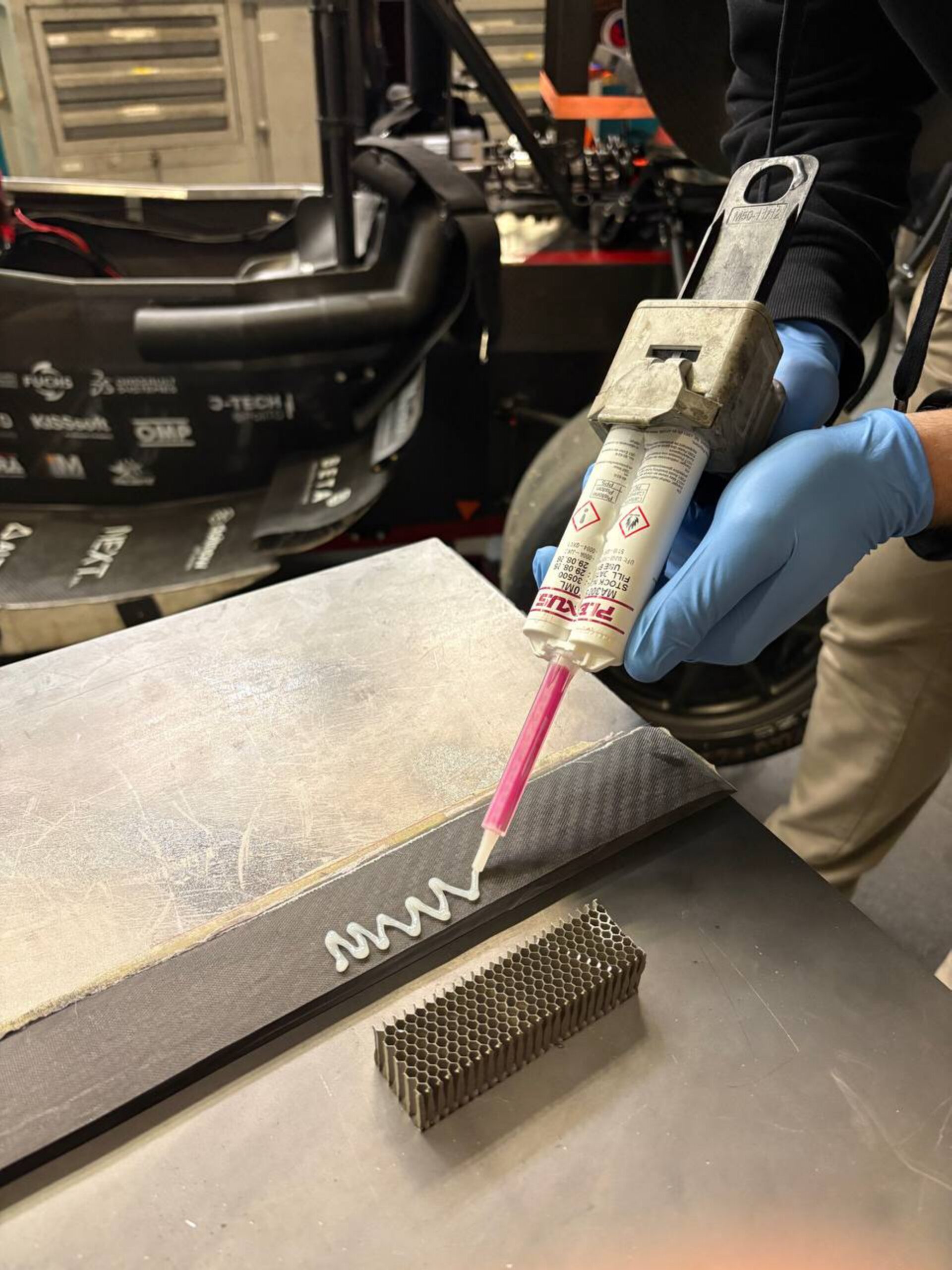
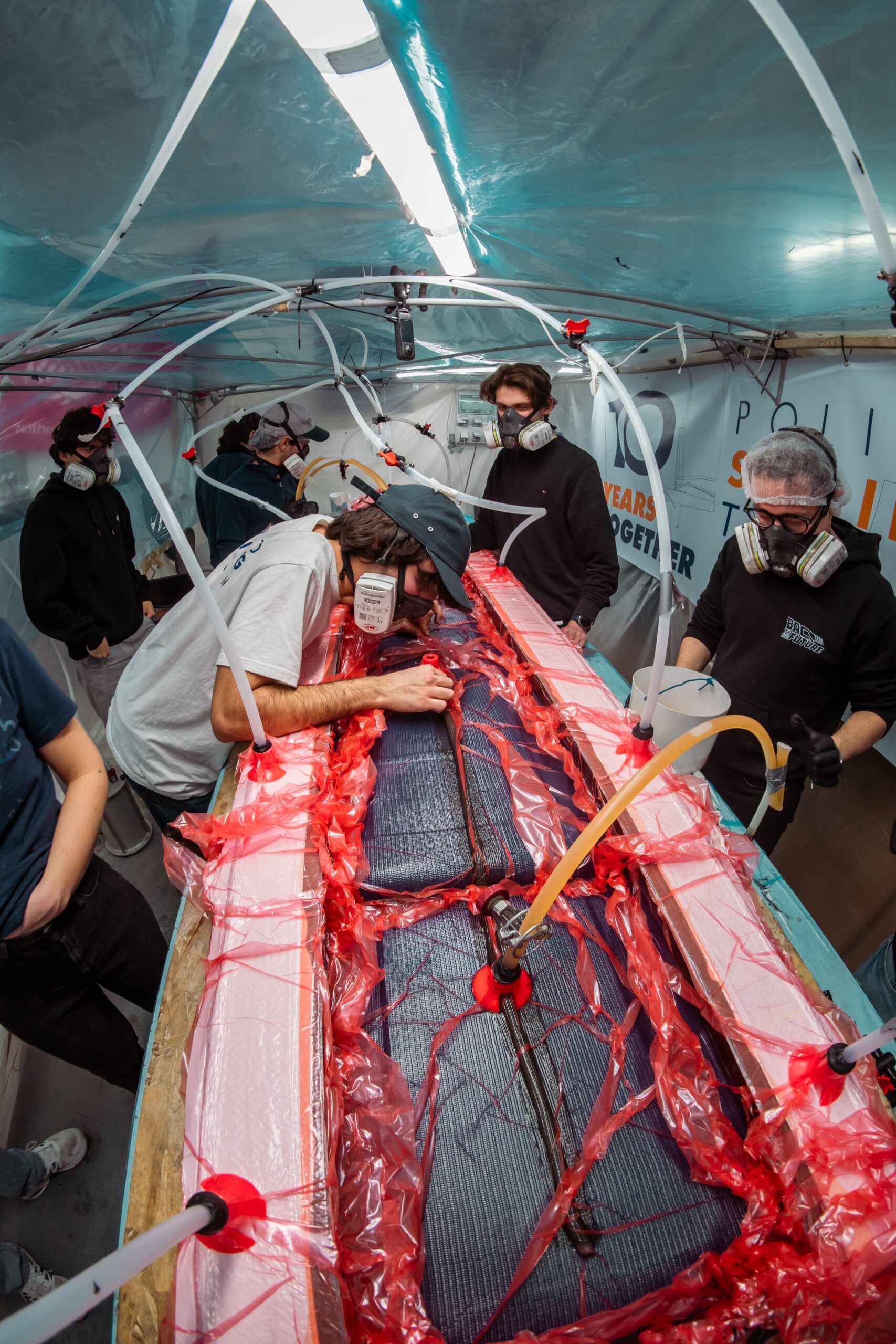
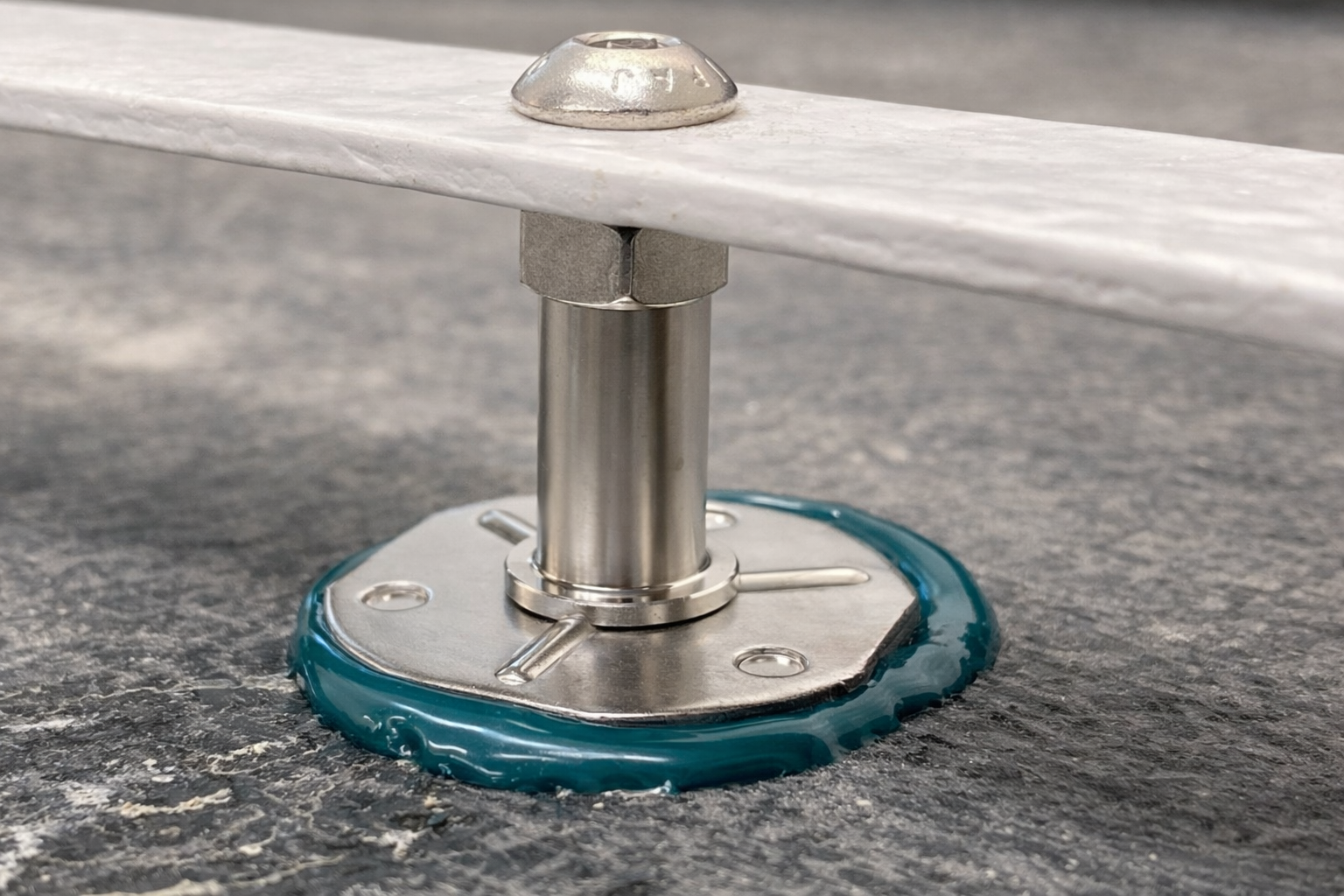
Building a composite skiff involves reinforcing fibres – glass, carbon or alternative materials – impregnated with thermosetting resins. One of the key techniques employed is vacuum infusion: dry fabrics are laid into the mould and resin is drawn through under vacuum, producing a lighter, more homogeneous and tightly controlled laminate. Within this scenario, Plexus structural adhesives are used to create high-strength bonds between composite components or between dissimilar materials. In a lightweight craft, replacing or integrating mechanical fasteners with structural bonding enables improved load distribution, reduced stress concentrations and lower overall weight, key aspects of advanced composite materials.
Different options
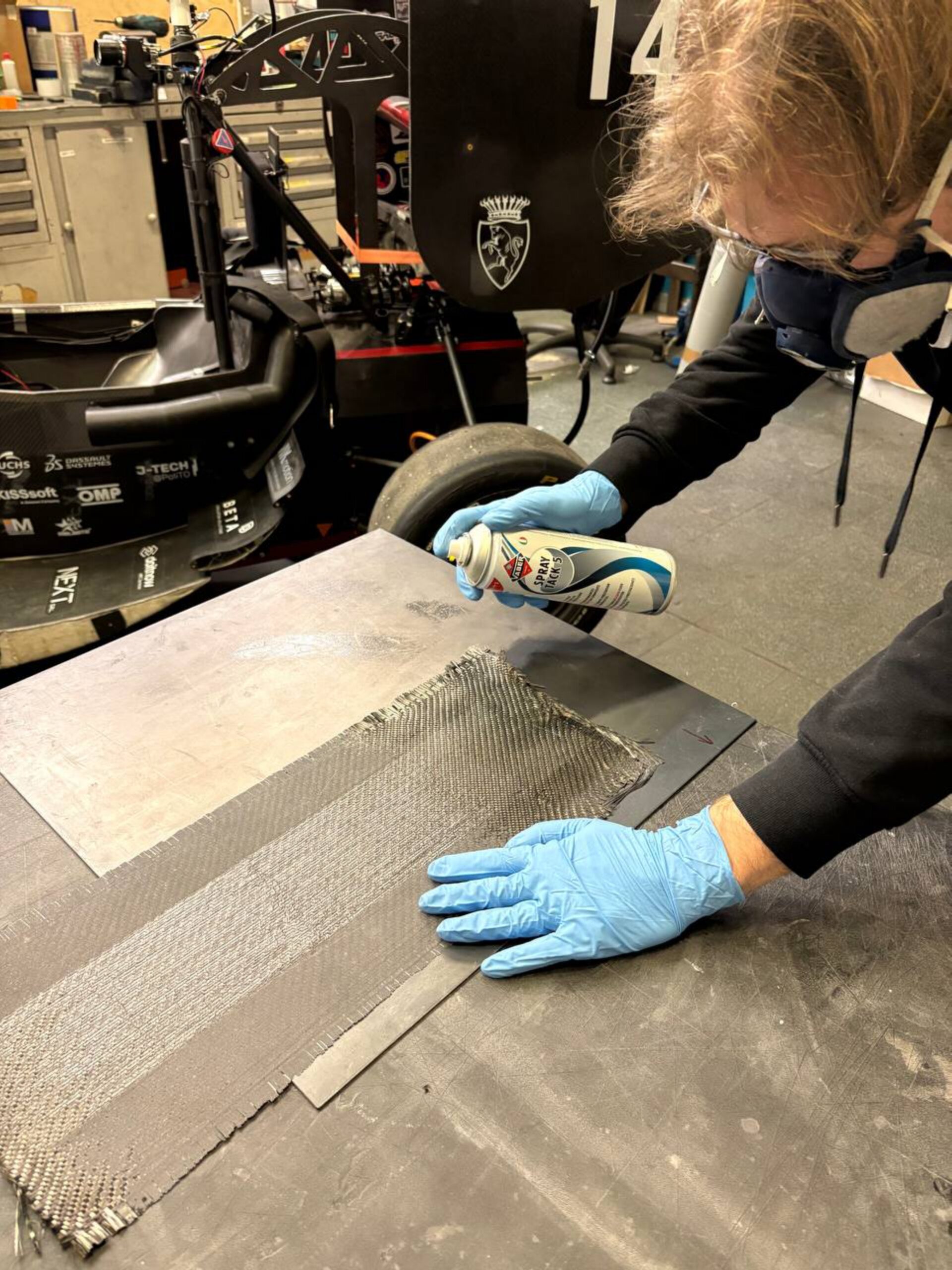
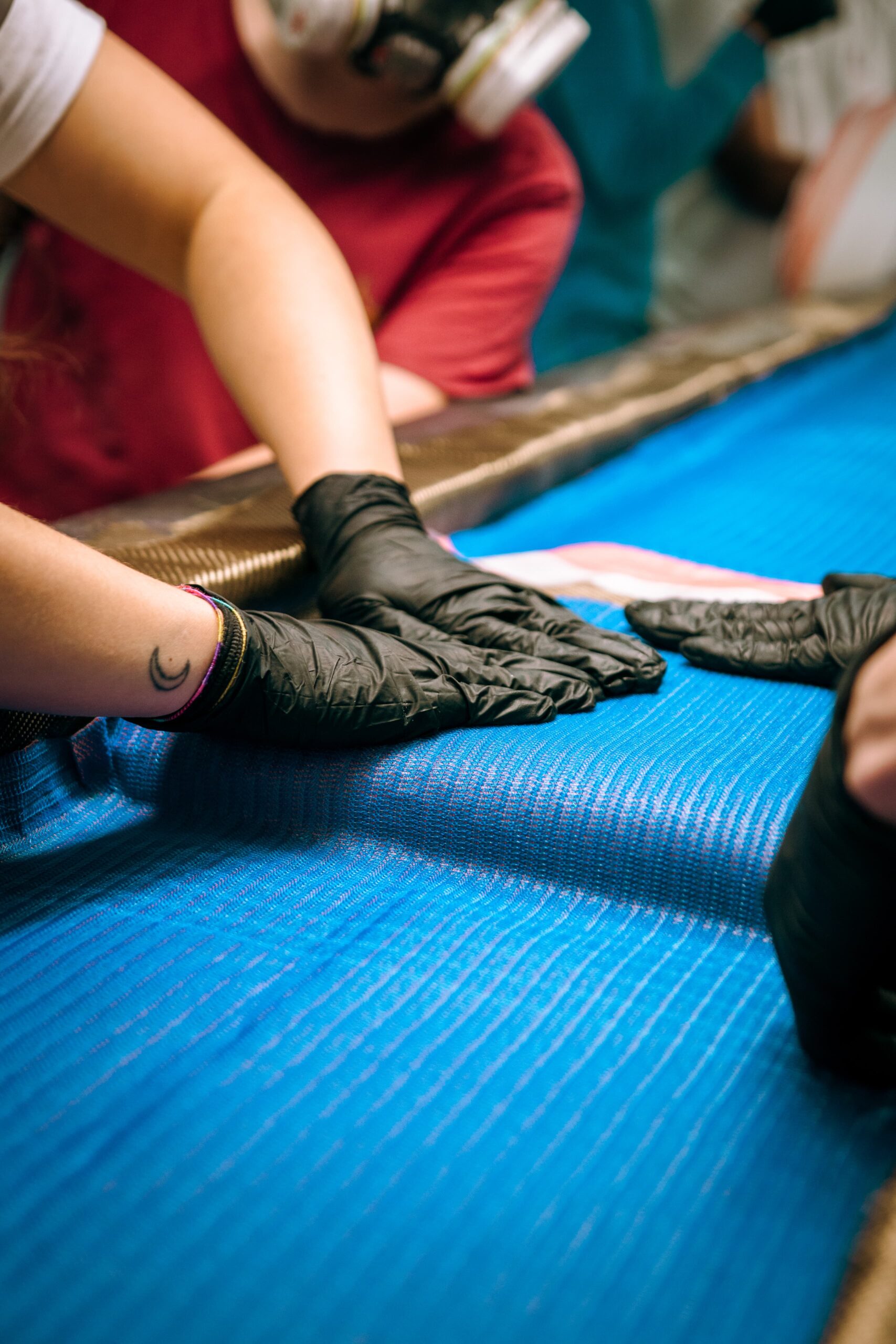
Spray tack – a temporary positioning adhesive – ensures accurate placement of reinforcements during lay-up, particularly on complex geometries such as hull shells and bulkheads. Minimising fibre movement during vacuum bagging translates into higher laminate quality and greater repeatability.
Infusion consumables – resin distribution mesh, films, peel ply, hoses – are less visible but decisive. They govern resin flow, air evacuation and surface finish quality, especially for external surfaces in contact with water. In a marine environment, where internal defects or moisture ingress can compromise durability, attention to detail is integral to performance and to the reliability of marine composites technology.
From Dinghy to Formula Student Single-Seater: One Technical Culture
The same methodological approach defines the work of Squadra Corse within Formula Student – the international competition in which university teams design and build electric racing single-seaters. Composites are equally central here: chassis structures, aerodynamic elements, structural components. The environment changes – track instead of sea – but the principles remain constant: surface preparation, bonding quality, process control and rapid iteration.
The difference lies in development pace. University motorsport operates on compressed timelines: design, manufacture, test and modify in continuous sequence. Experience gained in this context accelerates problem-solving capability in marine applications. Conversely, the marine sector’s emphasis on durability and environmental resistance provides valuable insights for long-term automotive reliability, strengthening competencies in high performance boat design.
One Laboratory, Two Extreme Environments
Sea and circuit represent 2 faces of the same technological challenge. In both cases, the objective is not merely to go faster, but to do so in a controlled and repeatable manner.
A collaboration with a university active in both marine and automotive engineering reinforces this bridge. Materials and methodology transfer from one sector to another, adapting to different requirements while speaking the same technical language.
PELE – ITA 78 lifting onto its foils and an electric single-seater attacking a chicane share the same ambition: to transform academic expertise into tangible, measurable and high-performance engineering artefacts. It is there – between fibre and resin, between water and asphalt – that engineering becomes real-world experience, driven by innovation in advanced composite materials.
Q&A with PoliTO Sailing Team (ST) and Squadra Corse PoliTO (SC)
How would you describe the team to an international reader?
ST: “PoliTO Sailing Team is a student engineering project from Politecnico di Torino, active for over 10 years now, focused on the design, development, and hands-on construction of high-performance foiling prototypes in the Moth and Skiff R3 classes.”
SC’s Luca Ferro: “Squadra Corse is a multidisciplinary student team from Politecnico di Torino that designs, builds and races a fully electric Formula Student car, competing against top universities worldwide”.
What has been the toughest challenge this year and why?
ST: “We face challenges on a double track. Technically, the biggest hurdle this year is transitioning to prepreg (pre-impregnated) composite construction techniques for the appendages of our new Moth, ITA27, working closely with external partner companies. Organizationally, the true challenge is coordinating a massive, diverse group: our Team Leader and the Board work tirelessly to synchronize the efforts of over 80 students involved in the project.”
SC’s Davide Abagnale: “For us, the toughest challenge this year has been technical. We significantly pushed the performance of our composite structures, which meant increasing complexity in manufacturing and testing. Managing high-performance materials, tight tolerances and strict deadlines at the same time required a major step forward in both technical knowledge and internal coordination.”
In which phases is the collaboration with Vaber most valuable: materials, methodology, technical support, testing?
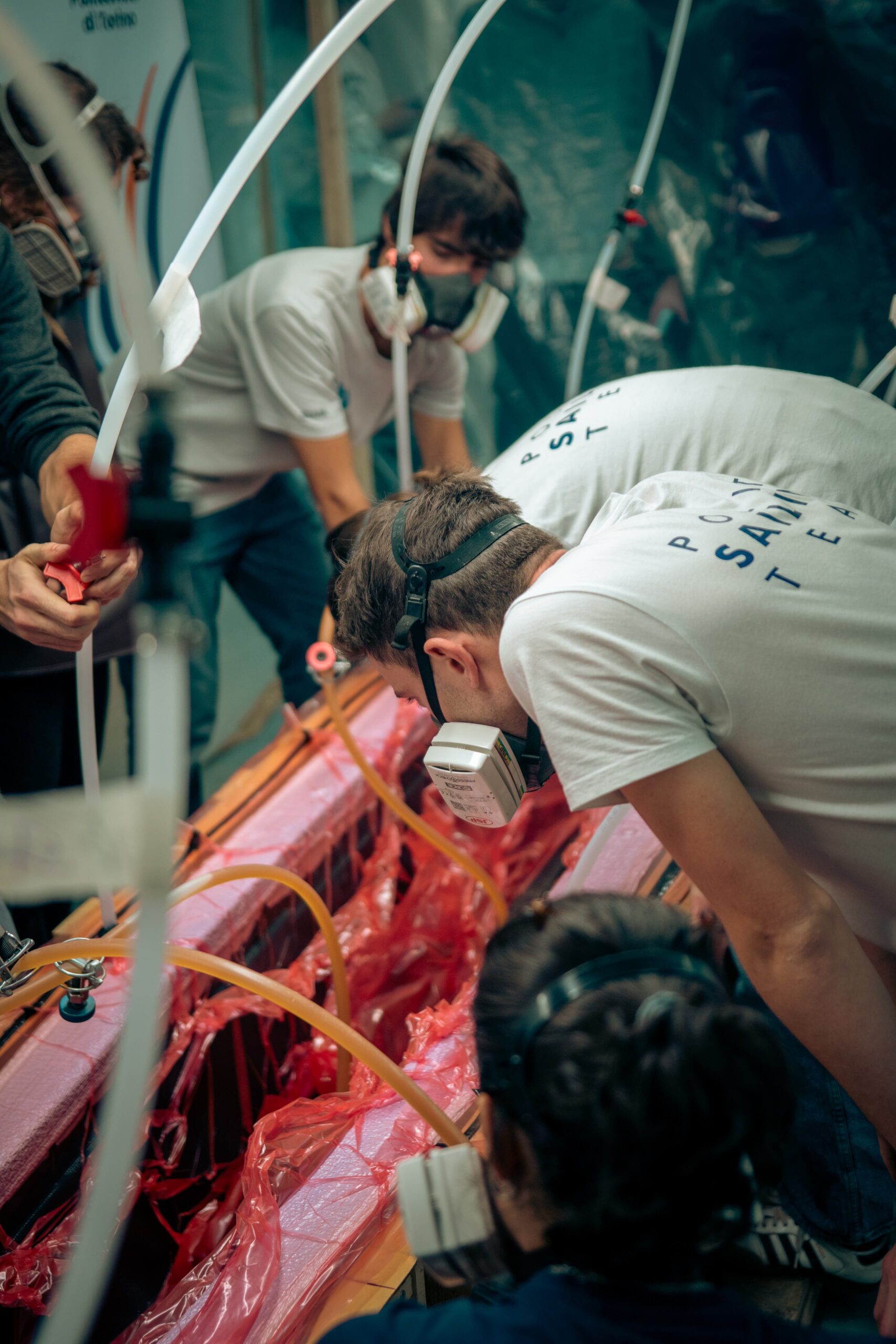
ST: “The collaboration is fundamental during the manufacturing of the hull and deck. In these processes, we rely on a multitude of Vaber consumables – from vacuum bagging films to peel ply and breather fabrics – which are essential for achieving a flawless vacuum infusion.”
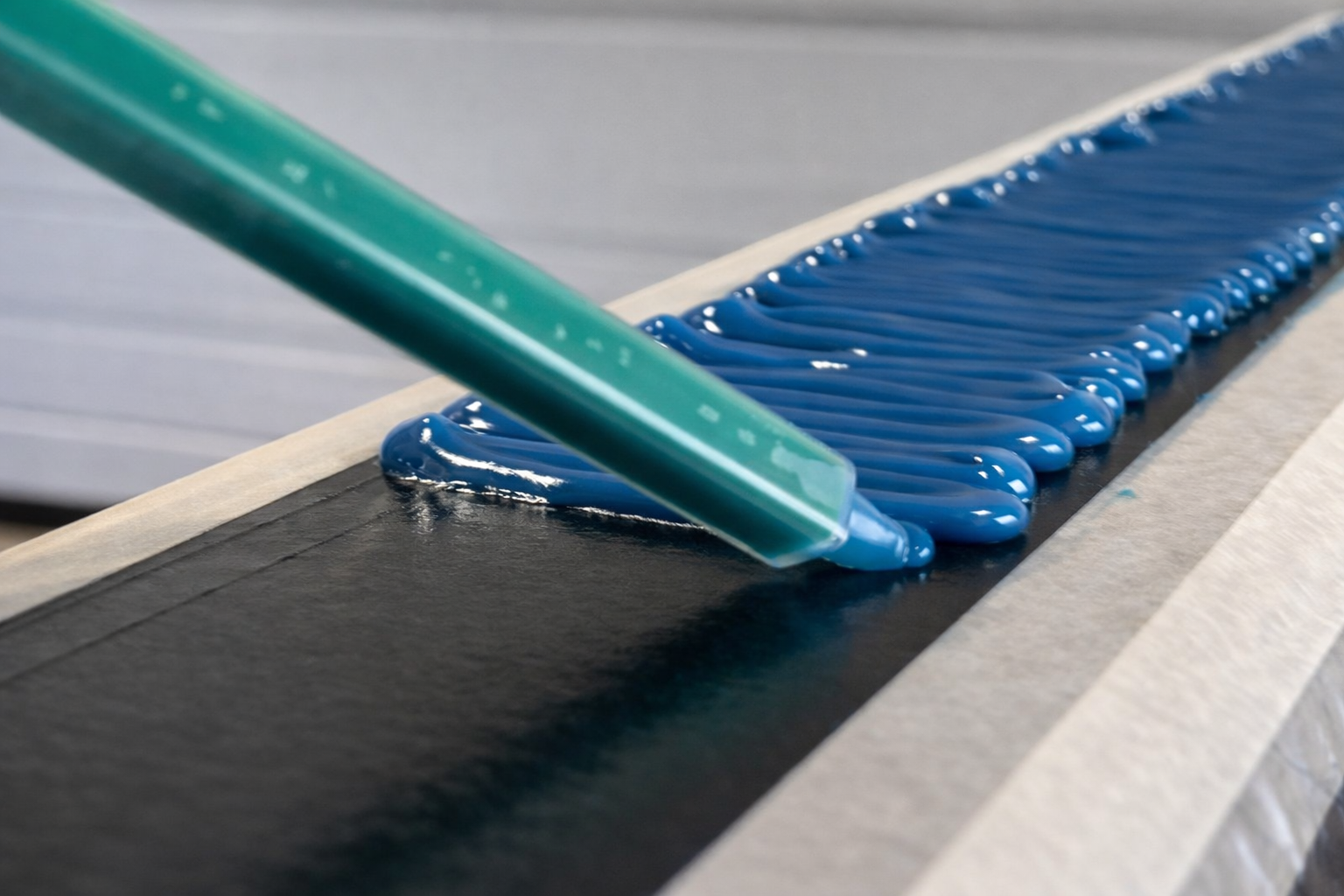
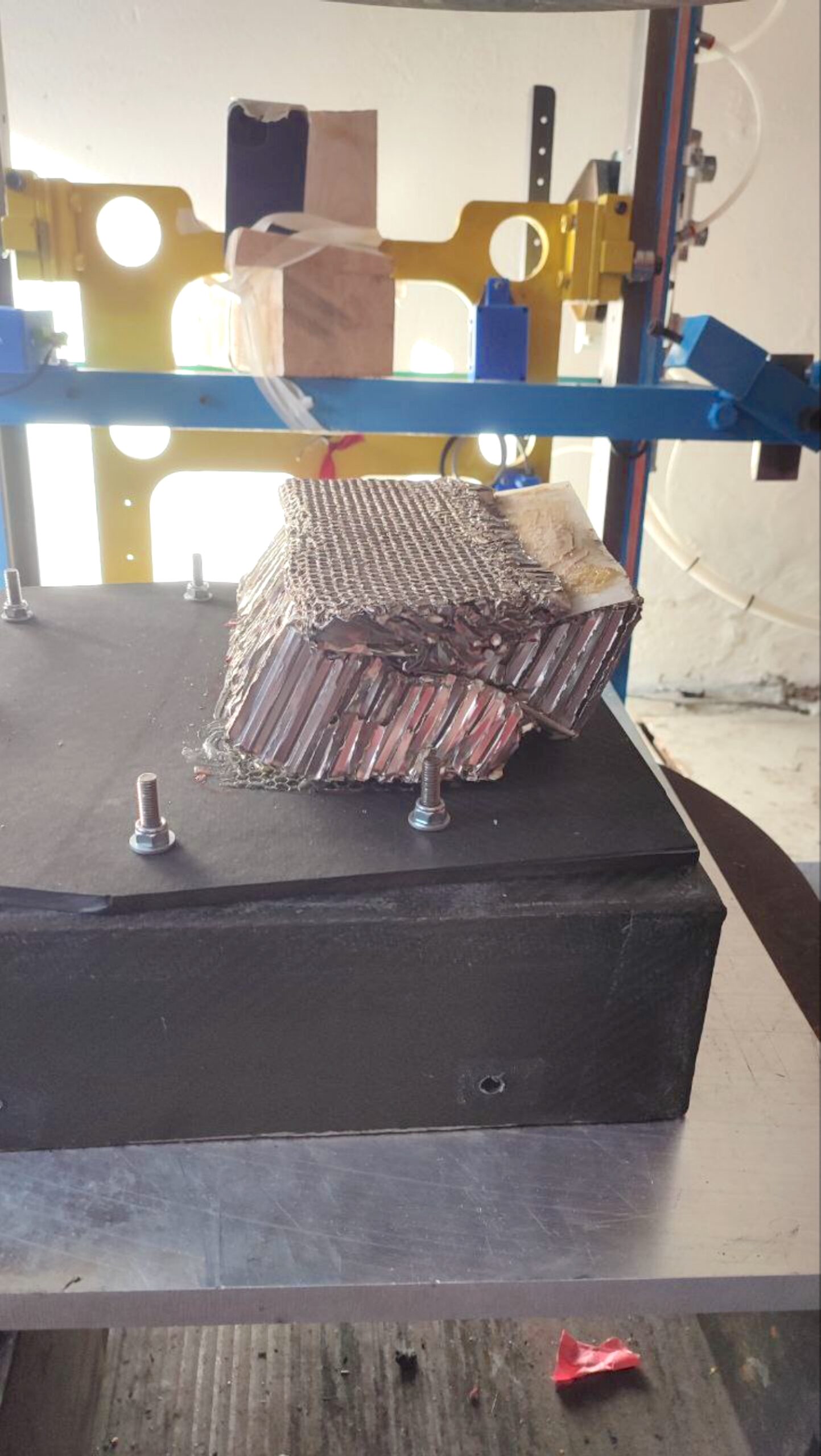
SC’s Jacopo Benfatto: “The collaboration with Vaber is especially valuable in materials selection and technical methodology. A concrete example is the impact test we performed on an aluminium honeycomb structure bonded with Vaber MA 300. We bonded three 8 cm aluminium honeycomb modules together and tested them using a drop tower setup with a 300 kg mass impacting at 7 m/s. The adhesive performance was critical to ensure structural integrity during the test. Vaber’s technical support and Vaber’s Seminars helped us better understand correct bonding procedures and material behaviour under dynamic loads”.
Which requirement does Plexus address most effectively in your projects – strength, repeatability, lead time, reduction of mechanical machining?
ST: “Plexus adhesives guarantee strong and tough structural bonds. Their biggest advantage for us is time efficiency and simplicity: they drastically reduce the need for complex surface preparation, speeding up our workflow. Plus, the wide range of available formulations means we can always select the exact adhesive tailored to the specific prototype we are building.”
SC’s Davide Abagnale: “In our projects, Plexus adhesives mainly address strength and reduction of mechanical machining. The high shear strength allows us to rely on bonded joints instead of mechanical fasteners in many applications. In simple terms, this means we can glue components instead of bolting them together, which reduces weight, saves time and simplifies manufacturing while maintaining structural reliability.”
What practical difference does Spray tack make in your day-to-day work?
ST: “During the preliminary lay-up phases, Spray tack ensures the correct adhesion of dry fibers and helps us precisely align and hold the PET core reinforcements in place, especially when dealing with the complex, curved geometries of our hull shells.”
SC: “Spray tack makes a significant difference during composite lay-up, especially for complex geometries and thick laminates. When working with multiple dry carbon fibre plies, especially in infusion processes, spray tack helps keep the layers correctly positioned before resin infusion. This improves lay-up order control, reduces the risk of fibre displacement and increases overall manufacturing quality and repeatability. It becomes particularly important when dealing with high laminate thickness or complex aerodynamic moulds.”
Infusion: what is the most common mistake you have learned to avoid over time?
ST: “We’ve learnt to avoid an improper distribution of the vacuum bag. You must leave enough excess bagging film (pleats or ‘ears’) over complex geometries to prevent ‘bridging’ and resin-rich corners. Also, it is vital to perfectly plan the resin feed network and ensure you have enough mixed resin readily available – running dry during an infusion is not an option!”
SC: “One of the most common mistakes in resin infusion is poor planning of resin flow and vacuum line positioning. Carefully designing the infusion layout, especially air evacuation paths and resin inlet positions, is crucial to avoid dry spots, air entrapment or incomplete wet-out. Proper preparation and process discipline make the difference between a successful part and a failed one.”
What have you picked up in the workshop or boatyard that university lectures alone cannot teach?
ST: “University lectures give you the theory, but in the boatyard, we saw how to read a lamination plan (plybook) and translate it into a physical object. We mastered the hands-on use of composites and how to manage the unpredictable real-world variables of infusion – like realizing that once the resin starts flowing, you can’t just press ‘undo’ like you do on CAD.”
SC: “We learnt that engineering is not only about calculations but about execution. We studied how materials actually behave, how small mistakes can compromise an entire part, and how teamwork and organisation directly impact technical results. It taught responsibility, precision and problem-solving under real constraints – aspects that no lecture alone can fully replicate.”
What message would you give to a student considering joining the team?
ST: “Stepping into the boatyard broadens your vision far beyond the CAD screen: physically building what you design is what truly turns a good student into a complete engineer.”
SC: “It requires commitment and dedication, but for those who are drawn to innovation and want to experience it firsthand, it’s a real opportunity already during university.”