As a general rule, a privately operated yacht registered outside the European Union and owned by an individual or entity established in a third country may remain within the EU customs territory under the temporary admission regime for up to 18 months without paying import VAT or customs duties. Before that period expires, the yacht must either leave the EU or be permanently imported, with the relevant taxes and duties being paid. The rule appears straightforward. In practice, its application can be considerably more complex, particularly when factors such as the user’s place of residence, a lengthy refit, a breakdown that prevents the yacht from sailing, an international corporate structure or difficulties in establishing the vessel’s actual value come into play.
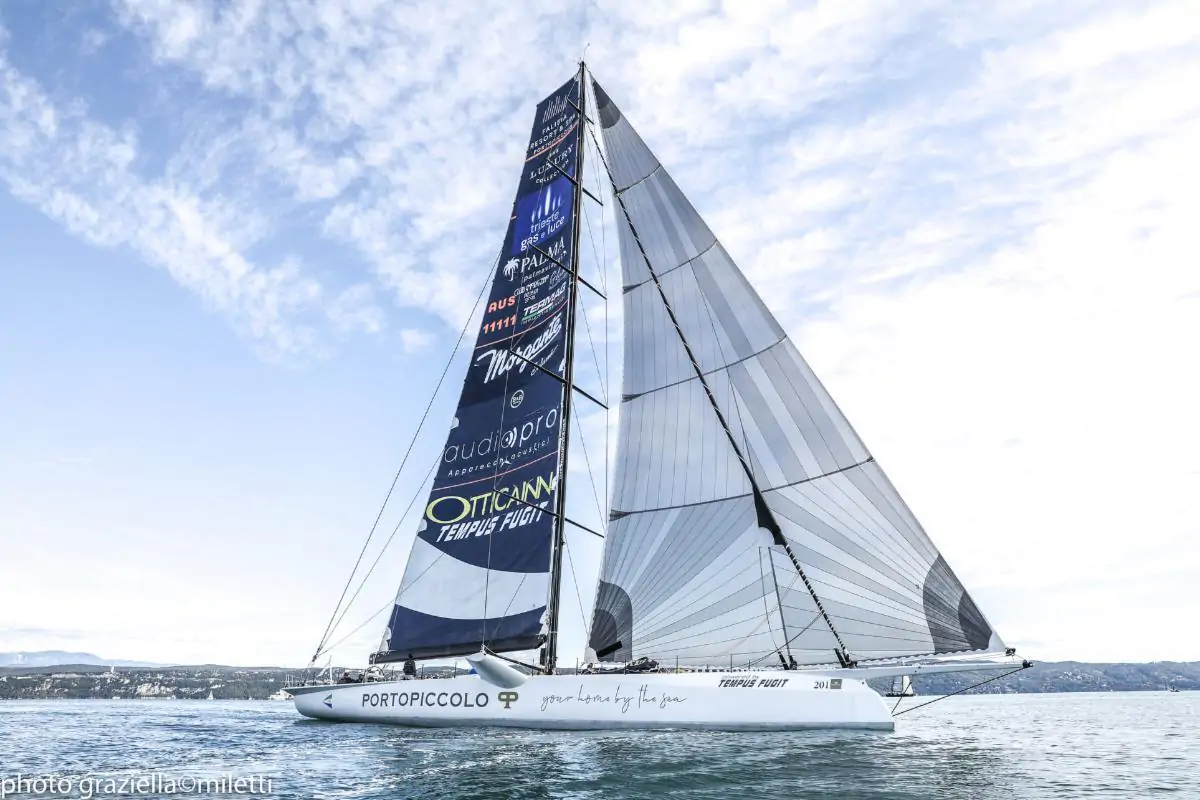
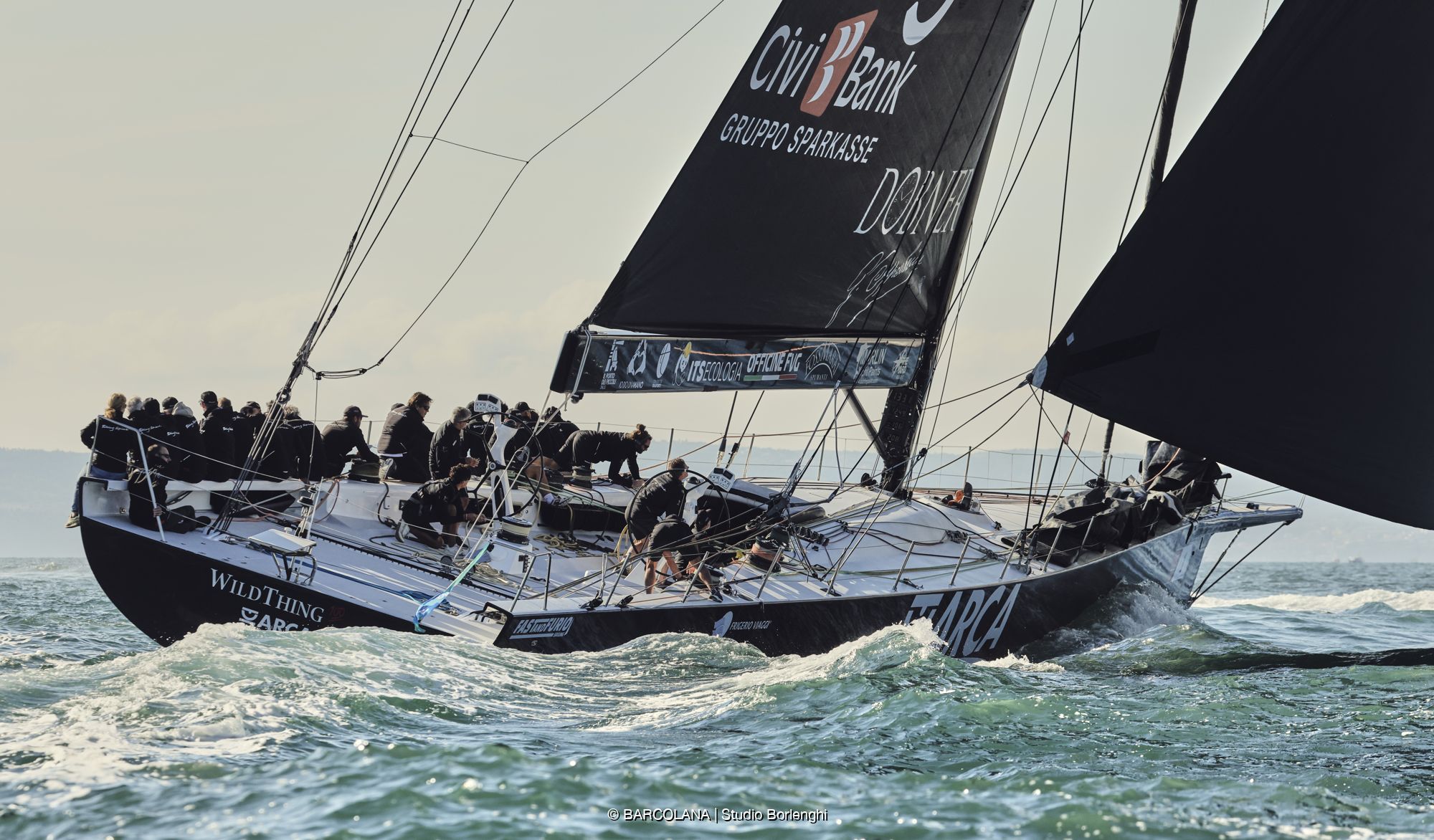
The very different cases involving Wild Thing, Tokolosh CQS (in the opening image) and Force Blue show how a customs issue can develop into legal proceedings lasting for years. The first two involve 100ft maxi sailing yachts designed purely for racing and brought to Italy to compete. The third is Italy’s best-known case involving the application of VAT to a non-EU superyacht, the vessel widely associated with Italian businessman Flavio Briatore.
Wild Thing: the yacht’s user and its taxable value
Wild Thing is a 100ft maxi sailing yacht built in Australia exclusively for racing. In more recent years she has also competed under the name of her sponsor, Arca SGR, which has no involvement in the legal proceedings. The yacht was seized in February 2025 while undergoing maintenance at Marina Monfalcone, in north-eastern Italy, close to Trieste on the northern Adriatic coast. According to the European Public Prosecutor’s Office (EPPO) in Venice, which carried out the investigation with the support of the Trieste unit of the Italian Financial Police (Guardia di Finanza), the yacht had allegedly entered Italy in 2019 without the required customs declaration, resulting in the non-payment of approximately €433,000 in import VAT.
The Australian company that owns the yacht subsequently paid the tax claimed by the authorities, and Wild Thing was released from seizure in December 2025. The director of the yacht-owning company, a US citizen, resolved his criminal position through a plea bargain. The yacht’s user, Italian skipper Furio Benussi, chose instead to contest the allegations in full, maintaining that he had no responsibility for the conduct attributed to him. The EPPO has filed a request for Benussi to stand trial for his alleged involvement in the case, while his defense has stated that it has received no notification of a ruling by a judge. According to his lawyer, Piero Fornasaro, Benussi did not physically import the yacht into the EU. His position in the proceedings derives solely from his being an EU-resident user of an asset which, according to the prosecution, was being held irregularly within the EU customs territory.
The yacht had in fact already been in Europe for several years when Benussi obtained the right to use her through agreements with the owning company. His personal position, which he contests in full, has therefore yet to be determined. At this stage, and unless and until any eventual court proceedings result in a final conviction, Benussi must be presumed innocent of the allegations against him. Perhaps the most significant aspect of the case concerns the yacht’s taxable value, because this may determine whether the alleged infringements have only administrative consequences or also reach the threshold of criminal liability.
When Benussi first came across Wild Thing ashore at a boatyard in Spain’s Balearic Islands, the yacht had been abandoned for years following a serious keel accident. According to the defense, surveys and photographic evidence described her as effectively a wreck, both technically and economically. Only later was she recovered, rebuilt and upgraded to the point where she could return to international yacht racing. The question is therefore whether the relevant taxable value should be that of the yacht when she originally entered the EU, or her actual value at the time Benussi began using her. Surveys, photographs, repair quotations, technical reports and descriptions of the yacht’s original condition may consequently become crucial evidence in reconstructing the evolution of her economic value.
Tokolosh CQS: a breakdown, the pandemic and an unanswered request
Tokolosh CQS is another 100ft maxi sailing yacht conceived purely for racing. Originally named Tokolosh and subsequently raced under sponsors’ names, first Nicorette and later CQS, she entered Italy legally under the temporary admission regime and, while under charter, competed in the 2018 and 2019 editions of the Barcolana, the annual sailing regatta held in Trieste. During her stay in Italy, however, the yacht suffered a serious failure of her propulsion system. A component of the transmission connected to the mechanism that allows the propeller to retract into the hull had to be specially manufactured. The highly specific nature of the component and the time required to produce it inevitably extended the yacht’s stay at the yard. Coincidentally, the yacht was also at Marina Monfalcone, near Trieste, but there is no connection between the Tokolosh CQS and Wild Thing cases.
While the yacht was still immobilised, the Covid-19 pandemic began. International travel restrictions prevented Ludde Ingvall, the yacht’s skipper and the legal representative of the company operating her, from travelling to Italy for an extended period. We spoke to lawyers Piero Santi and Paolo Stern, who represent the ownership. According to them, an application to extend the yacht’s temporary admission period had been duly submitted to the Italian customs authorities, but no response was received. This is a significant aspect of the case. Public authorities themselves referred to the exceptional circumstances created by the health emergency to explain the difficulties affecting their operations. It may therefore be argued that the same objective constraints should also have been taken into account in relation to a private party attempting to communicate with those authorities and who, because of the restrictions, could neither travel to Italy nor arrange for the yacht to leave EU waters.
The lawyers also refer to guidance issued by the European Commission during the pandemic, under which Member States’ customs authorities were encouraged to consider favourably requests for extensions based on force majeure circumstances related to Covid-19. The case therefore combines three separate factors: a genuine mechanical failure, the need to manufacture a bespoke component and an exceptional event that prevented international travel. Added to these was the lack of a response from the customs authorities to the ownership’s application for an extension.
For shipyards and marine professionals, the lesson is practical but limited in scope. A yard does not become responsible for a yacht’s customs status simply because the vessel is undergoing work there. Its technical records, however, may prove essential in demonstrating why a yacht was unable to leave the EU within the prescribed period. Work orders, breakdown reports, correspondence with suppliers, manufacturing lead times for replacement components and technical reports showing that the yacht was unable to sail can all help establish an accurate record of why the vessel remained in the yard for longer than originally planned.
The proceedings concerning Tokolosh CQS have not yet been concluded. The circumstances cited by the ownership, together with the consequences of the customs authorities’ failure to respond to the extension request, will have to be assessed by the competent authorities and courts. Here too, the case remains open.
Force Blue: Italy’s best-known yacht VAT case
Force Blue is probably the best-known Italian case concerning VAT on a non-EU yacht. The 62-metre yacht used by Flavio Briatore was registered in the Cayman Islands and formally owned by Autumn Sailing Limited, a company based in the British Virgin Islands. According to the prosecution, Briatore was the yacht’s effective owner and user, as well as the de facto director of the company.
At the centre of the case was the allegation that the yacht’s purported commercial charter activity was not genuine. According to prosecutors in Genoa, on Italy’s north-western coast, the corporate structure and charter agreements had enabled an EU-resident individual to use a non-EU yacht privately in European waters without paying approximately €3.6 million in import VAT. The proceedings began when the yacht was seized in May 2010 and continued for more than 12 years through six rounds of litigation. In January 2022, the Genoa Court of Appeal finally acquitted Briatore and the other defendants on the basis that the conduct did not constitute a criminal offence. The court also revoked the confiscation of the yacht and the seizure of assets of equivalent value.
By then, however, Force Blue had already been sold at auction by the court-appointed custodian. Bernie Ecclestone acquired the yacht for a price reported to be between €6 million and €7 million. The sale therefore took place before the legal proceedings had reached their final conclusion. Following his acquittal, Briatore sought approximately €12 million in compensation from the Italian state, arguing that Force Blue had been worth €19 million when she was seized and that the court-ordered sale had therefore taken place at an excessively low price. The claim was rejected. The judges pointed out that €19 million represented the yacht’s market asking price – in other words, the price sought by the seller – rather than necessarily the amount that could realistically have been achieved in a sale.
The international yacht brokers who had indicated a theoretical value of around €15 million had themselves recommended a price of no more than €7 million after taking into account the yacht’s specific characteristics, the relatively limited market recognition of her builder, the fact that the shipyard was no longer in business and the need to complete a judicial sale within a comparatively short timeframe. Italy’s Supreme Court of Cassation subsequently confirmed that Briatore was not entitled to the compensation he had claimed.
The Force Blue case therefore highlights two distinct issues. The first is the need for the commercial structure declared on paper to correspond with the yacht’s actual use. The second is the difference between a theoretical valuation, an asking price and the value that can realistically be achieved in a forced or judicial sale.
Why these cases matter to the wider yachting industry
The three cases arose from very different circumstances.
With Wild Thing, the key issues are the position of an EU-resident user and the taxable value of a racing sailing yacht recovered from a condition close to that of a wreck. In the Tokolosh CQS case, the central question is the overrun of the temporary admission period during a prolonged repair, compounded by the Covid-19 pandemic and the lack of a response from the customs authorities. With Force Blue, the main issue was the distinction between a genuine commercial charter operation and the private use of the yacht.
Taken together, the three cases illustrate the complexity of a sector in which yachts registered outside the EU, foreign companies, non-EU owners, users resident in Europe, captains, brokers and shipyards regularly interact with one of the most complex areas of European customs and tax law. The 18-month temporary admission rule is simple only in theory. In practice, a refit that takes longer than expected, a major mechanical failure, a change of user, an event of force majeure or a dispute over the economic value of the yacht can turn what initially appears to be an administrative customs issue into legal proceedings lasting for years. For this reason, the customs status of a non-EU yacht should be checked before the start of any prolonged stay or major refit in Europe. Relevant factors include the date on which the yacht entered the EU customs territory, the place of residence of both the owner and the user, and the way in which the yacht is actually being operated.
For shipyards, this does not mean taking on the role of tax advisers or becoming responsible for an owner’s customs obligations. It does mean recognising that the duration and nature of work carried out on a yacht may affect her ability to comply with the temporary admission regime, and that accurate technical documentation can become decisive evidence when explaining why a vessel was unable to leave EU waters within the prescribed period.