In December 2023, Ariane de Rothschild officially announced the start of construction for a new oceanic maxi-trimaran designed to venture ever further along the path towards offshore flight initiated by her predecessor, Gitana 17.
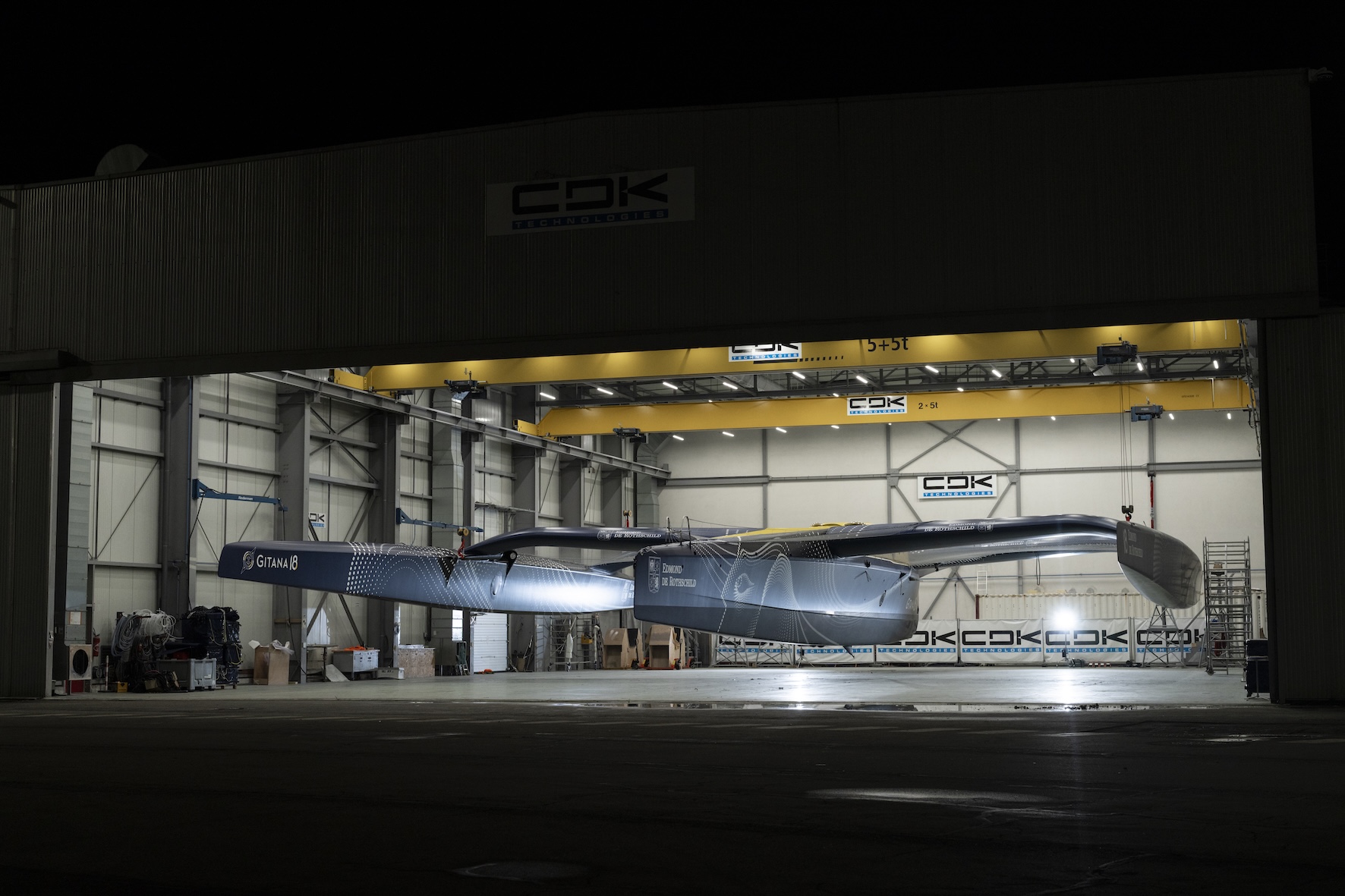
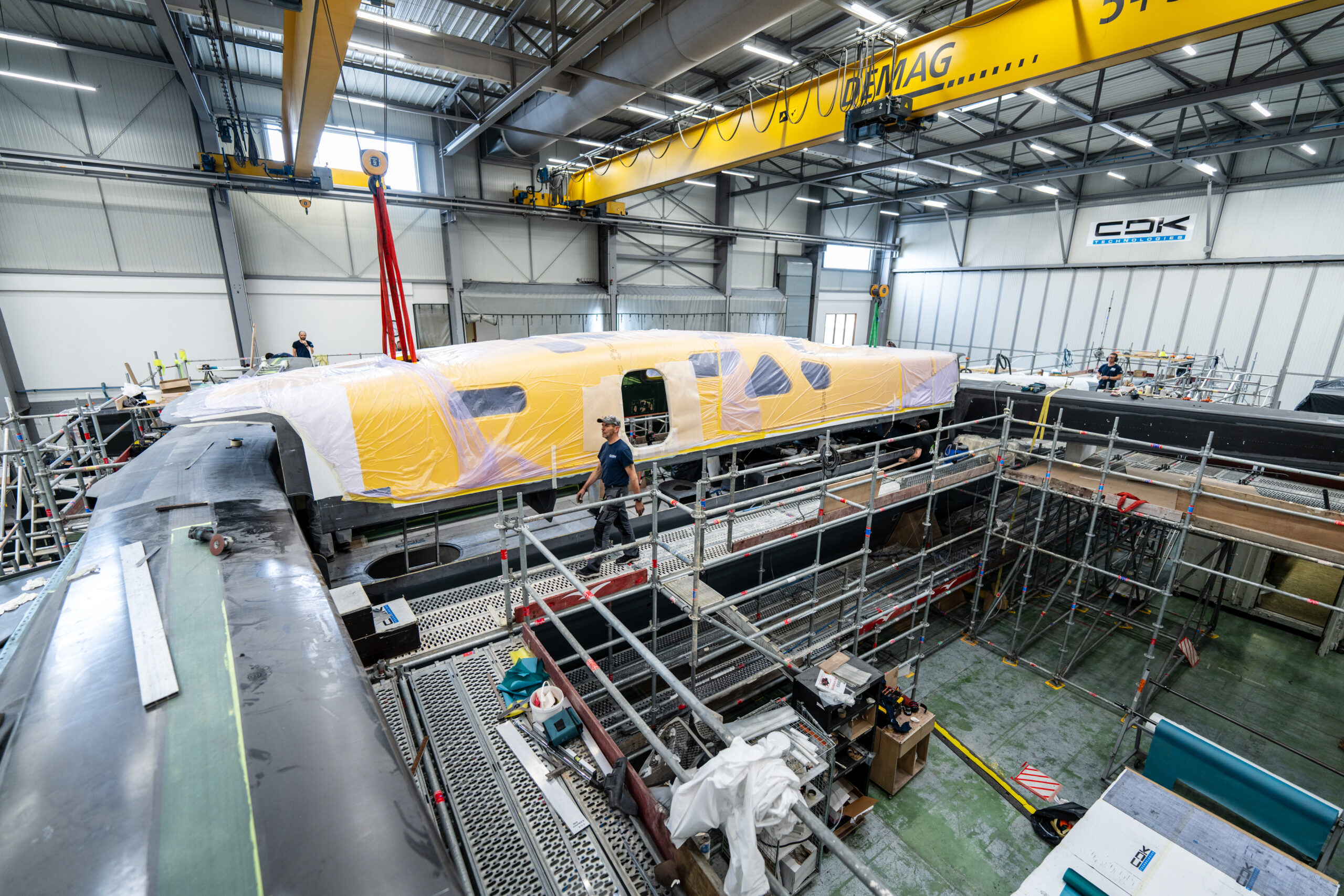
Since then, the whole of Gitana Team, together with the teams associated with naval architect Guillaume Verdier and the CDK Technologies yard, have been hard at work. 26 months later, on 14 February 2026, the future 32-m Gitana 18 emerged into the open at Lorient La Base, watched by sailing enthusiasts and offshore racing followers, confirming a major step forward in advanced sailing technology.
A radically innovative architecture
The genesis of the project is rooted in the experience accumulated aboard Gitana 17, the first large oceanic multihull specifically conceived for flight in the open ocean. 8 years on from that visionary gamble – crowned by over 200,000 nautical miles sailed on every ocean on the globe and an impressive series of victories, including the Transat Jacques Vabre, the Route du Rhum and the Arkea Ultim Challenge – the 5-arrow racing stable decided to raise the bar once more, committing to a radically innovative architecture that leaves nothing to chance.
“With this new boat, ideally, we’ll be able to fly very high without ever touching the waves and reach an average sailing speed bordering on 40 knots” explains Charles Caudrelier, skipper of the Maxi Edmond de Rothschild, highlighting the evolution of foiling sailboats.
Starting from a clean slate
To design this new Maxi Edmond de Rothschild, the team also had to raise its level of expertise in terms of design. The in-house design office headed by Sébastien Sainson – comprising 8 people working full-time and featuring highly specialised areas of expertise including structural design analysis – collaborated closely with Guillaume Verdier’s studio.
The result is a 32-m giant that represents a technological leap as significant as, if not greater than, the one that separated Gitana 17 from the previous generation of Ultim Class trimarans, reinforcing innovation in high performance multihull engineering.
“Gitana 18 is kind of the apotheosis of many things that we already knew and that we could have done before but perhaps we hadn’t dared to do. Having the opportunity to get a project like this up and running after 7 years of sailing Gitana 17 also enables us to put all our ideas to work within a new project, starting completely from scratch” admits Sébastien Sainson.
A Gitana/Verdier collaborative design
The design commitment was immense: nearly 50,000 hours of study compared with 35,000 hours for Gitana 17, which was already a very substantial figure.
“The design office headed by Sébastien Sainson has witnessed massive growth since 2017 with some extremely talented people,” enthuses Guillaume Verdier. “There’s a lot of diversity among the people who have joined the office, which is a real strength as we all have something to learn from one another. Ideas come from all over. It’s kind of like we’ve created a work of art together.”
The culture of innovation and boldness is intrinsically linked to the history of the Gitanas. “Within my family, we’ve always enjoyed a passion for competition, performance and also one of technological disruption. It’s about being disruptive, knowing how to take risks, gauging them and managing them,” admits Ariane de Rothschild.
Comparison
The fundamental difference between Gitana 18 and her predecessor lies in the approach to flight itself. While Gitana 17 alternated between conventional sailing and foiling depending on conditions, the new maxi-trimaran has been designed to fly 100% of the time.
“We didn’t even raise the question for this boat: we knew that she would be airborne 100% of the time, so we pulled out all the stops to make her as quick as possible when she flies,” stresses Sainson.
Verdier concurs: “I believe that we’ve really made a new technological breakthrough with this boat, in the same way we did in our work on G17. We’ll have reworked every element in a bid to futureproof this vessel,” advancing the limits of advanced sailing technology.
Innovations under the microscope
The new Maxi Edmond de Rothschild is a polymorphic creature, which provides an opportunity to adjust, deploy and retract a plethora of mobile elements – a colossal Gerris adorned with appendages whose forms and functions are as spectacular as they are unprecedented. Together, the Gitana design office and Team Verdier have brought to life a platform unlike any other in offshore racing. Several elements of Gitana 18’s design are the subject of a patent application, reinforcing its position among next-generation offshore racing yachts.
Retractable Y-foils and 3D trimming
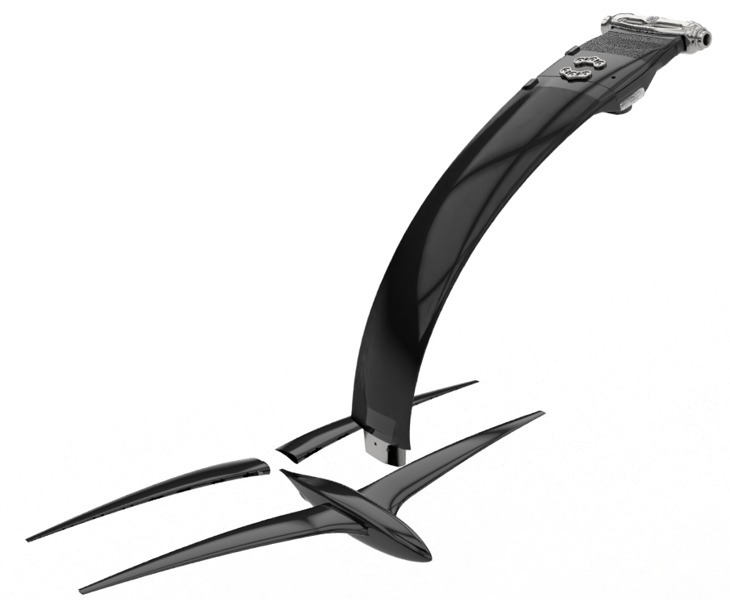
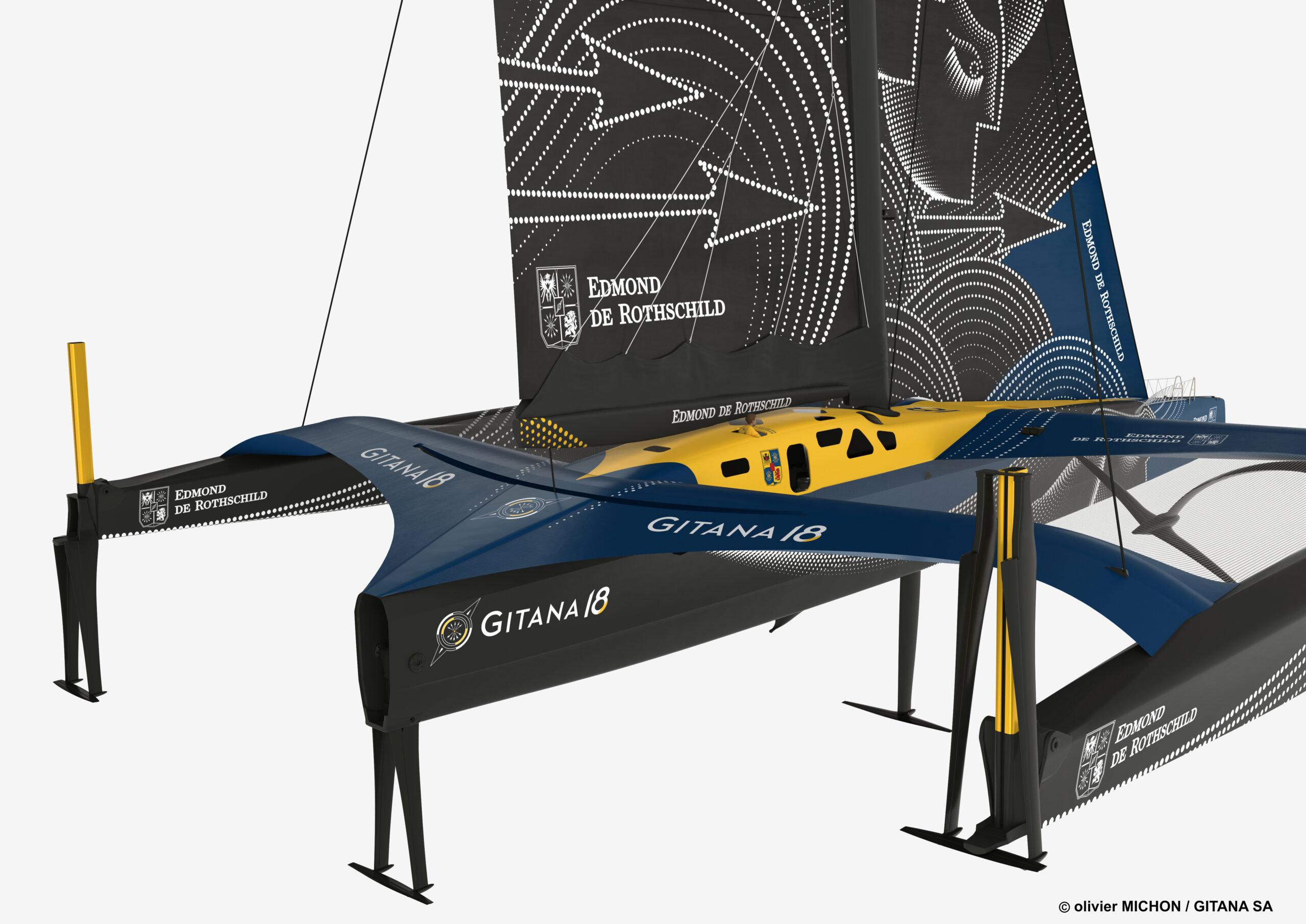
Inspired by the appendages on the flying monohulls of the America’s Cup, the Y-foils equipped with a wing spanning over 5 m have been designed to generate considerable lift, boost power and permit a number of different trimming options in order to optimise flight on every point of sail, in all manner of conditions. The capacity for 3D adjustment allows the trimaran to adapt dynamically to sea conditions, maintaining the optimal attitude for flight at all times, a key feature of modern foiling sailboats.
The defining characteristic of these foils is their retractability and extreme mobility. The system allows the appendages to be deployed and retracted according to conditions, transforming Gitana 18 into a shape-shifting machine capable of adapting to radically different sailing scenarios. The combined span of the foil system reaches 10.4 m, with each foil bulb measuring 2.4 m in length. The Y-foils will be installed once the initial testing phase has been completed – they were deliberately held back from the launch day sequence to allow the static tests standard on all new builds to be carried out first.
Rudders with a U-shaped geometry geared to withstand cavitation
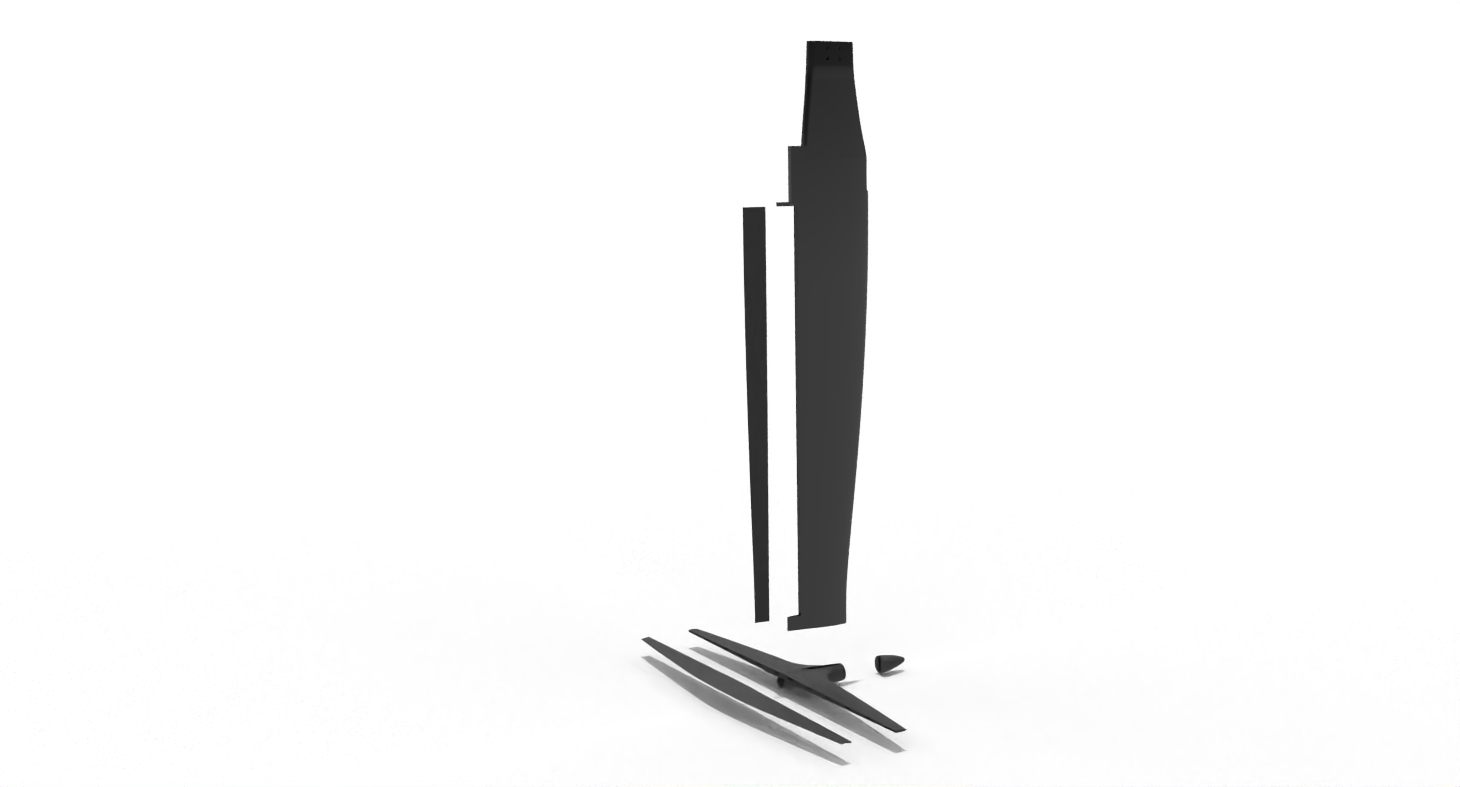
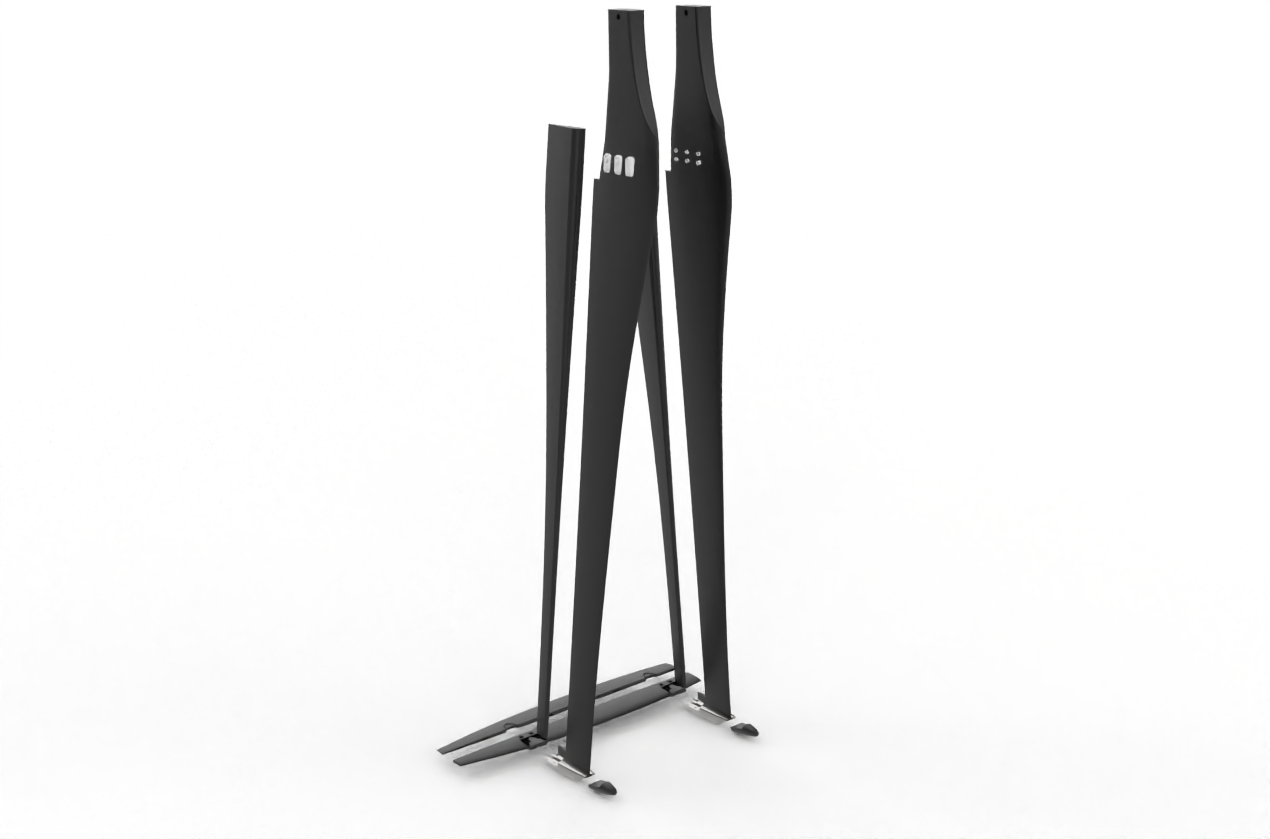
The rudders of the new Maxi Edmond de Rothschild feature an entirely novel U-shaped geometry, specifically developed to resist cavitation at very high speeds. This phenomenon, which occurs when water pressure drops below the liquid’s vapour pressure and which can cause severe erosion and loss of directional control, is addressed at source by the geometry itself.
The float rudders – already fitted at launch and immediately drawing attention from onlookers – stand 4 m tall. These are complemented by a retractable central rudder that can be raised when not required, reducing drag in specific sailing modes, further enhancing the performance of this high performance multihull.
A radically rethought centreboard with a large-scale lifting surface
The centreboard on the central hull, together with its large-scale lifting surface, represents a complete departure from everything that has previously been designed on this type of boat. Positioned in the centre of the main hull and fitted with a 3m-span metal lifting plane, the daggerboard was deliberately kept as a final surprise for launch day. Like the keel of an IMOCA monohull, it is designed to pivot while remaining fixed in height – an innovative solution that requires it to be installed once the yacht is in the water. This lifting plane works in synergy with the lateral foil system to create an integrated flight envelope, with the lift distribution calibrated across thousands of simulator runs.
A rig with dynamically adjustable spreaders: a world first at this scale
The rig on the new Maxi Edmond de Rothschild stands out through the presence of spreaders whose dynamic forces can be adjusted, enabling the mast to bend to modify the power of the mainsail whilst sailing. This is a world first on this scale. The mast, standing over 36 m – with a total aerial draft of 38.4 m – was stepped on the same afternoon as the platform launch, thanks to a rare window of moderate to light winds during what had been a succession of Atlantic depressions sweeping across Brittany.
The sail plan is sized for 450 sq.m of upwind sail area and 630 sq.m downwind. The nets between the hulls occupy 170 sq.m, while the aerodynamic covers add a further 73 sq.m. Total decorated surface across hulls and sails reaches 2,000 sq.m.
Structural integration: cockpit and coachroof as one with the central hull
The cockpit and the coachroof are structurally integral to the central hull to give it the maximum stiffness – a Gitana concept and implementation. This solution distributes loads more efficiently and reduces structural deformation under load.
At a displacement of just 19.5 tonnes for a platform of these dimensions – 32-m long by 23-m wide – the stiffness-to-weight ratio represents an outstanding achievement in composite boatbuilding.
80% of the platform was produced in an autoclave, an extraordinarily high proportion that guarantees the highest quality and consistency of the composite laminate. The construction process required a total of 200,000 hours of work, with over 200 people involved in the Gitana 18 project, incorporating 500 sensors and 8 km of electrical cabling.
From confidential build to public unveiling: a tight timeline
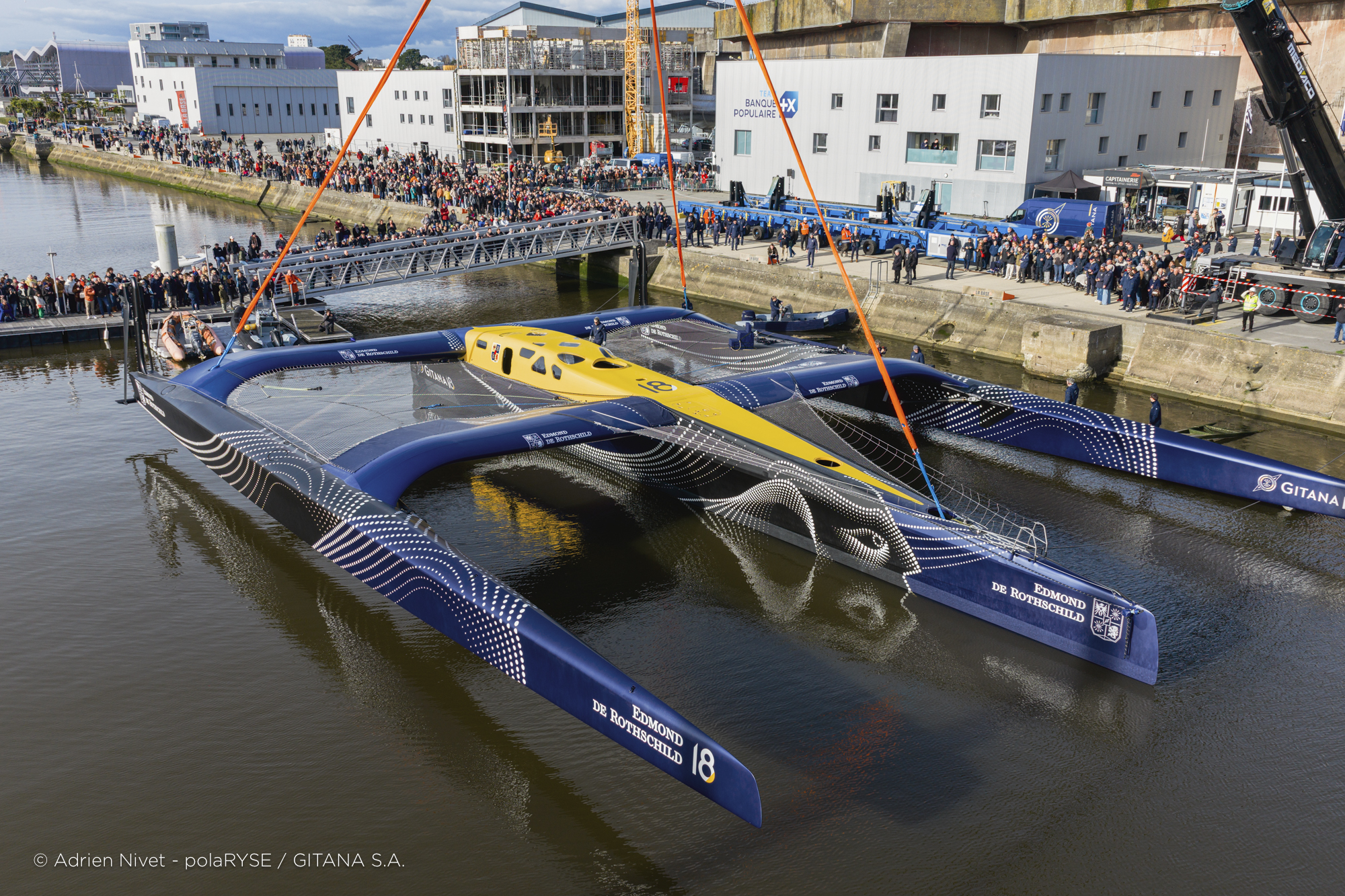
On Wednesday, 3 December 2025, after many months of work, waiting and preciously guarded secrets, the new Gitana/Verdier-designed Maxi Edmond de Rothschild was unveiled in Lorient, Brittany – a moment of joy and deep pride for Ariane de Rothschild and all the members of the five-arrow racing stable.
The distinguished outline and the sleek lines of this 32-m giant, adorned with revolutionary appendages, were further enhanced by her monumental livery designed by Florian and Michaël Quistrebert, in collaboration with the Palais de Tokyo.
“We’ve challenged ourselves right across the board” announced Cyril Dardashti, General Manager of Gitana Team, at the unveiling. The new boat is the 28th addition to the Gitana lineage, which is celebrating its 150th anniversary in 2026. On paper, based on thousands of tests carried out in a simulator, the new Maxi Edmond de Rothschild ticks all the boxes with a 10 to 15% gain in speed expected over Gitana 17.
The launch and departure
Since that first reveal in December, sailors, competitors and close observers of the offshore racing world had been waiting for the next milestone: the launch of the 32-m trimaran and her departure from the yard. The date of Saturday 14 February 2026 was chosen deliberately, to allow as many supporters as possible to share the moment. But the weather still needed to cooperate. Launching a 32-m by 23-m platform – followed by stepping a mast over 36 m tall – leaves little room for error.
As if on cue, the persistent Breton rain and wind eased for a few precious hours. “Everything aligned today,” said skipper Charles Caudrelier at the end of the operation. “The weather window was almost unexpected, but it allowed us to launch the platform and step the mast straight afterwards. It all went perfectly!”
When the hangar doors opened on launch morning, only the float rudders were in place – their distinctive U-shaped geometry immediately catching the eye. The central retractable rudder and the daggerboard with its 3m-metal lifting plane followed once the yacht was afloat. The Y-shaped pendulum foils, each featuring a wing of more than five metres in span, will be installed in a subsequent phase, once the initial static testing sequence has been completed.
Testing and commissioning
Now moored at her home pontoon in Lorient, Gitana 18 will remain alongside for a few days before casting off for her first sea trials off the Breton coast. From the following week, the yacht will undergo the standard static tests carried out on all new builds as they leave the yard. Given the yacht’s architecture and the scale of the highly innovative appendages, the commissioning sequence has been carefully phased to allow each system to be validated progressively in real-world conditions.
For Charles Caudrelier and the Gitana Team, the months ahead will be dedicated to the delicate process of fine-tuning a demanding and highly sophisticated prototype. “We are not starting from a blank page, thanks to the experience gained with Gitana 17, but with Gitana 18 we are stepping into another dimension. Everything in the systems that have been conceived is new. The development phase will be demanding, as the timeframe is short ahead of our key objective of the season,” Caudrelier acknowledges.
The road to the Route du Rhum
The team has until 1 November 2026 – 8 months – to be race-ready and in Saint-Malo to defend the team’s title at the Route du Rhum – Destination Guadeloupe. A tight schedule that demands extraordinary intensity, navigating the twin challenges of systems validation and progressive performance development simultaneously. “I hope we can quickly make the yacht as performant as it is beautiful!” Caudrelier adds.
The Gitana legacy and a new chapter for flying Ultim design
The new Maxi Edmond de Rothschild is not only a step forward for the Gitana programme. It marks the leading edge of a whole new generation of flying offshore multihulls: the wager on permanent full-foiling is a step into the unknown. If the simulator data holds true on the water, this trimaran will not simply be the fastest ever built: it will open the door to a new generation of flying machines that will redraw the boundaries of what is possible in offshore sailing.